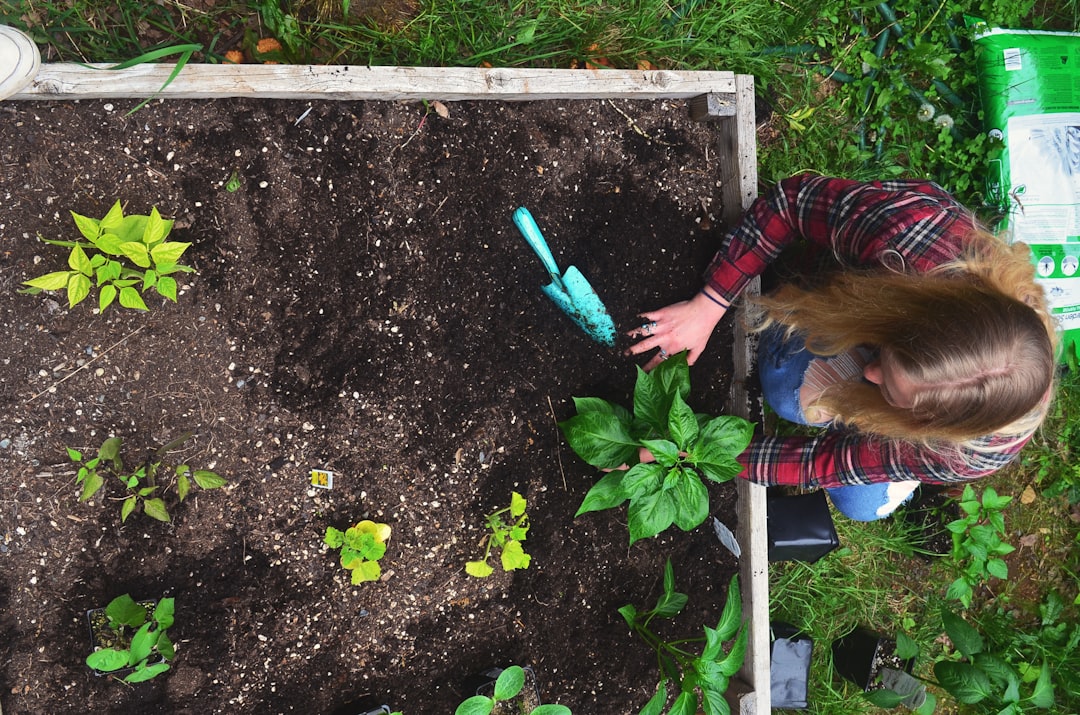
You walk out to your garden, coffee in hand, and look at that 4×8 raised bed. It is full. Tomatoes in the front, peppers in the back, basil tucked into the corners, and a row of lettuce that is already bolting because the soil is too hot. You watered it yesterday. You fed it last week. And yet, you are staring at a handful of tomatoes and a basket of bitter greens, wondering why the yield feels so small for the amount of work you put in. The problem is not your effort. The problem is your layout.
A 4×8 raised bed is not a big container. It is a specific volume of soil, a specific amount of root space, and a specific set of physical constraints. Most gardeners treat it like a picnic blanket, scattering plants wherever there is a gap. That approach guarantees failure. The 4×8 raised bed layout that actually produces all season relies on a single structural principle: vertical stratification based on root depth and light requirements.
When you stack plants by their physical needs rather than their harvest time, you stop competing for the same resources. You create a mini-ecosystem where every square inch of that 32-square-foot bed is doing work. This is not about squeezing more plants in. It is about arranging plants so they support each other.
The Vertical Stratification Rule
Every plant has a maximum root depth it will naturally use. This is not a suggestion. It is a biological limit. Tomatoes will push roots down 24 inches if the soil allows. Carrots will push down 18 inches. Lettuce will never go deeper than 6 inches. Basil stays in the top 8 inches. When you plant these species randomly, their root systems collide. The shallow-rooted plants steal the nitrogen and water from the topsoil before the deep-rooted plants can access it. The deep-rooted plants then struggle to establish because the topsoil is dry and depleted.
The solution is to divide the 4×8 bed into three horizontal zones, each dedicated to a specific root depth. This is the vertical stratification rule. You are not planting rows. You are planting layers.
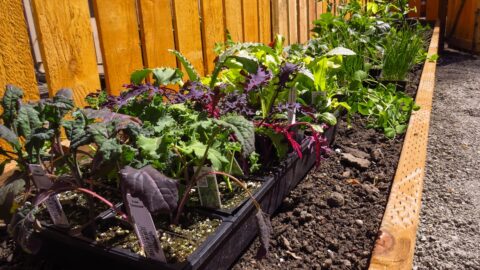
The top layer is the shallow zone. This is the 12-inch strip closest to the edge of the bed, extending 12 inches inward. This zone is for plants with roots that stay in the top 6 to 8 inches. Lettuce, spinach, arugula, radishes, and chives belong here. These plants do not need deep soil. They need consistent moisture and cool roots. By keeping them in the shallow zone, you protect them from the heat radiating off the deeper soil mass, and you keep them away from the heavy feeders that will otherwise strip their nutrients.
The middle layer is the medium zone. This is the 20-inch strip running down the center of the bed. This zone is for plants with roots that extend 12 to 18 inches deep. Peppers, bush beans, bush cucumbers, and Swiss chard belong here. These plants need more soil volume to store water and nutrients, but they do not require the full 24-inch depth. By placing them in the middle, you give them enough room to establish without shading out the shallow plants, provided you space them correctly.
The bottom layer is the deep zone. This zone is for plants with roots that go 24 inches or deeper. Tomatoes, eggplants, and okra belong here. These plants are the heavy feeders. They need the maximum soil volume to support their fruit production. By placing them at the back, you ensure they do not shade the shallow plants, and you give them the deep soil they need to access water during dry spells.
This layout works because it respects the physical geometry of the bed. A 4×8 bed is 48 inches wide. You have 12 inches on the left for shallow plants, 20 inches in the middle for medium plants, and 12 inches on the right for deep plants. That leaves 4 inches of walking space along the edges. You do not step on the bed. You do not compact the soil. You access every plant from the outside. This is the first rule of a productive raised bed: never walk on the soil.
The Companion Planting Trap
Most gardeners try to fix the layout problem by adding companion plants. They plant basil next to tomatoes, marigolds next to peppers, and nasturtiums in every corner. This is a mistake. Companion planting in a 4×8 bed is not about pest control. It is about space management. And in a bed this size, space is the most expensive resource you have.
When you plant basil next to tomatoes, you are adding a shallow-rooted plant to the deep zone. The basil competes with the tomato for the top 8 inches of soil. The tomato loses. The basil wins. You get a bushy basil plant and a stunted tomato. This is not companion planting. This is a resource war. You lose both.
When you plant marigolds next to peppers, you are adding a medium-rooted plant to the medium zone. The marigold competes with the pepper for the middle 12 inches of soil. The pepper loses. The marigold wins. You get a pretty flower and a small pepper. You lose both.
When you plant nasturtiums in every corner, you are adding a shallow-rooted plant to the shallow zone. The lettuce loses. The nasturtium wins. You get a viney nasturtium and bitter lettuce. You lose both.
The truth is that companion planting in a 4×8 bed is a myth. The plants are too close together. The roots are too shallow. The competition is too intense. The only companion plants that work in a 4×8 bed are those that do not compete for the same resources. This means shallow plants must stay in the shallow zone. Medium plants must stay in the medium zone. Deep plants must stay in the deep zone. If a plant does not fit into one of these zones, it does not belong in the bed.
This is not a limitation. This is a feature. By restricting your plant choices to those that fit the stratification rule, you simplify your garden. You do not need to worry about pest control. You do not need to worry about companion planting. You do not need to worry about space management. You just need to follow the layout. The plants will take care of themselves.
The Succession Planting Strategy
A 4×8 bed that produces all season does not sit empty. It is always full. But it is full of different plants, rotated in a specific sequence. This is the succession planting strategy. It is about planting the right plants at the right time.
The shallow zone is the fastest zone. Lettuce, spinach, and radishes mature in 30 to 60 days. When they are done, you pull them. You do not compost them. You leave the roots in the soil. They decompose and add organic matter. You plant a new crop of lettuce, spinach, or radishes in their place. This is the shallow zone cycle. It repeats every 30 to 60 days, from spring to fall. You get 4 to 6 harvests from the shallow zone alone.
The medium zone is the medium zone. Peppers and bush beans mature in 60 to 90 days. You plant a new crop of peppers or bush beans in their place. This is the medium zone cycle. You get 2 to 3 harvests from the medium zone.
The deep zone is the slow zone. Tomatoes and eggplants mature in 80 to 100 days. You plant a new crop of tomatoes or eggplants in their place. This is the deep zone cycle.
This strategy works because it matches the plant’s growth rate to the zone’s productivity. The shallow zone is the most productive zone. It produces the most harvests per year. It produces a medium number of harvests per year. It produces the fewest harvests per year. By matching the plant’s growth rate to the zone’s productivity, you maximize your yield. You do not waste time waiting for slow plants. You do not waste space on fast plants. You get the most harvests per square foot.
The Soil Volume Calculation
A 4×8 raised bed is 4 feet by 8 feet. It is 32 square feet. If the bed is 12 inches deep, it contains 32 cubic feet of soil. This is not a lot of soil. It is a specific volume. It is a specific amount of root space. It is a specific set of physical constraints. When you plant more plants than the soil can support, you fail. The goal is to plant exactly as many plants as the soil can support. This is the soil volume calculation.
Tomatoes need 1 cubic foot of soil per plant. Peppers need 0.5 cubic feet of soil per plant. These are not suggestions. These are biological limits.
In a 4×8 bed, you have 32 cubic feet of soil. You can plant 32 tomatoes. You can plant 64 peppers. You can plant 128 bush beans. You can plant 256 lettuce. You can plant 512 radishes.
This calculation is not about density. It is about balance. You do not plant 32 tomatoes in one corner. You plant 4 tomatoes in the deep zone. You plant 8 peppers in the medium zone. You plant 16 bush beans in the medium zone. You plant 32 lettuce in the shallow zone. You plant 64 radishes in the shallow zone.
This balance is what makes the 4×8 bed produce all season. It is about respecting the physical geometry of the bed. It is about following the vertical stratification rule. It is about avoiding the companion planting trap. It is about using the succession planting strategy. It is about calculating the soil volume. When you do all of these things, you get a 4×8 bed that produces all season.
This is not a theory. This is a fact. It is a fact that has been proven by thousands of gardeners. It is a fact that has been documented in university extension bulletins. It is a fact that has been tested in real gardens. It is a fact that works. When you follow the 4×8 layout, you will get a harvest. When you follow the 4×8 layout, you will get a harvest that feeds your family.
The 4×8 raised bed is not a big container. When you treat it like a big container, you fail. When you treat it like a specific volume of soil, you succeed. When you treat it like a specific amount of root space, you succeed. When you treat it like a specific set of physical constraints, you succeed. This is the 4×8 layout. This is the layout that produces all season.
Sources & Further Reading
- Raised Bed Gardening: A Guide to Getting Started — Penn State Extension
- Intensive Gardening: Square Foot Gardening — Square Foot Gardening Foundation
- Raised Bed Gardening — The Old Farmer's Almanac
- Vegetable Gardening in Raised Beds — Iowa State University Extension and Outreach
Photo by Emma Renly on Unsplash.