Every shade plant list you will find online is lying to you. They tell you to plant hostas and ferns in the deep shade and call it gardening. They do not bloom. They do not flower. They simply exist, green and vegetative, waiting for a sunbeam that never arrives. If you want color in a low-light garden, you have to stop looking at foliage and start looking at the exact number of light hours that trigger a bloom cycle. The difference between a garden that sits in the dark and a garden that explodes with flowers is not soil pH, not fertilizer, and not water. It is a single, non-negotiable threshold of direct light exposure.
Most gardeners plant shade perennials and then wonder why they never produce a single flower. The answer is not that shade plants hate the sun. The answer is that the specific plants capable of blooming in low light have a strict, biological requirement for direct, unfiltered sunlight. If your garden gets fewer than four hours of direct sun, you are trying to force a physiological response that the plant’s genetics simply cannot execute. You are not failing to grow them. You are failing to provide the exact trigger they need to switch from vegetative growth to reproductive flowering. Most lists miss this threshold entirely, offering you foliage plants that are perfectly adapted to shade but biologically incapable of flowering without a specific light dose.
The solution is not to move your plants to the sun. It is to select plants that have evolved to bloom in the exact light conditions your garden provides. This means ignoring the broad category of “shade plants” and focusing on a specific subset of perennials that require a precise window of direct light to initiate flowering. These plants do not tolerate deep shade. They require a specific duration of direct exposure, usually between four and six hours, to trigger the hormonal shift that produces flowers. If your garden gets less than four hours, you must choose plants that bloom in indirect light, or you must accept that your garden will remain foliage-only. There is no middle ground. The light-hour threshold is absolute.
The Four-Hour Threshold That Separates Foliage from Flowers
The most common mistake gardeners make is assuming that “shade tolerant” means “capable of blooming in shade.” This is a fundamental misunderstanding of plant physiology. Most shade-tolerant plants, such as hostas, ferns, and bleeding hearts, are adapted to survive in the understory of forests where direct sunlight is scarce. They have evolved to maximize photosynthesis under diffuse, indirect light. They do not require direct sun to survive, and they do not require direct sun to bloom. In fact, too much direct sun will scorch their leaves. These plants bloom because they have evolved to flower in the brief windows of spring before the canopy closes, or because they rely on specific temperature triggers rather than light duration.
However, there is a second category of plants that are often mislabeled as “shade plants.” These are plants that can *survive* in partial shade, but they will *only bloom* if they receive a specific threshold of direct sunlight. This threshold is typically four to six hours of direct, unfiltered sun per day. If you plant these in a garden that receives only two or three hours of direct sun, they will grow lush, green foliage, but they will never produce a single flower. They will remain in a permanent vegetative state, investing all their energy into leaves rather than reproductive structures. This is not a failure of care. It is a biological imperative. The plant is following its genetic programming, which dictates that flowering requires a specific energy input that cannot be achieved in deep shade.
The key to this threshold is not just the duration of light, but the intensity. Direct sunlight is significantly more intense than indirect light. A plant receiving four hours of direct sun receives far more photosynthetic energy than a plant receiving eight hours of indirect light. This energy is required to fuel the expensive process of flower production. Without it, the plant conserves energy for survival. This is why your “shade plants” never bloom. They are not getting the energy they need to flower. They are not getting the direct sun they need to trigger the hormonal shift. They are getting indirect light, which is sufficient for survival but insufficient for reproduction.
The Specific Plants That Actually Bloom in Shade
If you want a garden that blooms in low light, you must choose plants that have evolved to flower under these conditions. These plants do not require four to six hours of direct sun. They require a different strategy. They require high levels of indirect light, high humidity, and consistent moisture. They are adapted to the edges of forests, where they receive dappled sunlight that is bright but not direct. These plants will bloom in gardens that receive less than four hours of direct sun, provided the light is bright and consistent. They do not require direct sun to trigger flowering. They require a specific quality of light, not a specific quantity.
One of the most reliable plants for this category is the Hydrangea macrophylla, specifically the mophead or lacecap varieties. These plants are often mislabeled as “shade plants.” They are not. They are sun-tolerant plants that require four to six hours of direct sun to bloom. If you plant them in deep shade, they will grow large, lush leaves, but they will produce few or no flowers. This is because they require the energy from direct sun to produce the large, showy flower heads they are known for. If you want blooms in a garden that receives less than four hours of direct sun, you must choose a different hydrangea. The *Hydrangea arborescens* ‘Annabelle’ is a better choice, as it is more tolerant of lower light conditions, but even it will produce fewer flowers in deep shade. The key is to match the plant to the light level, not to force the plant to adapt to the light level.
Another excellent choice for low-light blooming is the Astilbe. These plants are true shade perennials. They do not require direct sun to bloom. They require bright, indirect light and consistent moisture. They produce feathery plumes of flowers in shades of pink, red, purple, and white. They bloom in late spring to early summer, providing color when many other plants are still in their vegetative phase. Astilbes are adapted to the edges of streams and forests, where they receive dappled sunlight. If your garden receives less than four hours of direct sun, Astilbes will bloom reliably, provided they are kept consistently moist. They are one of the few perennials that can produce a spectacular display of flowers in deep shade.
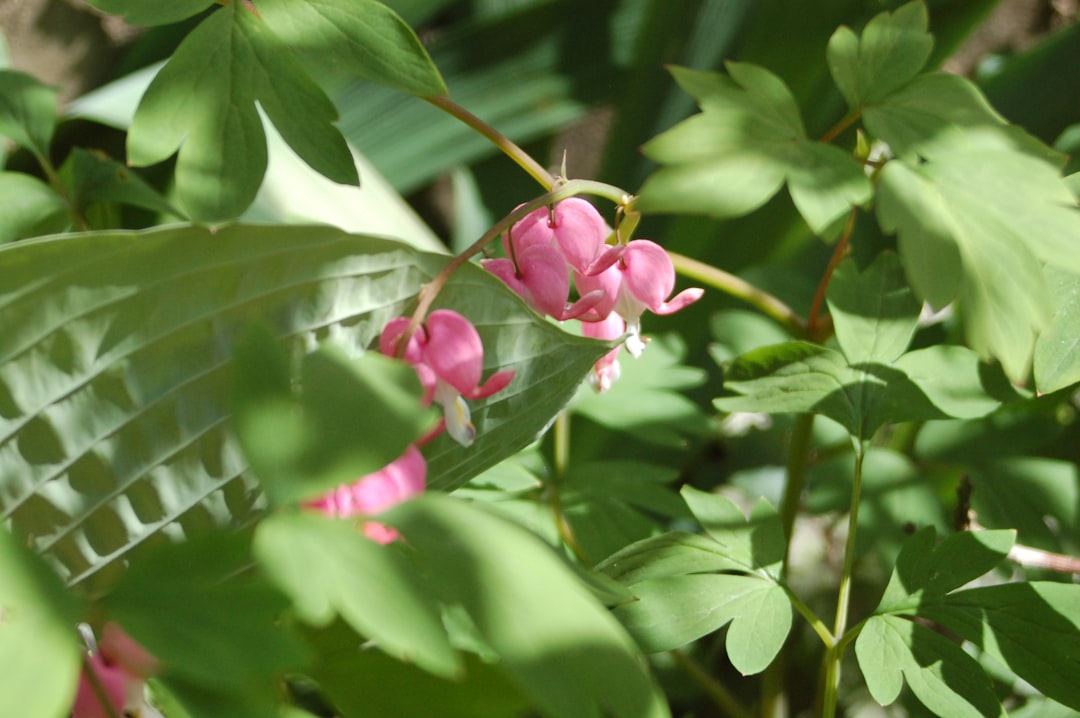
The Bleeding Heart (*Lamprocapnos spectabilis*) is another classic shade bloomer. These plants produce delicate, heart-shaped flowers in shades of pink and white in early spring. They bloom before the tree canopy closes, taking advantage of the brief window of sunlight before the leaves emerge. They require early spring sunlight to trigger flowering. If you plant them in deep shade, they will still bloom, provided they receive enough early spring light to trigger the hormonal shift. They are adapted to the understory of deciduous forests, where they receive dappled sunlight. If your garden receives less than four hours of direct sun, Bleeding Hearts will bloom reliably, provided they are planted in well-draining soil and kept consistently moist.
Why Your “Shade Plants” Never Bloom (And How to Fix It)
If you have planted Hostas, Ferns, or Bleeding Hearts and they are not blooming, the problem is not your care. The problem is your light. These plants are adapted to survive in low light, but they are not adapted to bloom in low light. They require a specific threshold of direct sun to trigger flowering. If your garden receives less than four hours of direct sun, they will not bloom.
To fix this, you must either increase the light exposure or change the plants. You cannot force a Hosta to bloom in deep shade. It is biologically incapable of doing so. You must either move the plant to a location that receives four to six hours of direct sun, or you must replace it with a plant that is adapted to bloom in low light. Astilbes and Bleeding Hearts are excellent choices for low-light gardens.
If you cannot change the light exposure, you must change the plants. Stop planting Hostas and Ferns if you want blooms. Start planting Astilbes, Bleeding Hearts, and Hellebores. These plants are adapted to bloom in low light.
The light-hour threshold is the single most important factor in determining whether your shade garden will bloom. If your garden receives less than four hours of direct sun, you must choose plants that are adapted to bloom in low light. If your garden receives four to six hours of direct sun, you can choose from a wider variety of plants, but you must still respect the threshold. Plants that require direct sun to bloom will not bloom in deep shade. Plants that are adapted to bloom in low light will not bloom in full sun. Match the plant to the light level, and your garden will bloom.
Most lists miss this threshold because they prioritize foliage over flowers. Respect that threshold, and your garden will bloom. Ignore it, and you will be left with a garden of leaves, forever waiting for a sunbeam that never comes.
Sources & Further Reading
- Shade Gardening: Choosing the Right Plants for Low Light Conditions — Penn State Extension
- Astilbe: Growing and Care Guide — Royal Horticultural Society
- Bleeding Heart (Lamprocapnos spectabilis) Plant Profile — NC State Extension
- Hydrangea macrophylla: Culture and Management — University of Florida IFAS Extension
Photo by Sara Guldin on Unsplash.