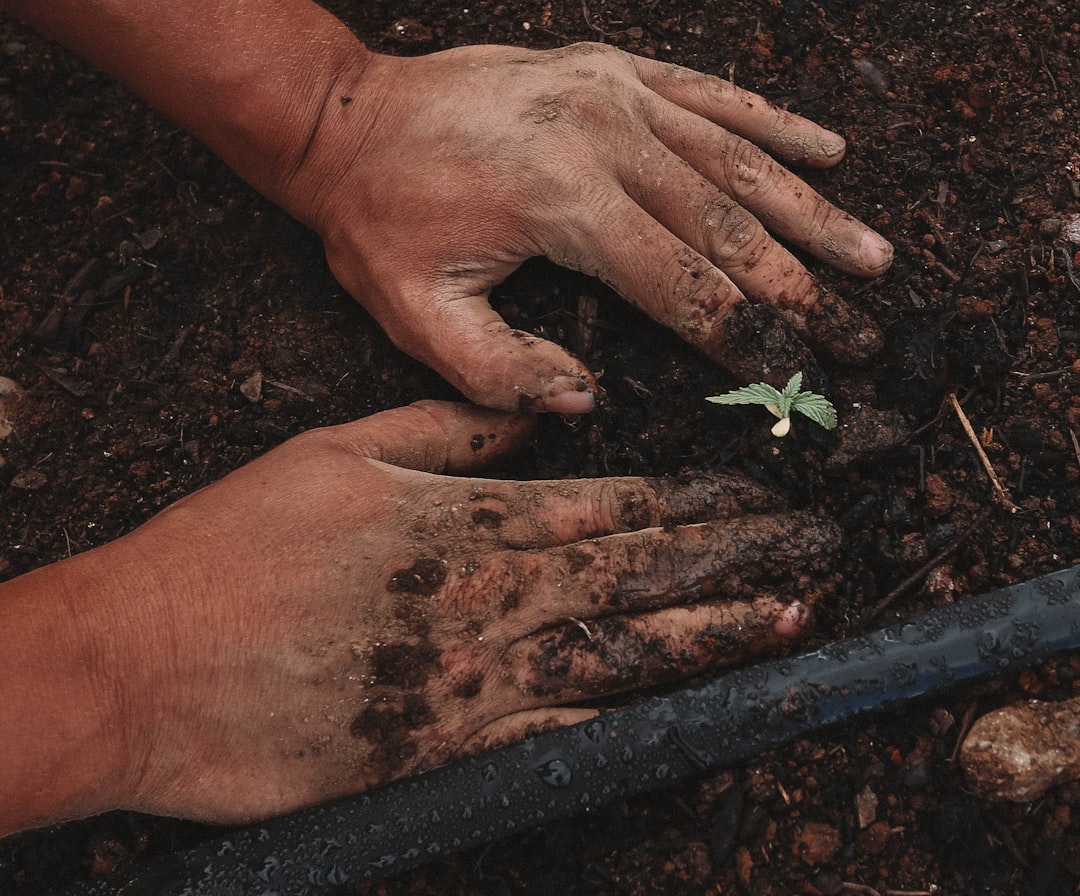
You bought a bag of premium coco coir because the label said “pre-washed.” You mixed it with compost, seeded your microgreens, and watered them exactly as the instructions said. Three days later, the seedlings at the base of the tray turned brown, collapsed, and died. You assumed you overwatered them. You assumed you didn’t give them enough light. You assumed the seeds were bad. But the problem isn’t your watering schedule, your light fixture, or your seed quality. The problem is the invisible salt sitting inside the very fiber you trusted.
Coco coir is the byproduct of coconut husks, and unlike peat moss, it is naturally saturated with sodium, chloride, and potassium. When a manufacturer skips the washing process, or when the washing process is rushed, those salts remain locked inside the fibrous matrix. When you water your microgreens, you aren’t just providing moisture. You are slowly leaching a concentrated saline solution directly into the root zone of seedlings that have zero tolerance for it. This is why your microgreens turn brown at the base: they are suffering from salt toxicity, not a lack of care.
The Chemistry of the Coconut Husk
To understand why this happens, you have to look at what a coconut husk actually is. It is a tropical fruit’s protective armor, evolved to survive in saltwater environments. The plant naturally accumulates sodium and chloride to regulate osmotic pressure and protect against high salinity. When that husk is processed into growing medium, those ions do not magically disappear. They remain in the fiber, bound by cation exchange capacity (CEC), waiting for water to release them.
Peat moss, the traditional alternative, is acidic and naturally low in salts. It is harvested from ancient bogs and contains almost zero sodium. Coco coir, on the other hand, is harvested from living trees in coastal regions. A 2018 one study the University of Florida’s Extension department demonstrated that unwashed coir can contain sodium levels exceeding 1,000 parts per million (ppm) and chloride levels around 400 ppm. For a mature tomato plant, this might be a minor inconvenience. For a microgreen seedling whose root system is barely a millimeter long, it is a lethal dose.
When you place a seed on unwashed or poorly washed coir, the seed absorbs water. But it doesn’t just absorb water. It absorbs the water’s dissolved salts. The seedling’s root cells are delicate. They are designed for fresh, low-salinity environments. When the osmotic gradient flips, the water inside the root cells is pulled out into the surrounding soil to balance the salt concentration. The plant essentially dehydrates from the inside out, even while sitting in wet soil. This is why the base of the stem turns brown and collapses. It is a classic symptom of salt stress, often misdiagnosed as damping-off disease.
Why “Pre-Washed” Is Not a Guarantee
Most commercial bags of coco coir are labeled “pre-washed” or “buffered.” This marketing term is where the confusion begins. It implies the manufacturer has removed the salts. In reality, it often means they ran the fiber through a water cycle, but they did not test the resulting Electrical Conductivity (EC) to ensure the salts are actually gone. Or, they buffered the coir with calcium and magnesium, which is a good thing for mature plants, but a dangerous thing for microgreens if the sodium wasn’t fully flushed first.
Buffering is a chemical process where calcium and magnesium are added to the coir to displace sodium and potassium ions. This is essential for growing peppers or tomatoes, which need those cations. But for microgreens, which are harvested in 7 to 14 days, you do not want calcium or magnesium. You want pure, inert fiber. If the buffering process is aggressive, it can actually leave a residue of calcium carbonate that raises the pH of your growing medium, locking out micronutrients and causing the exact browning you are seeing at the base of the stem.
Furthermore, not all pre-washed coir is created equal. A study in the journal HortScience measured the EC levels of commercially available coir products, even among those labeled “pre-washed.” Some bags tested at acceptable levels for seedlings (below 0.5 dS/m), while others tested dangerously high (above 2.0 dS/m). Without testing your specific bag, you are gambling with every tray you plant.
The Microgreen Sensitivity Threshold
Microgreens are not just small vegetables. They are a different physiological category of plant. They are grown for their cotyledons and first true leaves, harvested before the plant has developed a robust root system or the ability to regulate its own water balance. They have no buffer against environmental stress. When you grow full-sized lettuce, you can water heavily to leach salts from the soil. When you grow microgreens, you water lightly, frequently, and directly onto the seed bed. You are not flushing the salts. You are bathing the roots in them.
This is why you see the browning specifically at the base. The hypocotyl, the stem section between the root and the cotyledons, is the most tender part of the seedling. It is composed of thin-walled cells that are highly susceptible to osmotic shock. When salt concentration in the soil exceeds the plant’s internal concentration, water is drawn out of the hypocotyl cells. The tissue dies, turns brown, and collapses. This is often mistaken for damping-off, a fungal disease caused by Pythium or Rhizoctonia. But damping-off usually presents as a mushy, water-soaked rot. Salt toxicity presents as a dry, papery, brown collapse. The distinction matters, because fungicide will not fix a salt problem, and adding more water will only make it worse.
How to Test Your Coir Before You Plant
You do not need a laboratory to know if your coir is safe for microgreens. You need a simple Electrical Conductivity (EC) meter, which costs less than a bag of coir. EC measures the ability of water to conduct electricity, which is directly proportional to the concentration of dissolved salts. Here is the exact test you should run before every planting:
- Saturate a cup of your dry coir with distilled water. Let it sit for 30 minutes.
- Squeeze the coir into a clean container, extracting the leachate (the water that comes out).
- Place your EC meter into the leachate.
- Read the value.
If your EC reads below 0.5 dS/m (deciSiemens per meter), your coir is safe for microgreens. If it reads between 0.5 and 1.0 dS/m, it is borderline and may cause stress to sensitive varieties like basil or cilantro. If it reads above 1.0 dS/m, do not use it for microgreens. It is fine for mature plants, but it will kill your seedlings.
If you do not have an EC meter, you can perform a simple germination test. Take ten radish seeds and place them on a damp paper towel. Take ten more seeds and place them on a damp, squeezed-out portion of your coir. Keep both in a warm, dark place for 48 hours. If the radish seeds on the paper towel germinate at a higher rate, or if the seedlings on the coir show stunted growth or brown bases, your coir is too salty. Discard it, or use it only for mature plants that can tolerate the stress.
How to Fix It (If You Already Planted)
If you have already planted your microgreens and are seeing browning at the base, you have two options. The first is to discard the tray and start over with a different medium. The second is to attempt a flush, though this is rarely successful for microgreens because you cannot water heavily enough without drowning the seeds.
If you attempt a flush, use distilled water, not tap water. Tap water contains its own salts, which will not help. Water the tray slowly, allowing the water to drain completely out of the bottom. Repeat this process three times. This will leach some of the sodium and chloride from the fiber. However, because microgreens are harvested so quickly, the flush may not remove enough salt in time to save the crop. It is almost always faster and more reliable to switch to a different medium.
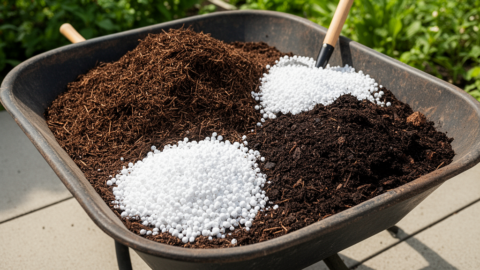
If you want to stick with coir, you must buy a high-quality, lab-tested product. Look for brands that publish their EC levels on their website or packaging. Alternatively, you can mix your own coir with perlite and compost to dilute the salt concentration, but this requires precise measurement and testing to ensure you are not creating a new problem. For microgreens, simplicity is key. A pre-mixed, seed-starting mix that is explicitly labeled “low salt” or “for seedlings” is often a safer bet than trying to engineer your own coir blend.
The Broader Implication for Your Garden
This issue extends far beyond microgreens. Any plant grown in a container with limited soil volume is susceptible to salt buildup from coir. This includes your herbs on the windowsill, your strawberries in the raised bed, and your tomatoes in the grow bag. The difference is that mature plants have larger root systems and deeper soil volumes, which buffer the salt concentration. They can also be flushed more easily.
But the principle remains the same: coir is not inert. It is a living, chemical entity that interacts with your water and your fertilizer. Ignoring its salt content is like ignoring the pH of your soil. It is a fundamental property that dictates whether your plants thrive or collapse. By testing your coir before you plant, you are not being paranoid. You are being a responsible gardener. You are ensuring that your plants get exactly what they need, and nothing they do not.
Next time you buy a bag of coir, look past the marketing. Look at the EC. Test it. If it is too salty, use it for your mature plants, or compost it to improve the structure of your outdoor beds. But do not use it for your microgreens. Your seedlings are counting on you to give them a clean start. Give them one.
Sources & Further Reading
- Coco Coir: A Sustainable Growing Medium — University of Florida Extension
- Electrical Conductivity of Commercial Coco Coir Products — HortScience
Photo by GreenForce Staffing on Unsplash.