In 2014, a graduate student at Michigan State University ran a series of potting mix trials on 300 hanging basket programs to find the perfect balance of water retention and drainage. The standard recipe called for a 3:1:1 ratio of peat, perlite, and compost. The student swapped the perlite for a cheap, fine-grained pumice to save money. Within two weeks, 40% of the baskets showed signs of root suffocation, despite identical watering schedules. The pumice didn’t hold water differently, but its particle size was too small, collapsing the air pockets that the roots needed to breathe. The 3:1:1 ratio isn’t just a suggestion from a bag label. It is a structural blueprint for a living ecosystem in a confined space, and breaking one part of it breaks the whole system.
The 3:1:1 rule for container potting mixes dictates a specific volumetric ratio: three parts peat moss or coco coir, one part perlite, and one part compost. This exact proportioning creates a soil structure that balances water retention, aeration, and nutrient availability. When you deviate from this ratio, you aren’t just tweaking the recipe. You are fundamentally altering the physical architecture of the root zone, leading to either root rot from waterlogging or nutrient lockout from an imbalanced pH. Understanding why these three components must be exact helps you stop guessing and start growing.
Why Peat Must Be Three Parts
Peat moss or high-quality coco coir forms the base of the mix, accounting for 60% of the total volume. This isn’t arbitrary. Peat acts as a sponge, holding water and nutrients while remaining light enough to prevent the pot from becoming structurally unstable. The key here is the volume. If you reduce the peat to two parts, you lose the water-holding capacity required for container plants, which dry out much faster than ground soil. If you increase it to four parts, you create a dense, hydrophobic mass that repels water once it dries out completely.
Peat moss has a naturally low pH, typically between 3.5 and 4.5. This acidity is beneficial for acid-loving plants like blueberries, azaleas, and camellias, but it can be a problem for others. However, the 3:1:1 ratio relies on the peat’s ability to hold moisture without becoming compacted. When you use three parts peat, you ensure that the water stays available to the roots for several days, giving you a realistic window for watering. This is especially critical for larger containers, where the soil mass takes longer to dry out. The volume of peat dictates the baseline hydration of the entire system.
Coco coir is the sustainable alternative to peat, and it behaves similarly in a 3:1:1 mix. It holds water efficiently and resists compaction better than peat over time. However, coco coir often contains higher levels of sodium and salt, which can burn plant roots if not thoroughly leached before use. When you use three parts coco coir, you must ensure it is buffered and washed. The volume remains the same, but the preparation steps differ slightly. The structural role of the base material is identical: provide a stable, moisture-retentive foundation that doesn’t collapse under its own weight.
Why Perlite Must Be One Part
Perlite is the structural reinforcement of the potting mix. It is expanded volcanic glass, creating lightweight, porous particles that do not break down over time. The one-part ratio of perlite is critical for creating air pockets within the peat matrix. Roots need oxygen just as much as they need water. Without perlite, the peat moss compacts, squeezing out air spaces and creating an anaerobic environment where root rot thrives.
The particle size of perlite matters. Standard perlite, with particles ranging from 1 to 3 millimeters, creates the ideal balance of aeration and water retention. If you use coarse perlite, you create large air pockets that dry out too quickly. If you use fine perlite, it fills the spaces between peat particles without creating enough structural support, leading to compaction. The one-part ratio ensures that roughly 20% to 30% of the total volume is dedicated to air space, which is the sweet spot for most container plants.
Some gardeners substitute pumice or coarse sand for perlite. While pumice works in a pinch, it is heavier and can alter the drainage rate. Coarse sand, if used in excess, can create a concrete-like mixture when combined with peat. The 3:1:1 rule specifically calls for perlite because its light, angular particles interlock to create a stable, open structure that resists settling. This structural integrity is what allows the mix to maintain its aeration properties throughout the growing season, preventing the gradual decline in root health that comes from compacted soil.
Why Compost Must Be One Part
Compost provides the biological engine of the potting mix. It introduces beneficial microorganisms, slow-release nutrients, and organic matter that improves soil structure over time. The one-part ratio of compost is crucial because too much compost can lead to nutrient burn, excessive microbial activity that consumes oxygen, and a rapid breakdown of the mix that changes its physical properties within a single season.
High-quality compost is dark, crumbly, and smells like earth. It should be fully matured, meaning it has completed the decomposition process and no longer generates heat. Using one part compost ensures that the nutrient load is balanced. Too little compost leaves the plants underfed, requiring frequent liquid fertilization. Too much compost introduces excess nitrogen and phosphorus, which can lead to excessive foliage growth at the expense of flowers and fruit, and can alter the pH of the mix in unpredictable ways.
The biological activity in compost is also a double-edged sword. Active microorganisms consume oxygen as they break down organic matter. In a container, oxygen is already limited. The one-part ratio of compost, balanced against three parts peat and one part perlite, ensures that the microbial population is robust enough to cycle nutrients but not so large that it depletes the available oxygen in the root zone. This balance is what makes the 3:1:1 mix a living, breathing system rather than just an inert growing medium.
When the 3:1:1 Rule Breaks Down
The 3:1:1 rule is a starting point, not an absolute law. Certain plants have specific needs that require adjustments to this ratio. Succulents and cacti, for example, require significantly more drainage. A 3:1:1 mix will hold too much water for these plants, leading to root rot. For succulents, you might increase the perlite to two parts and reduce the peat to two parts, creating a much faster-draining mix.
Heavy-feeding plants like tomatoes and peppers benefit from a slightly higher compost ratio. Increasing the compost to 1.5 parts can provide the sustained nutrient supply these plants need to produce fruit. However, this adjustment must be balanced with careful watering to avoid nutrient leaching. The 3:1:1 rule provides a baseline, but understanding the specific needs of your plants allows you to tweak the ratio without breaking the fundamental structure of the mix.
Another factor to consider is the type of container. Plastic pots retain more moisture than terracotta or clay pots, which breathe and allow water to evaporate through the walls. If you are growing in terracotta, you might increase the perlite to 1.5 parts to compensate for the faster drying rate. Conversely, if you are using self-watering containers, you might reduce the peat to 2.5 parts to prevent the reservoir from becoming oversaturated. The 3:1:1 rule is a flexible framework that adapts to the container, the plant, and the environment.
How to Mix It Correctly
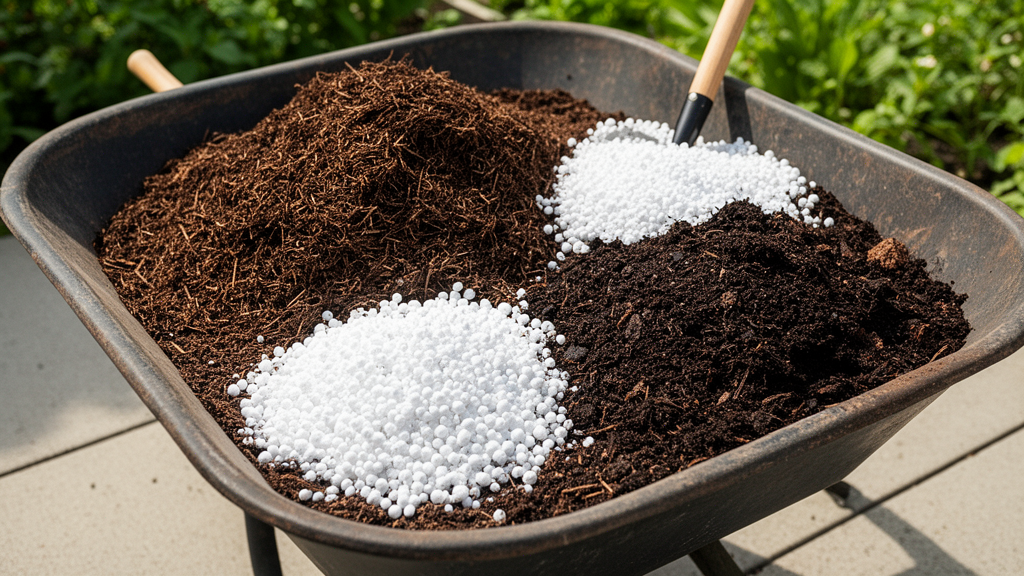
Mixing the 3:1:1 ratio correctly is just as important as the ratio itself. Start by wetting the peat moss or coco coir thoroughly before mixing. Dry peat is hydrophobic and will clump, creating dry pockets that water cannot penetrate. Soak the base material in a large tub or wheelbarrow until it is evenly moist, then squeeze out excess water. The material should feel like a wrung-out sponge, not dripping wet.
Next, add the perlite and compost. Mix them together using a shovel or your hands, ensuring that the perlite is evenly distributed throughout the peat matrix. The goal is to create a uniform mixture where every particle of peat is surrounded by perlite and compost. Avoid over-mixing, which can break down the perlite particles and reduce the aeration properties of the mix. Once mixed, the soil should be light, fluffy, and easy to work with.
Finally, test the mix before planting. Fill a small pot with the mix, water it thoroughly, and let it drain. The water should flow through the pot within 30 seconds to a minute, leaving the soil moist but not soggy. If the water sits on top, add more perlite. If the water drains too quickly, add more peat. This simple test ensures that your mix is balanced and ready to support plant growth. The 3:1:1 rule is a proven formula, but testing it for your specific conditions is the final step to success.
Sources & Further Reading
- Container Mixes for Greenhouse and Nursery Crops — Michigan State University Extension
- Growing Media for Container-Grown Plants — Penn State Extension