
Most gardeners build a compost pile and wait for it to heat up, assuming that if it stays cold, they just need to wait longer. A cold pile is not a slow pile; it is a dead pile. The problem is rarely time. It is the ratio. When you mix standard yard waste with standard kitchen scraps, you almost always create a carbon-to-nitrogen imbalance that starves the thermophilic bacteria responsible for generating heat. The solution is not patience. It is the 4:1:1 ratio.
When you stop adding nitrogen-rich green materials, the pile drops below 100 degrees Fahrenheit. At that temperature, the active bacteria go dormant. The pile stops decomposing. It stops killing weed seeds. It stops breaking down tough materials. It simply sits there, slowly drying out, smelling faintly of earth and decay, and doing absolutely nothing. This is the single most common failure mode in home composting, and it happens because the standard advice of “greens and browns” is too vague to be useful. You need a specific volumetric ratio that guarantees the bacteria have enough fuel to maintain a fire.
That ratio is four parts brown carbon material to one part green nitrogen material, plus one part water by volume. This is not a guess. It is a structural rule derived from the basic chemistry of decomposition. The 4:1:1 ratio forces the pile into a thermophilic state within 48 hours, regardless of the ambient temperature outside. It turns a pile of leaves and coffee grounds into a biological engine that processes organic matter in weeks, not months.
Why Your Pile Stays Cold (It’s Not the Weather)
When a compost pile fails to heat up, the first thing every gardener blames is the weather. They assume it is too cold outside, so the pile cannot get hot. This is a fundamental misunderstanding of how compost works. A properly balanced compost pile generates its own heat through the metabolic activity of billions of bacteria. The pile can reach 160 degrees Fahrenheit even when the air temperature is 30 degrees. The pile is its own climate. If your pile is cold, it is because you have starved the bacteria.
Composting is a chemical reaction between carbon and nitrogen. Carbon provides the energy. Nitrogen provides the protein. When you have too much carbon, the bacteria have plenty of fuel but no way to build the cellular machinery to burn it. They grow slowly, if at all. The pile stays cold. When you have too much nitrogen, the bacteria reproduce so fast that they run out of carbon, and the pile goes anaerobic, turning into a slimy, smelly mess. The 4:1:1 ratio keeps the bacteria in the perfect state to burn carbon rapidly, generating heat as a byproduct.
Think of the carbon as the wood in a fireplace. Think of the nitrogen as the gasoline you pour on it to get it to roar. If you just pile up dry leaves (carbon) and never add anything else, the fire will never catch. If you pile up only grass clippings (nitrogen), the pile will mat together, suffocate, and rot. You need the exact right balance of fuel and accelerator. The 4:1:1 ratio provides that balance in a way that is easy to measure with your hands, your wheelbarrow, or your compost bin.
How to Measure the 4:1:1 Ratio
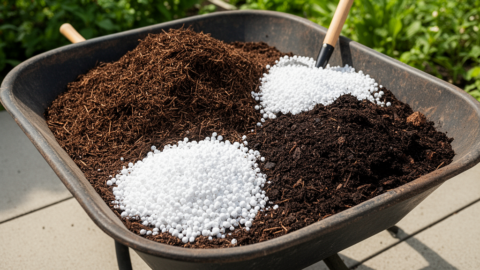
Measuring the 4:1:1 ratio is simple, but it requires you to stop thinking in terms of “greens” and “browns” and start thinking in terms of volume. This means for every four buckets of dry leaves, straw, or shredded cardboard, you add one bucket of grass clippings, vegetable scraps, or manure, and you add enough water to make the whole mixture damp like a wrung-out sponge.
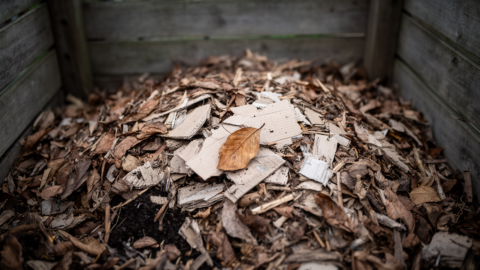
The brown carbon materials are the bulk. They provide the structure and the energy. Straw, dry leaves, shredded cardboard, sawdust, and wood chips are all excellent carbon sources. They should make up the vast majority of your pile. The green nitrogen materials are the fuel. Grass clippings, vegetable scraps, coffee grounds, and manure are all excellent nitrogen sources. They should make up a small fraction of your pile. The water is the medium. It allows the bacteria to move, eat, and reproduce. Without enough water, the bacteria die. With too much water, the bacteria drown and the pile goes anaerobic.
Here is how you build a 4:1:1 pile in practice. Start with a four-foot by four-foot base. Add four buckets of shredded leaves. Add one bucket of grass clippings. Add one bucket of water. Mix it thoroughly. The mixture should feel damp, but not soggy. If you squeeze a handful of the mixture, a few drops of water should seep out. If no water comes out, add more water. If water pours out, add more carbon. This is the 4:1:1 ratio. It is simple. It is repeatable. It works.
Why This Ratio Generates Heat
The heat in a compost pile is a byproduct of bacterial metabolism. When bacteria break down carbon, they release energy. Some of that energy is used to build new cells. The rest is released as heat. The more carbon the bacteria can burn, the more heat they generate. The 4:1:1 ratio provides enough carbon for the bacteria to burn rapidly, while providing enough nitrogen to keep their population growing. This creates a positive feedback loop: the bacteria grow, they burn carbon, they generate heat, the heat speeds up their metabolism, they grow faster, they burn more carbon, they generate more heat.
This is called a thermophilic state. It is the state where composting happens fast. At 130 to 160 degrees Fahrenheit, the bacteria work at maximum speed. They break down tough materials like lignin and cellulose. They kill weed seeds. They kill pathogens. They turn your scraps into black gold in weeks, not months. If your pile stays below 100 degrees, the bacteria are working slowly, if at all. The pile will take a year or more to decompose. The 4:1:1 ratio guarantees you reach that thermophilic state every time.
When the 4:1:1 Ratio Fails (And What to Do)
Even with the perfect ratio, a compost pile can fail. The most common reason is a lack of oxygen. Bacteria need oxygen to burn carbon. If you pack the pile too tightly, the oxygen gets used up, and the bacteria switch to anaerobic metabolism. Anaerobic bacteria produce methane and hydrogen sulfide. The pile smells like rotten eggs. It stays cold. It stops working. The fix is simple: turn the pile. Add more air. Break up the clumps. The bacteria will wake up, the heat will return, and the smell will stop.
Another common reason for failure is too much water. If you add too much water, the bacteria drown. The pile goes anaerobic. It smells. It stays cold. The fix is simple: add more carbon. Mix in dry leaves or straw. The carbon will absorb the excess water, and the bacteria will breathe again. A third reason for failure is too much nitrogen. If you add too much grass clippings or manure, the pile will mat together. It will suffocate. It will rot. The carbon will provide structure, and the bacteria will burn again.
If you follow the 4:1:1 ratio, you will rarely encounter these problems. The ratio is designed to prevent them. It provides enough carbon to keep the pile loose and aerated. It provides enough nitrogen to keep the bacteria fed. It provides enough water to keep the bacteria happy. It is the simplest, most reliable way to compost. It is the only way to compost that guarantees heat. It is the only way to compost that works.
How to Know Your Pile Is Working
The best way to know your compost pile is working is to stick a thermometer into the center. If the temperature is between 130 and 160 degrees Fahrenheit, the pile is working. If the temperature is below 100 degrees, the pile is not working. If the temperature is above 160 degrees, the pile is working too hard, and you are killing the beneficial bacteria. The 4:1:1 ratio keeps the temperature in the perfect range. It is the sweet spot for fast, efficient composting.
If you do not have a thermometer, use your nose. A working compost pile smells like earth. It smells like a forest floor. It smells like nothing. A failing compost pile smells like rotten eggs, or like ammonia, or like garbage. A failing pile is anaerobic. It is rotting. It is not composting. The fix is to turn the pile, add more carbon, and add more air. The 4:1:1 ratio prevents these smells. It keeps the pile aerobic. It keeps the pile healthy. It keeps the pile working.
If you use the 4:1:1 ratio, you will have compost in weeks, not months. You will have hot compost that kills weed seeds and pathogens. You will have black gold that feeds your garden. You will have a system that works, every time, regardless of the weather. You will have a garden that thrives. This is the power of the 4:1:1 ratio. It is the key to fast, efficient, reliable composting. Use it. Your garden will thank you.
Sources & Further Reading
- Composting at Home — U.S. Environmental Protection Agency
- Composting: A Guide to Managing Yard and Kitchen Waste — University of Illinois Extension
- Backyard Composting — U.S. Forest Service
Photo by Immo Wegmann on Unsplash.