Ice expands by approximately nine percent when it freezes. In a rigid system with zero tolerance for movement, that nine percent translates directly into upward force strong enough to crack concrete, heave pavers, and turn a garden path into a jagged mess within a single winter. Most garden paths fail because they are trying to be walls. They are built to hold back earth, to resist lateral pressure, and to stand rigid against the ground. A garden path is not a wall. It is a bridge. When you build a path to act like a retaining wall, you are fighting a losing battle against gravity and water, and the result is a cracked, heaved, uneven surface that looks terrible after the first freeze-thaw cycle.
The 3:2:1 hardscape ratio solves this by accepting the ground’s natural behavior instead of fighting it. It dictates that for every three inches of compacted base, you lay two inches of structural bedding, and leave one inch of vertical clearance for the surface material to move. This ratio does not prevent movement. It manages it. It gives the path exactly enough room to shift, settle, and breathe without breaking apart, turning a rigid structure into a flexible system that survives winter by yielding rather than resisting.
Why Rigid Paths Break
When a path is built with zero tolerance for movement, water becomes the enemy. Rainwater seeps into the microscopic gaps between pavers, and when the temperature drops below freezing, that water turns to ice. In a rigid system with no room to expand, that nine percent of growth translates directly into upward force. The pavers push against each other, the edges push against the border, and the path pushes against the subgrade. Since the subgrade is usually softer than the pavers, the path buckles. This is called heaving, and it is the single most common failure mode in garden hardscaping.
Homeowners often try to fix heaving by adding more concrete, more rebar, or more rigid mortar. This is a mistake. Adding rigidity to a system that is failing due to a lack of flexibility only stores more potential energy, which eventually releases in a more violent, catastrophic failure. The solution is not to make the path stronger. The solution is to give it room to breathe.
The 3:2:1 Ratio Explained
The 3:2:1 ratio is a simple volumetric rule for building a flexible paver path. It breaks down into three distinct layers, each with a specific function and thickness. It is a practical application of the principle that a path should behave like a bridge, not a wall.
The 3: Compacted Base. This is the foundation. It is typically a three-inch layer of crushed stone, often called road base or Class V aggregate. This material is a mix of angular stones and fine dust. The angular stones lock together when compacted, creating a rigid platform. The fine dust fills the gaps, preventing water from washing through. This layer must be compacted in two-inch lifts with a mechanical plate compactor. If you skip the compactor, the base will never reach its full density, and the path will sink. The goal of the three-inch base is to distribute the load of foot traffic and the weight of the pavers across a wider area of the subgrade soil.
The 2: Structural Bedding. This is the middle layer. It is a two-inch layer of coarse sand or stone dust. This layer is not for strength. It is for leveling. It allows you to tap the pavers into a perfectly flat plane. It also provides a cushion that absorbs minor impacts. Unlike the base, this layer is not compacted with heavy machinery. It is raked smooth and lightly tamped. The two-inch thickness is critical. If it is too thin, the pavers will dig into the base and crack. If it is too thick, the pavers will sink and wobble. Two inches is the sweet spot for standard 2-inch pavers.
The 1: Vertical Clearance. This is the most important part of the ratio, and the part most builders ignore. It is one inch of vertical space between the top of the paver and the top of the border edging. This space is not empty. It is filled with jointing sand. This sand locks the pavers together laterally, preventing them from spreading apart. But more importantly, it provides the one inch of vertical clearance that allows the pavers to lift slightly during freeze-thaw cycles without breaking. The pavers can move up and down, as long as they do not push against each other horizontally. The one-inch clearance ensures that horizontal pressure never builds up to dangerous levels.
Why This Ratio Works in All Climates
The 3:2:1 hardscape ratio works in cold climates because it accommodates freeze-thaw cycles. It works in hot climates because it accommodates thermal expansion. It works in wet climates because it accommodates drainage. The ratio is not climate-specific. It is physics-specific.
In cold climates, the one-inch clearance allows the path to heave without breaking. When the ice melts, the pavers settle back down. They do not stay heaved. They do not stay cracked. They return to their original position, ready for the next freeze. In hot climates, the one-inch clearance allows the pavers to expand laterally during the heat of the day. They do not buckle. They do not push against the border. They expand into the jointing sand, which absorbs the movement. In wet climates, the three-inch base allows water to drain away from the surface. The path does not pool. It does not erode. It drains. In dry climates, the three-inch base prevents the path from sinking into the shrinking soil. The path does not crack. It stays level. It drains.
How to Build a 3:2:1 Path
Building a 3:2:1 path is straightforward. It requires three materials: crushed stone, coarse sand, and pavers. It requires three tools: a plate compactor, a landscape rake, and a rubber mallet. It requires three steps: excavate, compact, and lay.
Step 1: Excavate. Dig out the path to a depth of six inches. This depth accounts for the three-inch base, the two-inch bedding, and the one-inch paver. The width of the excavation should be the width of the path plus six inches for the border edging. The edges of the excavation should be straight and vertical. If the edges are sloped, the border edging will not sit flush, and water will pool against the path.
Step 2: Compact. Lay the three-inch layer of crushed stone. Compact it in two-inch lifts. Do not skip the compactor. The goal is a surface that does not move when you walk on it. If the surface moves, compact it again.
Step 3: Lay. Rake the two-inch layer of coarse sand. Level it with a straight board. Lay the pavers, tapping them into place with a rubber mallet. Leave a quarter-inch gap between the pavers and the border edging. This gap is the one-inch vertical clearance. Fill the gaps with jointing sand. Sweep the sand into the gaps. Repeat until the gaps are full. The path is now complete.
When the 3:2:1 Ratio Fails
The 3:2:1 ratio is not a magic bullet. It fails when the subgrade soil is too soft to support the load. If you are building a path over peat, clay, or organic matter, the three-inch base will sink, regardless of how well it is compacted. In these cases, you must excavate deeper, replace the soft soil with stable fill, and then build the 3:2:1 path. The ratio assumes a stable subgrade. If the subgrade is not stable, the ratio will not work.
The ratio also fails when the pavers are too heavy for the base. If you are building a path for vehicles, the three-inch base is not enough. You need a five-inch base, a three-inch bedding, and a two-inch paver. The 3:2:1 ratio is for foot traffic only. Do not use it for driveways. Do not use it for patios with hot tubs. Do not use it for anything that weighs more than a person.
Finally, the ratio fails when the jointing sand is not swept into the gaps. If the gaps are empty, the pavers will spread apart, and the path will fail. The jointing sand is not optional. It is the glue that holds the path together. Sweep it in. Tamp it down. The path is only as strong as its weakest joint.
Why This Matters
The 3:2:1 ratio matters because it changes how you think about garden paths. It changes the conversation from “how do I make this path strong?” to “how do I make this path flexible?” Strength is not the goal. Flexibility is the goal. A flexible path survives. A rigid path breaks. The 3:2:1 ratio gives you a simple, reliable way to build a flexible path that will last for decades. It is a simple volumetric rule. Three inches of base. Two inches of bedding. One inch of clearance. That is all you need to build a path that works.
The 3:2:1 ratio works because it accepts that a path is a bridge. It gives the path room to move. It gives the path room to breathe. It gives the path room to survive. Build your path with the 3:2:1 ratio, and it will last. Build your path any other way, and it will fail.
Sources & Further Reading
- Interlocking Concrete Pavement Institute (ICPI) Technical Manual for Residential and Commercial Pavement Installation — Interlocking Concrete Pavement Institute
- Pavement Design and Construction: A Guide to Flexible and Rigid Pavements — Federal Highway Administration
- Residential Concrete Pavement: Design and Construction — Precast/Prestressed Concrete Institute
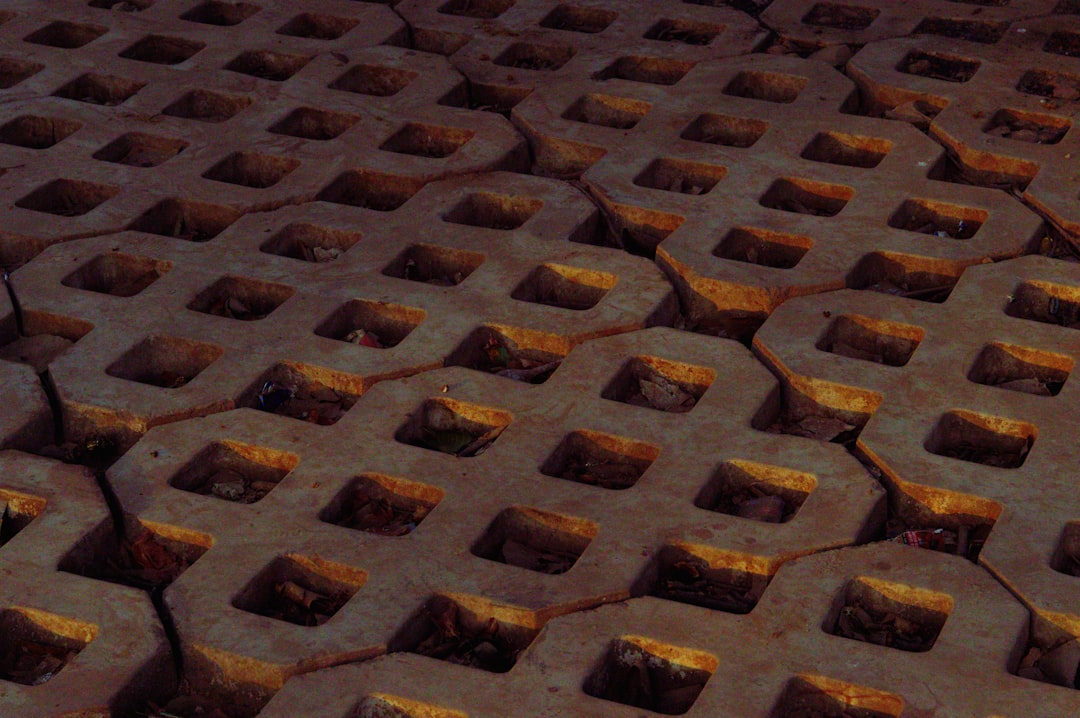
Photo by Harshit Katiyar on Unsplash.