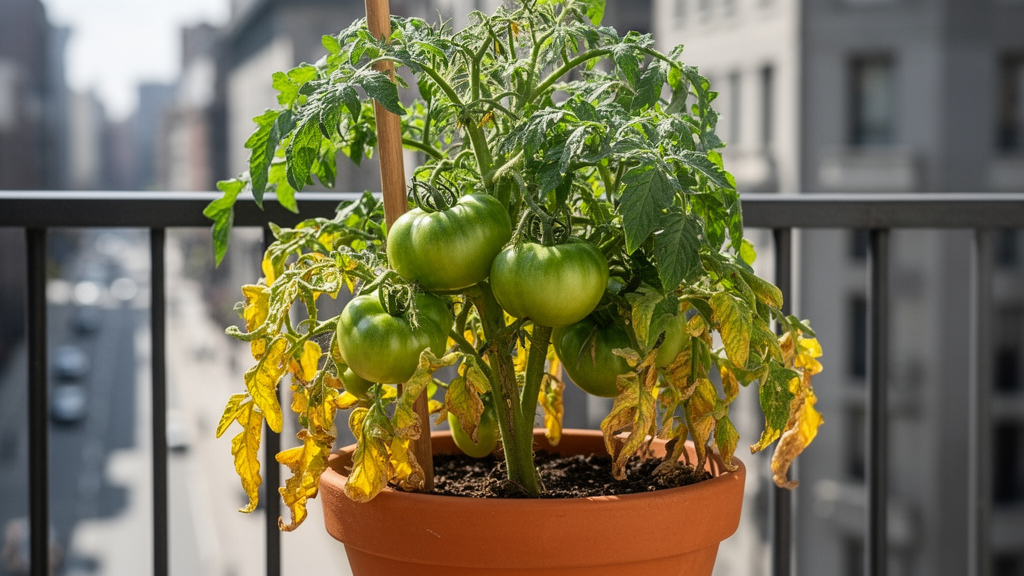
Your tomato plants are not dying. They are fruiting too hard and burning out their own root system. You are watching the leaves yellow and the stems crack, assuming the plant is sick, when the truth is much simpler: you have given your plant exactly what it wants, and it is working itself to death.
Here is the exact mechanism behind this self-destruction, the visual signs that tell you the plant is still alive, and the single pruning move that stops the burnout before the harvest is ruined.
What Fruiting Overload Actually Does to a Plant
Tomato plants (Solanum lycopersicum) are biologically designed to propagate at the first sign of stress. When a plant senses heat, drought, or root restriction, it shifts energy from leaf production to seed production. It is a survival reflex. Under normal conditions, a healthy plant will keep pushing new leaves and branches all season. Under stress, it locks its energy into the fruit it is already growing, and it stops making new foliage to protect what it has already invested.
When you have a plant that is fruiting heavily, that reflex fires constantly. The plant is not dying. It is diverting every available carbohydrate into the tomatoes it is growing, and the leaves that remain are being asked to do the work of an entire canopy for a plant that has grown three times its normal size. The leaves yellow, not because of a nutrient deficiency, but because the plant is cannibalizing its own foliage to feed the fruit. The stems crack, not because of a disease, but because the plant is growing fruit faster than its vascular system can support. The plant is still alive. It is just working itself to death.
How to Tell If Your Plant Is Fruiting Overload or Actually Dying
The difference between a plant that is fruiting too hard and a plant that is dead is the stem. A dead tomato plant will have brittle, brown stems that snap cleanly. A plant that is fruiting overload will have green, flexible stems that are simply exhausted. If you bend a stem and it does not snap, the plant is still alive. It is just fruiting too hard.
Another tell is the fruit itself. A plant that is dying will drop its fruit or produce small, misshapen tomatoes. A plant that is fruiting overload will produce large, perfectly formed fruit, but the plant will not be replacing the leaves that fall off. The plant is not dying. It is just prioritizing the fruit over its own structure.
The Single Pruning Move That Stops the Burnout
The fix is not to give the plant more water or more fertilizer. The fix is to reduce the fruit load so the plant can recover its leaf canopy. You do this by removing the oldest, lowest fruit clusters. These are the clusters that have been growing the longest and are demanding the most energy. By removing them, you force the plant to redirect its energy into growing new leaves and strengthening its existing structure.
Remove the lowest two to three fruit clusters. Do not remove more than that. The plant needs some fruit to keep the survival reflex from firing again. But by removing the oldest clusters, you give the plant a chance to catch up on leaf production. Within two weeks, you will see new leaves unfurling, and the plant will stop yellowing. The plant is not dying. It is just fruiting too hard, and you have given it a chance to rest.
Why This Happens in Container Gardens
This problem is most common in container gardens, where the root system is restricted and the plant cannot access the deep soil moisture it would normally use to support heavy fruiting. In a ground bed, a plant might grow six feet tall and produce fifty tomatoes without burning out. In a five-gallon bucket, that same plant will burn out after producing fifteen tomatoes, because it has no deep roots to fall back on.
If you are growing tomatoes in containers, you must manage the fruit load from the start. Pinch off the first two fruit clusters as soon as they form. This forces the plant to grow more leaves and stronger stems before it starts investing in fruit. A plant with a strong canopy will produce more fruit later in the season than a plant that burns out early trying to produce everything at once.
The Real Reason You Should Not Panic When Leaves Yellow
Most gardeners see yellow leaves and immediately assume nitrogen deficiency. They add more fertilizer, which only makes the problem worse by forcing the plant to produce even more fruit. The plant is not dying. It is just fruiting too hard, and the yellow leaves are a symptom of that overload, not a nutrient deficiency. The fix is not more fertilizer. The fix is less fruit, and the patience to let the plant recover.
Tomato plants are resilient. They will bounce back from fruiting overload if you give them the chance. But you have to stop treating the symptom (yellow leaves) and treat the cause (too much fruit). The plant is not dying. It is just fruiting too hard, and you have the power to stop it. If you notice your other nightshades, like potatoes, turning green or sprouting, check our guide on What Are Green Potatoes: The Solanine Warning Your Tuber Sends to understand how stress triggers similar defense mechanisms in tubers.