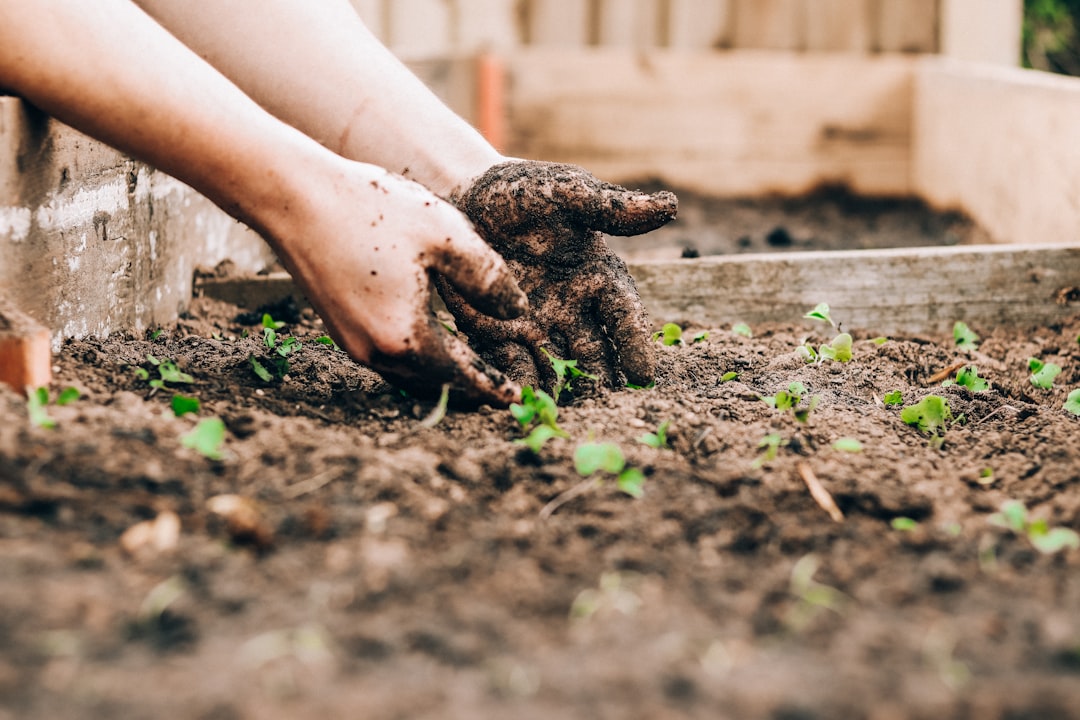
You are standing in the garden holding a packet of tomato seeds, staring at the calendar, and your stomach drops. You remember your neighbor’s bumper crop from last year, but you also remember your own plants stalling out in the cold soil three weeks ago. The question is screaming in your head: is it too late to plant tomatoes, or have you already missed the window for a harvest?
It is almost never too late, provided you stop guessing and start calculating. The answer to whether you have enough time before your first autumn frost is not a date on a calendar, but a simple math problem. By subtracting your crop’s specific days-to-maturity and your seed-starting lead time from your local first frost date, you get an exact planting deadline. If you are past that number, you do not plant the seeds you have; you plant a different crop, or you buy a mature transplant and skip the seed stage entirely.
How to Calculate Your Exact Last-Planting Date
Every cool-season crop has a built-in countdown clock. This is called the days-to-maturity rating, and it is printed on every seed packet you buy. It tells you exactly how many days the plant needs to go from a germinated seed to a harvest-ready fruit or vegetable, assuming ideal growing conditions. This number is your anchor. Without it, you are just hoping.
To find your hard deadline, you need two numbers. The first is your local first frost date. You can find this by looking up your USDA hardiness zone or your specific county’s historical frost data online. The second number is the days-to-maturity for the specific variety you want to grow. A ‘Cherokee Purple’ tomato takes 85 days. A ‘Roma’ takes 75 days. A ‘Early Girl’ takes 55 days. The variety dictates the pace.
Here is the calculation: take your first frost date, and count backward. Subtract the days-to-maturity rating of your chosen crop. Then, subtract the number of weeks it takes you to grow that seed into a transplant. If you start seeds indoors, that is usually 4 to 6 weeks. If you buy a 6-inch transplant from a nursery, you subtract zero weeks. The result is your last possible planting date. If today is past that date, the math says ‘no.’ Stop planting that seed. You will waste money, space, and your own time.
For example, if your first frost is September 15, and you want to grow an 85-day heirloom tomato, you must count back 85 days to June 22. That is your absolute last day to get a seed into the ground. If you are starting seeds indoors, you must start those seeds indoors by mid-May to have a sturdy plant ready for June 22. If you are past May 15, you cannot grow an 85-day tomato from seed. You must buy a transplant, or you must grow a 55-day early variety instead.
Why This Math Saves You From Cold Shock
Most gardeners fail because they plant too early, not too late. They see the sun and rush seeds into cold soil, only to watch them rot or stall out. But when you are standing in July wondering about late planting, your problem is the opposite: you are trying to force a long-season crop into a short window. The days-to-maturity calculation stops you from making that mistake.
Tomatoes are not cold-hardy. They stop growing entirely when soil temperatures drop below 60 degrees Fahrenheit. This is a hard biological limit. If you plant a seed that needs 85 days, and your frost is 80 days away, the plant will hit that 60-degree soil wall before it has a chance to fruit. The plant will not magically speed up because you want tomatoes. It will simply stop. The calculation accounts for this by forcing you to look at the total time required, not just the time left until autumn.
When you apply this same math to other crops, the picture becomes incredibly clear. Peas take 60 to 75 days. Cucumbers take 50 to 60 days. Pumpkins take 90 to 110 days. If you are asking ‘is it too late to plant pumpkin seeds’ in mid-July, the math will tell you immediately that you do not have enough days left, regardless of how warm the weather is. Pumpkins need 100 days. If your frost is 90 days away, you cannot grow a pumpkin from seed. You can only grow a fast-maturing winter squash, or you can buy a small, already-established vine from a nursery and give it a head start with a row cover.
What to Plant When the Window Closes
Once the calculation tells you ‘no’ for your first choice, you do not sit idle. You immediately run the math for a faster crop. This is the secret to a late-season harvest. If your 85-day tomato window has closed, look for a 50-day crop. Bush beans take 50 days. Radishes take 30 days. Arugula takes 40 days. Spinach takes 45 days. These crops do not care about the same long-season constraints. You can plant them directly into the ground, and they will mature before the first frost hits.
For tomatoes specifically, when the seed-starting window is gone, your only option is a transplant. You must find a plant that is already 6 to 8 inches tall, with a thick stem and healthy leaves. This plant has already used up its 4-to-6-week indoor time. You are only buying the 55-to-85 days of outdoor growth. By skipping the seed stage, you buy yourself the exact time the math says you need. You plant the transplant, you water it, and you wait for the fruit. You do not waste a single day.
For peas, the late-season strategy is different. Peas hate heat. If you are planting late, you are planting into warming soil, which peas despise. The solution is to plant them in the shade of taller crops, or to use a shade cloth to keep the soil cool. Peas will still mature in 60 days, but only if their roots stay cool. This is why the calculation is vital: it tells you exactly how much heat you have to endure before the plant finishes.
How to Extend the Window Once You Plant
Even when the math says you have enough time, the weather does not always cooperate. A cold snap can steal 10 days from your harvest. A heatwave can stall fruit set. To protect your late planting, you must use physical barriers. A floating row cover traps heat and protects young transplants from cold nights. It can add 10 to 14 days to your effective growing season. This is not a guarantee, but it is a buffer that turns a ‘no’ into a ‘maybe,’ and a ‘maybe’ into a harvest.
For tomatoes, the row cover is essential in the early fall. As temperatures drop, the cover keeps the air around the plant 10 degrees warmer. This keeps the plant actively growing and fruiting long after bare plants have stopped. For cucumbers and pumpkins, the cover is less useful once the vines are established, but it is critical for the first few weeks of growth. You are buying time, and time is the only currency that matters at the end of the season.
When to Stop Planting Entirely
There is a hard limit to how late you can plant. If your first frost is 60 days away, and your fastest crop takes 60 days, you are planting on the edge. One cold night, one pest outbreak, one fungal issue, and you get nothing. At this point, the calculation tells you to stop planting for harvest entirely. Instead, you plant for cover. You plant winter rye, or you plant compost. You let the soil rest. You prepare for next year. This is not failure. This is strategy.
The next time you stand in the garden holding a seed packet, do not guess. Do not hope. Do not ask a neighbor if they think it is too late. Take out your calendar. Find your frost date. Subtract the days-to-maturity. Subtract your seed-starting time. If the number is positive, you have time. If it is negative, you do not. The math does not lie. It only tells you what is possible, so you can stop wasting your energy on crops that will never fruit, and start planting the ones that will.
Sources & Further Reading
- Tomato Growing in Home Gardens — University of California Agriculture and Natural Resources
- Cool-Season Crop Planting Windows — USDA Agricultural Research Service
Photo by Sandie Clarke on Unsplash.