You are killing your roses with fresh wood chips. Not slowly, not accidentally, but actively, aggressively, and with the full force of a gardening convention that has been repeated so often it has become gospel. The problem is not the mulch itself. The problem is the word “fresh”.
Mulch is one of the most effective things you can do for a garden bed. It moderates soil temperature, retains moisture, suppresses weeds, and slowly feeds the soil as it breaks down. But when you spread fresh wood chips directly around the base of a rose bush, you are not feeding the plant. You are starving it. The process is called nitrogen tie-up, and it is the single most common mistake made by gardeners who want to do the right thing.
This article will explain exactly why fresh wood chips tie up nitrogen, how to tell if your mulch is ready to use, and what you should put around your roses instead. By the end, you will know how to mulch without killing the very plants you are trying to protect.
Why Fresh Wood Chips Tie Up Nitrogen
When you spread fresh wood chips, sawdust, or bark mulch directly onto a garden bed, you are introducing a massive amount of carbon to the soil surface. Wood is roughly 50% carbon by dry weight. That carbon feeds soil microbes, and those microbes need nitrogen to survive and reproduce. They pull nitrogen from the surrounding soil to build their own cells. The nitrogen your rose bush needs to grow leaves, produce flowers, and develop strong canes goes into the soil, and the microbes take it before the plant can use it.
This is not a theory. It is basic soil biology. The carbon-to-nitrogen ratio of fresh wood chips is roughly 300:1. A rose bush needs a C:N ratio closer to 24:1. When you introduce material with a 300:1 ratio into the top few inches of soil, the microbial population explodes, and they consume every available molecule of nitrogen in the process. The result is a temporary but severe nitrogen deficiency in the plants growing in that bed. Leaves yellow. Growth stalls. Flower production drops. The plant looks stressed, and the gardener responds by adding more fertilizer, which only accelerates the cycle.
The fix is simple: compost the wood chips first. When wood chips break down in a compost pile, the microbes have access to nitrogen from the other materials you add (grass clippings, kitchen scraps, manure, blood meal). The composting process balances the C:N ratio down to roughly 25:1, which is safe to apply directly to garden beds. The result is a mulch that feeds the soil instead of stealing from it.
How to Tell If Your Mulch Is Ready
Not all mulch needs to be composted. Some materials break down quickly enough to be safe within a single season. Others require two to three years of aging. The difference comes down to the source material and how it was processed.
Fresh hardwood chips are the most carbon-dense. They can tie up nitrogen for 18 to 24 months. Fresh softwood chips (pine, spruce, fir) break down faster but still require at least 12 months of aging. Bark mulch, especially shredded bark, is safer within six to eight months because the outer bark has already begun to decompose on the tree. Sawdust is the worst offender. It compacts, holds water, and ties up nitrogen aggressively. If you use sawdust, compost it for at least a full year before applying it to any bed.
You can test whether your mulch is ready by performing the bag test. Fill a clear plastic bag halfway with your mulch, add a handful of garden soil, add enough water to make it damp (not soaking), seal the bag, and leave it in a warm place for 48 hours. Open the bag and smell it. If it smells earthy, like forest floor, it is ready. If it smells sour, ammonia-like, or like a compost pile that is still actively breaking down, it is not ready. The sour smell indicates active microbial decomposition, which means the mulch is still pulling nitrogen from the soil.
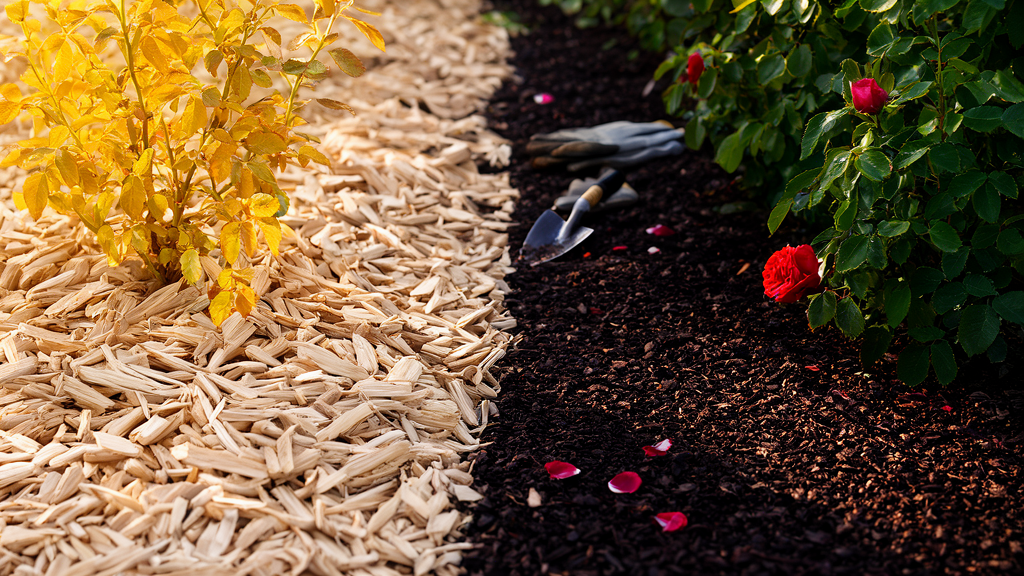
Another reliable indicator is color. Fresh wood chips are pale, almost yellow. Aged, composted mulch is dark brown to black. The color change comes from the oxidation of lignin and the accumulation of humus. If your mulch is still light-colored, it is not ready to use around nitrogen-sensitive plants like roses, tomatoes, or peppers.
What to Use Around Roses Instead
Not all mulches tie up nitrogen. Some are safe to apply fresh. Others require no preparation at all. The best mulches for roses are those that break down quickly and add organic matter without depleting soil nutrients.
Leaf mold is the single best mulch for roses. It is shredded leaves that have decomposed for one to two years. It is dark, crumbly, and contains a C:N ratio close to 30:1, which is safe to apply directly. It also improves soil structure, increases water retention, and provides a habitat for beneficial fungi. You can make leaf mold yourself by shredding autumn leaves, bagging them, and leaving them in a corner of the yard for 12 months. The result is black gold for your rose bed.
Composted manure is another excellent option. Cow, horse, and chicken manure that has been composted for at least six months will add nitrogen, phosphorus, and potassium to the soil without tying up nutrients. Apply a one-inch layer around the base of your roses, keeping it two inches away from the canes to prevent rot.
Grass clippings are safe to use fresh, provided they come from a lawn that has not been treated with herbicides. They are high in nitrogen and break down quickly. Apply them in thin layers (one inch maximum) and water them in immediately. Thick layers of fresh grass clippings will mat down, smother the soil, and create anaerobic conditions that promote root rot.
Straw is a classic rose mulch. It is light, allows water to penetrate, and breaks down at a moderate rate. It does not tie up nitrogen aggressively, and it keeps the soil cool during summer. Avoid hay, which contains seeds that will sprout weeds. Straw is the dried stalks of grain crops, harvested after the grain has been removed. It is seed-free by definition.
If you must use wood chips, apply them to paths between rose beds, not directly around the plants. This is a common mistake: gardeners spread wood chips everywhere because they are cheap and abundant. The solution is simple: use wood chips on walkways, composted mulch under plants. This keeps the nitrogen tie-up out of the root zone while still giving you the weed-suppression and moisture-retention benefits of wood chips.
When Fresh Mulch Is Actually the Right Choice
Fresh wood chips are not universally bad. They are the right choice in specific situations. Pathways are the most obvious. When you spread fresh wood chips on a garden path, they compact into a stable, weed-suppressing surface that improves with each rain. The nitrogen tie-up happens in the path, not in a plant root zone, so it does not matter.
Tree rings are another acceptable use. When you apply fresh wood chips around the base of a mature tree, you are not harming the tree. Mature trees have deep root systems that extend far beyond the drip line. The nitrogen tie-up happens in the top few inches of soil under the mulch, and the tree’s roots are deep enough to access nitrogen from lower layers. The mulch protects the root flare from lawnmower damage, retains moisture, and moderates soil temperature. This is called a mulch volcano when done incorrectly (piled high against the trunk), which promotes rot and rodent damage. A proper tree ring spreads the chips three to four feet wide and keeps them two inches away from the trunk.
Compost tea is a liquid fertilizer made by steeping compost in water for 24 to 48 hours. It contains beneficial microbes and soluble nutrients. Apply it to the soil around your roses once a month during the growing season. It does not replace mulch, but it supplements it by adding nitrogen in a form the plant can use immediately.
How to Mulch Roses Correctly
Here is the exact mulching schedule for roses:
- Early spring (before new growth emerges): Apply a two-inch layer of composted mulch (leaf mold, composted manure, or aged wood chips) around the base of each rose bush. Keep the mulch two inches away from the canes to prevent rot.
- Mid-summer (after the first flush of blooms): Add another one-inch layer of composted mulch. This replenishes organic matter and keeps the soil cool during heat stress.
- Late fall (after the last frost date in your area): Apply a three-inch layer of straw or composted mulch. This protects the graft union from freezing. Remove the fall mulch in early spring to prevent rot and pest habitation.
Do not apply fresh wood chips directly under rose canes at any time of year. If you have already done so, remove the chips, amend the soil with blood meal or feather meal to restore nitrogen, and replace with composted mulch. The plant will recover within one growing season.
Common Mistakes That Keep Fresh Mulch in Rotation
Many gardeners continue to use fresh wood chips around roses because they do not see immediate damage. The plant does not die in the first season. It slowly declines over two to three years. By the time the plant shows severe stress, the gardener assumes the plant is old, diseased, or poorly positioned. The real cause is chronic nitrogen deficiency caused by years of fresh mulch application.
Another common mistake is applying mulch too thickly. A three-inch layer of fresh wood chips is worse than a one-inch layer of composted mulch. Thickness matters. The deeper the mulch, the deeper the nitrogen tie-up zone. If you must use fresh chips, keep them to one inch maximum and mix them into the top two inches of soil before applying them to the bed.
The third mistake is assuming all “organic” mulches are equal. Pine needles, cedar chips, and cypress mulch contain natural oils and compounds that can inhibit plant growth. They are not as nitrogen-depleting as hardwood chips, but they are not as safe as composted leaf mold. Use them sparingly, and only around plants that tolerate acidic soil (azaleas, rhododendrons, blueberries).
What This Means for Your Garden
Mulch is not inherently good or bad. It is a tool. Like any tool, it can help or harm depending on how you use it. Fresh wood chips are a tool for pathways and tree rings. Composted mulch is a tool for garden beds. Knowing the difference is the difference between a thriving rose garden and one that slowly starves.
The next time you buy a bag of mulch, read the label. If it says “fresh,” “natural,” or “bark chips,” do not put it under your roses. Put it on the path. Under your roses, put composted mulch, leaf mold, or straw. Your plants will thank you with stronger canes, more blooms, and healthier soil.
Mulching is not about covering the soil. It is about feeding it. The right mulch feeds the soil. The wrong mulch starves the plant. Choose wisely.
Frequently Asked Questions
Q: Can I use fresh wood chips around my vegetable garden?
A: No. Fresh wood chips tie up nitrogen in the top six inches of soil. Vegetables have shallow root systems and need immediate access to nitrogen. Use composted mulch, straw, or grass clippings instead. If you must use fresh chips, compost them for at least 12 months first.
Q: How long does it take for wood chips to compost?
A: Hardwood chips take 18 to 24 months. Softwood chips take 12 to 18 months. Bark mulsh takes 6 to 8 months. Sawdust takes 12 to 18 months. The timeline depends on moisture, temperature, and whether you turn the pile.
Q: Will composted mulch attract rodents?
A: Composted mulch is less attractive to rodents than fresh mulch because it lacks the loose, airy structure that mice and voles use for nesting. Keep composted mulch two inches away from plant canes and tree trunks to prevent burrowing.
Q: Can I mix fresh and composted mulch?
A: Yes, but only if the fresh portion is no more than 25% of the total volume. A quarter fresh chips mixed with three-quarters composted mulch will not tie up enough nitrogen to cause visible damage. This is a practical compromise for gardeners who have a large supply of free wood chips.
Q: How do I fix a rose bed that has been mulched with fresh chips for years?
A: Remove all fresh chips. Amend the top six inches of soil with blood meal (one pound per 100 square feet) or feather meal (two pounds per 100 square feet). Water thoroughly. Replace with composted mulch. The plant will recover within one growing season.