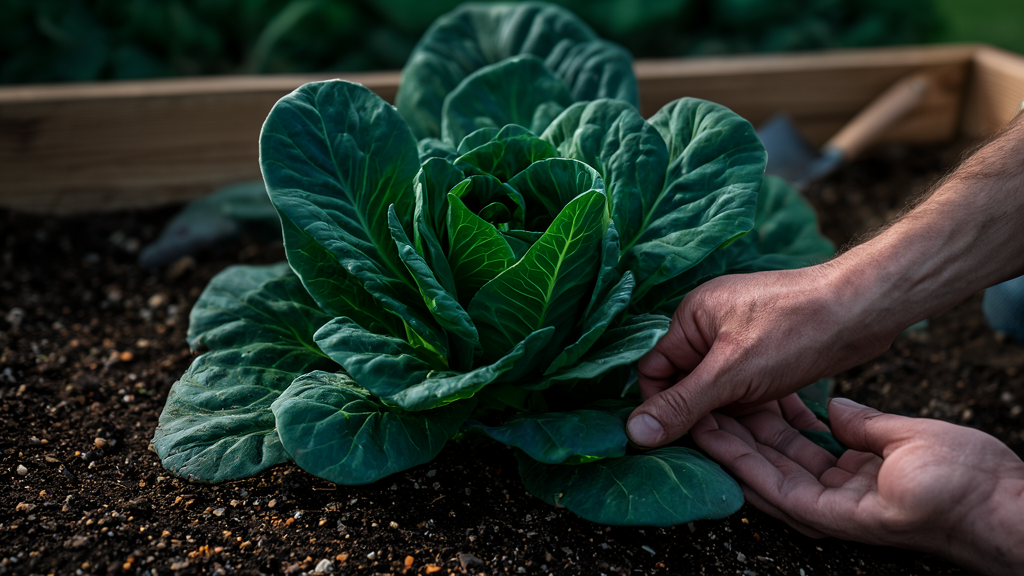
You pull a handful of collard greens from the garden, wash them, sauté them with garlic and a splash of vinegar, and serve them to your family. Three days later, your spouse is on the toilet wondering what they did to deserve this. The greens were fine. The greens were always fine. The problem was the soil.
That viral Reddit post about harvest-time gastrointestinal distress wasn’t a joke. It was a symptom of a specific soil chemistry problem that shows up in home vegetable gardens with alarming regularity. The collard greens themselves aren’t the enemy. The nitrogen balance in the soil they grew in is. And fixing it is simpler than you think.
What the Reddit Post Actually Described
The post title, “That feeling when you harvest your homegrown (explosive diarrhea parasite free) collard greens”, was a darkly humorous way of describing a well-documented plant-physiology response. When leafy greens absorb too much nitrogen relative to their sulfur capacity, they accumulate high levels of nitrates and certain sulfur compounds that the human digestive system handles poorly. This isn’t a food-safety violation. It’s not rot. It’s not contamination. It’s what happens when you overfeed a crop that naturally grows in lean soil.
Collard greens (*Brassica oleracea* var. *viridis*) are hardy brassicas. They evolved in the Mediterranean basin, where the soil is thin, rocky, and low in available nitrogen. They’re adapted to grow slowly, build dense leaves, and store nutrients efficiently. When you plant them in soil loaded with fresh compost, blood meal, or high-nitrogen fertilizer, they don’t just grow faster. They change their internal chemistry. They pull nitrogen faster than they can process sulfur into amino acids, and that imbalance ends up in your plate.
The result? Gastrointestinal distress. Not from pathogens. From chemistry. People who eat supermarket collards rarely experience this because commercial growers manage nitrogen carefully and harvest at predictable stages. Home gardeners who “love” their greens with extra compost are the ones who get the payoff.
Why Nitrogen Balance Matters More Than Total Nitrogen
Most gardeners think of nitrogen as a single dial: more equals bigger plants equals more food. That’s a useful heuristic for corn or tomatoes, but it breaks down for leafy brassicas. The N:S ratio, the ratio of nitrogen to sulfur in the plant tissue, is what actually determines whether those leaves will sit comfortably in your digestive tract.
Sulfur is essential for amino acid synthesis. Without enough sulfur, excess nitrogen accumulates as free nitrates and certain nitrogenous compounds that irritate the gut lining. The University of Massachusetts Extension published research showing that leafy greens grown under high-nitrogen, low-sulfur conditions can accumulate nitrate levels 3 to 5 times higher than those grown under balanced conditions. The numbers aren’t toxic, but they’re uncomfortable. And discomfort is what your spouse experienced.
Here’s the thing most garden guides skip: sulfur is often locked in the soil even when nitrogen is abundant. That happens in sandy soils, heavily leached soils, or soils that have been built up with nitrogen-rich amendments (compost, manure, blood meal) without balancing sulfur sources. The plant takes up nitrogen freely. It can’t access sulfur. The ratio skews. The leaves become a digestive irritant.
How to Grow Collards That Don’t Fight Back
The fix isn’t to stop feeding your garden. It’s to feed it differently. Here’s what actually works:
- Test your soil for sulfur capacity. Most home soil tests report pH, phosphorus, potassium, calcium, magnesium, and organic matter. They rarely report sulfur. If you’re growing leafy brassicas, collards, kale, cabbage, broccoli, ask your lab for a sulfur reading, or assume your soil is sulfur-deficient if it’s sandy, heavily amended, or from a region with low baseline sulfur (parts of the Pacific Northwest, the Northeast, and the upper Midwest).
- Use gypsum, not sulfur, if your pH is already low. Gypsum (calcium sulfate) adds sulfur without dropping pH. Elemental sulfur drops pH over time, which can compound other soil problems. If your pH sits between 6.0 and 6.8, gypsum is the safer bet for leafy greens.
- Delay heavy nitrogen until the plants are established. Plant collards in soil with moderate nitrogen. Let the root system establish for 2 to 3 weeks. Then side-dress with a balanced amendment. This gives the plant time to build the root architecture needed to access sulfur before the nitrogen surge hits.
- Mix in rock phosphate or bone meal if your soil test shows low phosphorus. Phosphorus supports root development, which supports sulfur uptake. It’s a secondary lever, but it matters.
- Harvest before the plants bolt. Bolting changes the N:S ratio again. Once a collard plant shifts energy toward flowering, the leaves accumulate different compounds. Harvest mature leaves when they’re 8 to 10 inches long, before the plant shows signs of flowering stress.
When This Advice Doesn’t Apply
This isn’t a universal law. Some gardeners grow collards in rich compost without any digestive issues. That’s because their soil already has adequate available sulfur, or their compost has a balanced N:S ratio from the start. If your soil test shows sulfur above 15 parts per million, you likely don’t need to adjust anything. The problem only shows up when sulfur is limiting and nitrogen is abundant, the exact condition that “love” creates.
Some varieties also handle high nitrogen better than others. Dark-green, broad-leaf heirlooms like ‘Georgia Southern’ and ‘Moroccan’ tend to be more forgiving than tightly curled types. If you’re growing tight-curled varieties and getting digestive fallout, try switching to a broad-leaf cultivar and see if the problem resolves without changing your soil at all.
What This Changes About How You Garden
The Reddit post was funny because it was true. But it was also a signal that most home gardeners are managing nitrogen as if it’s the only nutrient that matters. It isn’t. For leafy brassicas, the nitrogen-to-sulfur ratio determines whether your harvest nourishes you or upsets your stomach. That’s a specific, testable, fixable problem, not a curse, bad luck, or parasite-related.
Next time you plant collards, check your soil for sulfur. Side-dress after establishment, not before. Harvest before bolting. Your family will thank you, and your spouse will stop questioning their life choices. And if you notice any green spots on your potatoes, remember that What Are Green Potatoes: The Solanine Warning Your Tuber Sends is a related issue of plant chemistry gone wrong.