You are spraying the wrong pest. The fine webbing on your Monstera and the silver stippling on your peace lily look like the same stress, but they are two completely different organisms with two completely different life cycles. Treating spider mites with a spray designed for thrips will not stop the infestation, and treating thrips with a miticide will waste your money while the damage spreads. The difference is not in the treatment you buy, but in the geometry of the damage you see on the leaf.
Identifying the culprit correctly is the only way to stop a garden-wide collapse. Spider mites are arachnids, meaning they have eight legs and move slowly, creating a fine, almost invisible webbing that anchors them to the undersides of leaves. Thrips are tiny, winged insects with fringed wings, moving rapidly and leaving behind distinct, dark fecal specks alongside their feeding scars. When you look at the leaf surface, you are not looking at a generic pest problem. You are looking at a specific diagnostic map that tells you exactly which organism is feeding, how fast it is reproducing, and what chemical or biological intervention will actually work.
The Geometry of the Damage
The first clue lies in the pattern the damage makes on the leaf surface. Spider mite damage, caused by the two-spotted spider mite (Tetranychus urticae), presents as tiny, pale yellow or white stippling. These mites puncture individual plant cells and suck out the chlorophyll, leaving behind a stippled, speckled appearance that starts on the undersides of lower leaves and moves upward. As the infestation worsens, the leaves turn a dull, dusty gray-green, and you will see the tell-tale fine silk webbing stretching between leaf veins and stems. This webbing is not just a byproduct; it is a physical shield that protects the colony from contact sprays and desiccation.
Thrips damage, caused by various species of thrips (Thysanoptera), looks entirely different. Instead of stippling, thrips rasp the leaf surface and feed on the plant juices, leaving behind silvery, bronze, or brown patches where the epidermis has been stripped away. This damage often appears as irregular streaks or blotches, particularly on new growth and flowers. The most reliable diagnostic sign of thrips is the presence of tiny, dark, tar-like fecal specks scattered across the leaf surface alongside the silvering. Unlike spider mites, thrips do not produce webbing. If you see silvering without webbing, and you see those dark specks, you are dealing with thrips, not mites.
Where to Look: The Underside vs. The Crevice
Knowing what to look for is only half the battle. You also need to know where to find them. Spider mites prefer the protected, humid microclimate under the leaf. They stay relatively stationary, clustering on the undersides of mature and lower leaves. If you turn over a leaf and see fine webbing or tiny, moving dots (you can magnify them with a hand lens), you have confirmed a mite infestation. They are slow movers, so you can often see them crawling deliberately across the leaf surface.
Thrips, on the other hand, are fast, tiny, and elusive. They hide in the tight crevices of the plant: the base of flower buds, the axils where leaves meet the stem, and the folded tips of new growth. They do not stay on the flat surface of the leaf for long. If you tap a flower bud or a leaf tip over a white piece of paper, thrips will drop off and crawl around as tiny, elongated specks. Spider mites will not drop off when you tap the leaf; they will hold on. This behavioral difference is a critical diagnostic tool that most gardeners miss.
The Treatment Mismatch
The reason misidentification is so costly is that the treatments for spider mites and thrips often fail when applied to the wrong pest. Spider mites are arachnids, not insects, which means standard insecticides like pyrethrin or imidacloprid are often ineffective against them. In fact, broad-spectrum insecticides can sometimes kill the natural predators of spider mites, allowing the mite population to explode in a phenomenon known as a resurge. Effective mite control usually requires miticides, horticultural oils, or predatory mites like Phytoseiulus persimilis, which are specifically adapted to hunt spider mites.
Thrips are insects, so insecticides like spinosad or imidacloprid can be effective, but they must be applied correctly. Because thrips hide in flower buds and tight crevices, contact sprays often miss them entirely. The key to controlling thrips is targeting the larvae, which are wingless and spend most of their time inside the plant tissue. Spraying the surface of the leaves does nothing to the larvae feeding inside the flower. You need systemic treatments or sprays that penetrate the plant tissue, combined with sticky blue traps to monitor the winged adults. Using a miticide on a thrips infestation is like using a net to catch a bird; the tools are completely mismatched to the target.
Prevention: The Humidity and Host Difference
Prevention strategies also differ based on the pest. Spider mites thrive in hot, dry conditions. Raising the humidity around your plants, regularly misting the leaves, and wiping them down with a damp cloth can physically dislodge mites and make the environment less hospitable for them. Increasing humidity is a primary defense against spider mites. Thrips, however, are not deterred by humidity. They are attracted to bright colors, particularly yellow and blue, which is why sticky traps are so effective for monitoring them. They also thrive on a wide variety of hosts, from ornamental flowers to vegetables, making exclusion and early detection crucial.
Understanding the specific damage patterns, hiding spots, and treatment requirements of spider mites and thrips transforms pest management from a guessing game into a targeted operation. By looking at the geometry of the damage, checking the right places on the plant, and applying the correct treatment, you can stop an infestation before it spreads to your entire garden. The next time you see fine webbing or silver stippling, take a closer look. The leaf is telling you exactly what is wrong, if you know how to read it.
Sources & Further Reading
- Spider Mites: Monitoring and Management — University of California Agriculture and Natural Resources
- Thrips: Monitoring and Management — University of California Agriculture and Natural Resources
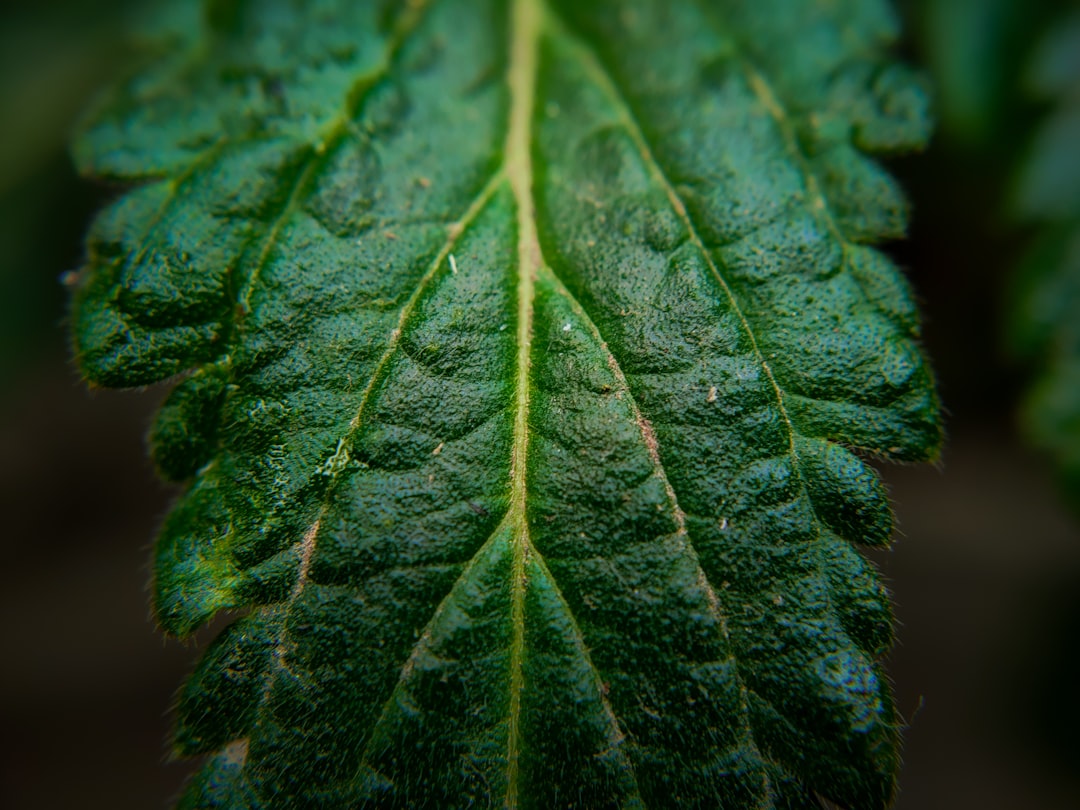
Photo by Sujay Paul on Unsplash.