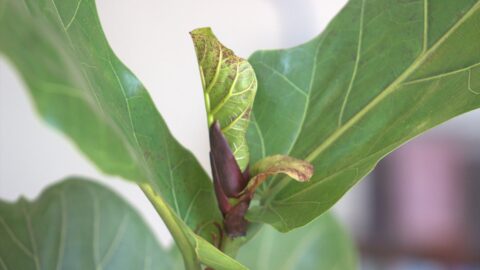
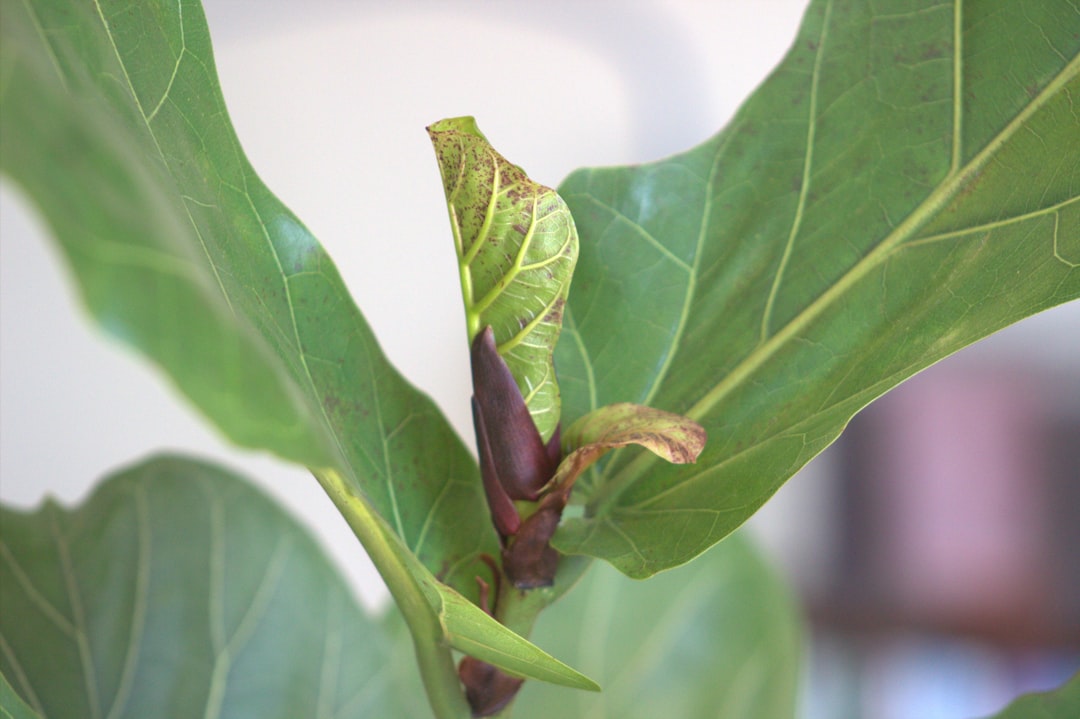
A single brown spot on a Fiddle Leaf Fig leaf costs you nothing. Two spots on the same leaf? That is a diagnostic signal, and it tells you exactly which battle you are fighting. Most gardeners see brown, panic, and reach for a fungicide. They are usually fighting the wrong war. The difference between a sunburned leaf and a fungal infection is not the color. It is the geometry of the damage, and where it appears on the plant.
When you see brown patches on your Ficus lyrata, your first instinct is likely to assume the soil is holding too much water or that you have invited a pathogen into the pot. But brown spots on a fiddle leaf fig are rarely a watering error. They are a symptom of environmental stress, and the specific pattern of the spot reveals whether the plant is being cooked by light or infected by a pathogen. If you treat a sunburn like a fungus, you waste time and money. If you treat a fungus like a sunburn, you watch your plant rot from the inside out. The key to saving the plant is learning to read the spot.
How to Read the Geometry of the Damage
The first thing you need to do is stop looking at the spot as a generic brown mark and start looking at its edges. Sun damage and fungal damage follow completely different physical rules, and those rules are visible to the naked eye if you know what to look for.
Sunburn on a fiddle leaf fig is a physical burn. It happens when the leaf tissue is exposed to intensity it has not acclimated to. The result is a spot that is usually crisp, dry, and sharply defined. The edges are straight, almost geometric. If the spot is on the upper surface of the leaf, it will likely be a light tan or bleached white color, sometimes with a brown, necrotic center. If the spot is on the underside, it will be a darker, scorched brown. The defining feature of sunburn is that it does not spread. Once the tissue is burned, it stays burned. It does not grow larger, it does not develop a halo, and it does not produce spores. It is a static injury.
Fungal infection, on the other hand, is a living process. It is a pathogen actively consuming the leaf tissue. The result is a spot that is soft, dark, and irregular. The edges are fuzzy, blurred, or water-soaked. Unlike sunburn, a fungal spot will grow. It will spread across the leaf, often developing a yellow or translucent halo around the necrotic center. If you touch a fungal spot, it will feel soft or mushy. If you touch a sunburned spot, it will feel dry and papery. This tactile difference is the single most reliable diagnostic tool you have.
Location Tells the Story
Where the brown spots appear on the plant is the second half of the diagnostic equation. Sun damage is directional. It only appears on the leaves that are directly in the path of the light source. If your fiddle leaf fig is sitting three feet from a south-facing window, the sunburn will only appear on the leaves facing the window. The leaves on the shaded side of the plant will remain perfectly green. This directional consistency is a massive clue. If you rotate the plant and the brown spots move with the light, you are dealing with sun exposure, not a pathogen.
Fungal spots do not care about the light. They appear wherever the conditions are right for the pathogen to thrive. This usually means high humidity, poor air circulation, or water sitting on the leaf surface. Fungal spots often start on the lower leaves, where humidity pools and air movement is slowest. They can appear on any leaf, regardless of its orientation to the window. If you see brown spots on the shaded side of the plant, or on the lowest leaves while the top leaves remain pristine, you are almost certainly looking at a fungal issue, not a light issue.
The Watering Connection
It is easy to conflate watering problems with fungal infections because they often share the same root cause: excess moisture. However, overwatering itself does not cause brown spots. Overwatering causes root rot, which presents as widespread leaf drop, yellowing, and a general decline in the plant’s vigor. Brown spots are a secondary symptom. They appear when the plant is already stressed, either by light or by poor air quality, and a pathogen takes advantage of the weakened tissue.
When you overwater a fiddle leaf fig, the roots begin to suffocate. The plant stops taking up nutrients efficiently. The leaves become thin, pale, and susceptible to environmental stress. If you then place that stressed plant in direct sun, the leaves will burn. If you place that same stressed plant in a humid, stagnant corner, a fungus will colonize the leaf surface. The water is the underlying condition, but the brown spot is the specific injury. Treating the water without addressing the spot’s geometry will not stop the damage.
How to Treat Sunburn vs. Fungal Infection
Once you have diagnosed the spot, the treatment is straightforward. If you are dealing with sunburn, the solution is physical. Move the plant. Fiddle leaf figs are incredibly adaptable to light changes, but they change slowly. If you have burned a leaf, you cannot un-burn it. The spot will remain there until the leaf falls off naturally, which could take months. Your job is to prevent further damage. Move the plant back six to twelve inches from the window, or install a sheer curtain to diffuse the light. Do not rotate the plant to hide the spot, as this will just burn the other side. Give the plant time to acclimate to the new light level. New leaves will emerge healthy and green, and the plant will recover its full aesthetic over the next growing season.
If you are dealing with a fungal infection, the solution is chemical and environmental. Fungal pathogens on houseplants are typically Colletotrichum or Phytophthora species. These are opportunistic pathogens that attack stressed tissue. The first step is to isolate the plant. Fungal spores can spread through the air and contaminate other plants in your home. Next, remove the affected leaves. Cut them off with clean, sharp shears, and dispose of them in the trash, not the compost. Do not leave them on the soil surface, as they will continue to release spores.
After removing the leaves, apply a targeted fungicide. A copper-based spray or a neem oil solution applied to the upper and lower surfaces of the remaining leaves will stop the spread. Apply it every seven to ten days until no new spots appear. Simultaneously, improve the plant’s environment. Increase air circulation with a small fan. Wipe the leaves down with a damp cloth to remove surface spores. Reduce humidity around the plant by ensuring the soil dries out completely between waterings. Fungal infections thrive in wet, stagnant air. Dry, moving air kills them.
When to Worry
Most brown spots on a fiddle leaf fig are cosmetic. A single spot on a lower leaf is not an emergency. It is a sign that the plant is experiencing minor stress, and you should adjust your care routine accordingly. However, if you see multiple spots appearing rapidly, or if the spots are spreading to new leaves despite your interventions, you are dealing with an active infection. This requires immediate action. Do not wait to see if it goes away. Fungal pathogens can move from leaf to leaf in a matter of days, and by the time the entire plant is covered, the root system may already be compromised.
The other time to worry is if the brown spots are accompanied by other symptoms. If the leaves are dropping, yellowing, or the stem is becoming soft and mushy at the base, you are dealing with root rot, not a leaf spot. Root rot is a systemic failure. It requires repotting, pruning the dead roots, and replanting in fresh, well-draining soil. Leaf spots are a local injury. Root rot is a systemic collapse. Treat them accordingly.
FAQ
Can I save a fiddle leaf fig with brown spots?
Yes. If you diagnose the spot correctly and treat the underlying cause, the plant will recover. Remove damaged leaves, adjust the environment, and apply fungicide if necessary. New growth will be healthy.
Does brown spot mean I am overwatering?
No. Brown spots are a symptom of environmental stress, not a direct result of watering. Overwatering causes root rot, which presents as yellowing and leaf drop. Brown spots are a secondary injury caused by light or fungus.
How do I know if the spot is sunburn or fungus?
Look at the edges. Sunburn has sharp, dry, geometric edges. Fungus has soft, fuzzy, water-soaked edges. Touch the spot. Sunburn feels dry and papery. Fungus feels soft and mushy. Check the location. Sunburn is directional. Fungus is random.
What fungicide works best for fiddle leaf figs?
Copper-based sprays and neem oil are the most effective treatments for fungal leaf spots. Always follow the manufacturer’s instructions.
Should I move my fiddle leaf fig if it has brown spots?
Move it only if you have diagnosed sunburn. If you have diagnosed fungus, move it to isolate it from other plants, but do not change its light exposure. Fungal spots are not caused by light intensity.
Sources & Further Reading
- Fiddle Leaf Fig Care: How to Grow and Care for Ficus lyrata — University of Minnesota Extension
- Fungal Leaf Spot Diseases — United States Department of Agriculture (USDA) Agricultural Research Service
- Houseplant Pests and Diseases: Fungal Leaf Spots — Penn State Extension
Photo by Grant Charsley on Unsplash.