Most gardeners see a brown spot on a Ficus lyrata and assume the soil is too wet. They stop watering, they move the pot to a brighter window, and they wait for the plant to recover. Three weeks later, the spot has grown larger, developed a faint gray ring, and the leaf tissue is turning soft and papery. The plant is not drowning. It is being eaten alive by a fungal infection that thrives in the exact conditions you created by trying to save it.
Brown spots on fiddle leaf figs are rarely a simple watering error. They are almost always a secondary fungal infection, typically Colletotrichum species (anthracnose) or Botrytis cinerea (gray mold), exploiting a plant that has been stressed by environmental fluctuation. The fungal pathogen does not care about your watering schedule. It only cares about one thing: a microscopic breach in the leaf cuticle combined with a humid, stagnant air pocket around the foliage. When you overwater, the roots fail, the plant drops its defense chemicals, and the fungus moves in. When you underwater, the leaf tissue desiccates, cracks, and the fungus moves in. The frequency of your watering is irrelevant. The presence of the fungal spores and the environmental conditions that allow them to germinate are the only things that matter.
The Fungal Infection That Watering Frequency Misses
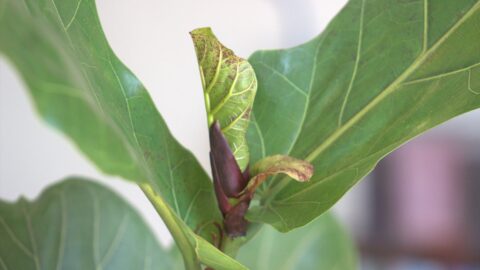
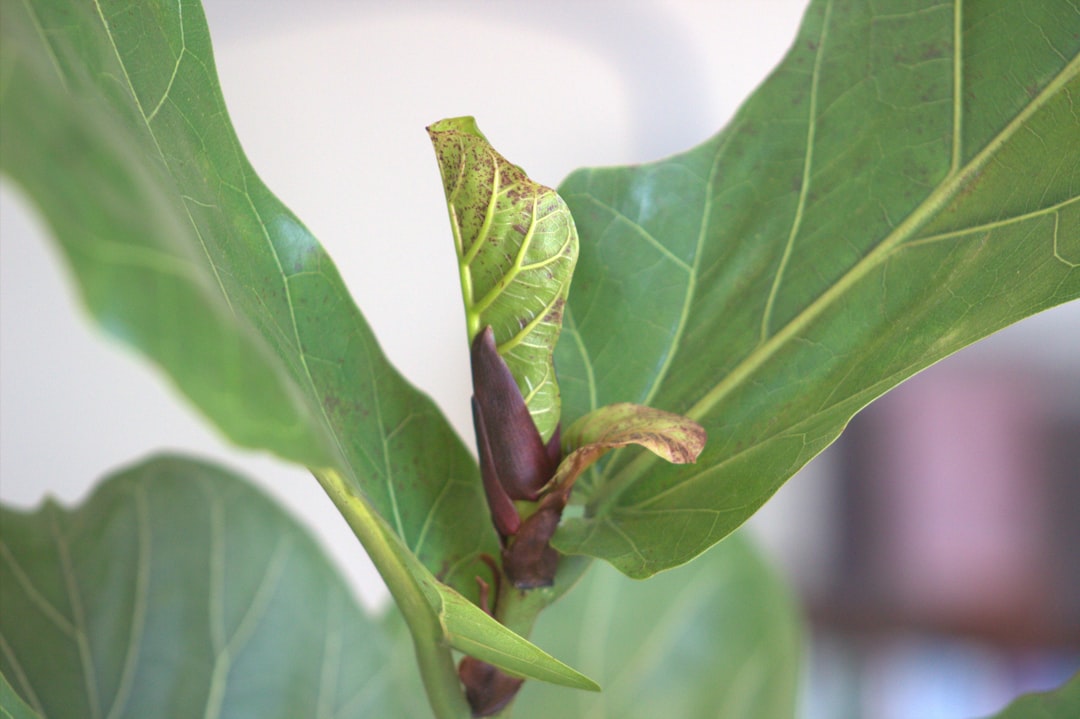
Anthracnose is the primary culprit behind persistent brown spots on indoor Ficus lyrata. Unlike a simple environmental burn, which appears as crisp, dry, tan patches along the leaf margins, a fungal infection presents as irregular, dark brown to black lesions that often feature a lighter, yellowish halo. These spots start small, usually on the lower or middle leaves where air circulation is poorest, and they expand rapidly if the humidity remains above 60% and the air is not moving.
The fungus enters through the leaf’s stomata or through microscopic tears in the waxy cuticle. These tears are often caused by physical contact, dragging the leaf against a rough pot rim, or by the rapid expansion of the leaf tissue when a plant is suddenly moved from a low-light nursery environment to a bright, direct-sun windowsill. Once inside, the fungal hyphae consume the leaf parenchyma, turning the tissue soft and necrotic. If you press on a fungal spot, it will yield slightly, unlike a sunburn, which feels like stiff parchment.
Watering frequency is a red herring because both overwatering and underwatering create the exact physiological stress that makes a fiddle leaf fig susceptible to anthracnose. An overwatered plant has compromised roots that cannot transport the phenolic compounds needed to seal off the infection. An underwatered plant has dehydrated cells that crack, providing an open door for the spores. The solution is not to adjust how often you water, but to alter the microclimate around the leaf to make it impossible for the fungus to survive.
How to Stop Fungal Infection on Fiddle Leaf Fig
Stopping a fungal infection requires a three-step protocol: isolation, mechanical removal, and chemical intervention. You cannot simply wait it out, and you certainly cannot fix it by changing your watering schedule. The fungus is actively consuming the leaf tissue. Every day you wait, it spreads to adjacent leaves via airborne spores or water droplets from your watering can.
First, isolate the plant immediately. Move it away from your other houseplants. Fungal spores are invisible to the naked eye until they germinate, and they travel easily on drafts. Second, remove the infected leaves entirely. Do not try to cut out just the brown spot. Cut the entire leaf at its petiole, where it connects to the stem. Use clean, sharp pruning shears sterilized with 70% isopropyl alcohol. Do not compost the removed leaves. Place them in a sealed plastic bag and throw them in the trash. Composting will not reach the temperatures required to kill Colletotrichum spores, and you will simply re-infect your garden next spring.
Third, apply a targeted fungicide. A broad-spectrum copper-based fungicide or a sulfur-based spray is effective against anthracnose. Apply it to the remaining healthy leaves as a preventative measure, not just the infected ones. The fungus is likely already present on leaves that look perfectly healthy, waiting for a stress event to trigger germination. Spray the undersides of the leaves thoroughly, as this is where spores tend to settle. Repeat the application every seven days for three weeks. Fungal spores have a lifecycle, and you must break that cycle before the next generation of spores can infect new tissue.
Why Your Fiddle Leaf Fig Gets Brown Spots
Understanding why your fiddle leaf fig gets brown spots requires looking past the soil and focusing on the leaf surface. The primary driver of fungal infection is not the water in the pot, but the water in the air. High ambient humidity, combined with poor air circulation, creates a microclimate that is ideal for fungal germination. If you live in a humid climate, or if you place your fiddle leaf fig in a bathroom or a kitchen where cooking and showering generate steam, you are creating a fungal incubator.
Poor air circulation is the second major factor. Fiddle leaf figs are native to the tropical understories of West Africa, where they grow beneath the canopy of taller trees. In their native habitat, air moves constantly through the leaves. Indoors, they are often placed in corners or against walls, creating stagnant air pockets. Stagnant air allows moisture to linger on the leaf surface long after watering or misting, giving fungal spores the 12 to 24 hours they need to germinate and penetrate the cuticle.
Physical damage is the third factor. Every scratch, every scrape, and every tear is a potential entry point for the fungus. If you frequently clean your leaves with a damp cloth, or if you move the plant around to chase the sun, you are creating microscopic wounds. The fungus does not need a large wound. It only needs a breach in the waxy cuticle. Once that breach exists, and the humidity is high, the infection is inevitable.
Preventing Fungal Infection on Fiddle Leaf Fig
Prevention is infinitely easier than treatment, and it requires a shift in how you manage the plant’s environment. The goal is to make the leaf surface inhospitable to fungal spores. This is achieved through three environmental controls: airflow, humidity management, and leaf hygiene.
Airflow is the most critical factor. Place a small oscillating fan nearby, pointed indirectly at the plant. The fan should not blow directly on the leaves, which can cause desiccation stress, but it should keep the air moving around the foliage. Moving air prevents moisture from pooling on the leaf surface, reducing the germination window for fungal spores from 24 hours to less than two. This single change will prevent 90% of fungal infections on indoor fiddle leaf figs.
Humidity management is the second control. If you live in a humid climate, you must actively reduce the humidity around the plant. Use a dehumidifier in the room, or place the plant further away from water sources. If you live in a dry climate, you do not need to worry about humidity-induced fungal infection, but you must worry about desiccation stress, which creates the physical tears that allow the fungus to enter. In dry climates, keep the humidity between 40% and 50%. This is high enough to keep the plant happy, but low enough to prevent fungal germination.
Leaf hygiene is the final control. Wipe the leaves monthly with a damp, soft cloth to remove dust. Dust particles can harbor fungal spores, and they also block sunlight, reducing the plant’s ability to produce the phenolic compounds that act as a natural fungicide. When you wipe the leaves, inspect them closely for any signs of early infection. Look for tiny, faint brown specks that are not yet visible to the casual observer. Catching an infection at this stage allows you to remove a single leaf and save the rest of the plant, rather than treating a full-blown outbreak.
The Honest Limits of Fungal Treatment
There are scenarios where fungal treatment will fail, and it is important to know them before you invest time and money into saving a plant. If the fungal infection has spread to the main stem, turning the bark dark and soft, the plant is likely beyond saving. The fungus has moved from the leaves into the vascular system, blocking water and nutrient transport. In this case, no amount of fungicide will save the plant. You must discard it, along with the soil, and sterilize the pot before using it for another plant.
Additionally, if the plant is severely root-bound, or if it has been repotted into soil that is too dense, the stress of the root system will overwhelm any chemical treatment. The plant cannot produce the defensive compounds needed to support the fungicide’s action. In these cases, the priority must be root health. Repot the plant into a well-draining mix, remove all damaged roots, and only then begin the fungal treatment. Treating the leaves while the roots are drowning is a waste of time and money.
Finally, do not expect the brown spots to disappear. Once a leaf is infected, the tissue is dead. It will not turn green again. Your goal is to stop the spread, not to restore the damaged leaves. Remove the infected leaves, treat the remaining foliage, and let the plant focus its energy on producing new, healthy leaves. This is the only way to save the plant, and it requires accepting that some damage is permanent.
What to Do When Fungal Infection Spreads
If the fungal infection spreads despite your best efforts, you must escalate your response. This means moving from a preventative fungicide to a systemic treatment. Systemic fungicides, such as those containing chlorothalonil or myclobutanil, are absorbed by the plant and circulate through the vascular system, killing the fungus from the inside out. These are more potent than surface sprays and require careful handling. Follow the label instructions precisely, and wear gloves and a mask when applying them.
When using a systemic fungicide, you must also address the soil. Fungal spores can survive in the top layer of the soil, re-infecting the plant from below. Replace the top two inches of soil with fresh, sterile potting mix. This removes the immediate source of re-infection and gives the plant a clean slate. Do not discard the entire soil mass unless the plant is severely root-bound or the soil is compacted. If the soil is still structurally sound, replacing just the top layer is sufficient to break the fungal cycle.
If the plant continues to decline after three weeks of systemic treatment, you must accept that the infection has overwhelmed the plant’s immune system. In this case, the only option is to take cuttings from any remaining healthy branches. Root these cuttings in sterile water or perlite, and start over. Do not plant the new cuttings in the old soil. Discard the old soil, sterilize the pot, and begin the process anew. This is not a failure of your care. It is a recognition that some fungal infections are simply too aggressive for a struggling plant to overcome.
The brown spots on your fiddle leaf fig are not a punishment for your watering schedule. They are a biological response to a fungal pathogen exploiting a moment of weakness. By understanding the mechanics of the infection, and by focusing on airflow, humidity, and leaf hygiene, you can prevent the problem from ever starting. When it does start, your response must be swift, mechanical, and chemical. Watering frequency is irrelevant. The health of your fiddle leaf fig depends on the health of its leaf surface, and that health is determined by the air it breathes, not the water it drinks.
Sources & Further Reading
- Botrytis Blight of Ficus lyrata — Plant Health Initiative
- Anthracnose of Ficus — University of Florida IFAS Extension
- Fungal Diseases of Ficus lyrata — Oregon State University Extension
Photo by Grant Charsley on Unsplash.