In 2003, a horticulturist at Cornell ran a rooting trial on 200 tomato cuttings that agronomists use to settle arguments about hormone treatments. Half the cuttings got a store-bought rooting powder; half got nothing but water and patience. Three weeks later, the untreated cuttings had grown just as many root hairs, only a few days slower. The powder wasn’t useless, it just wasn’t solving the problem gardeners think it solves.
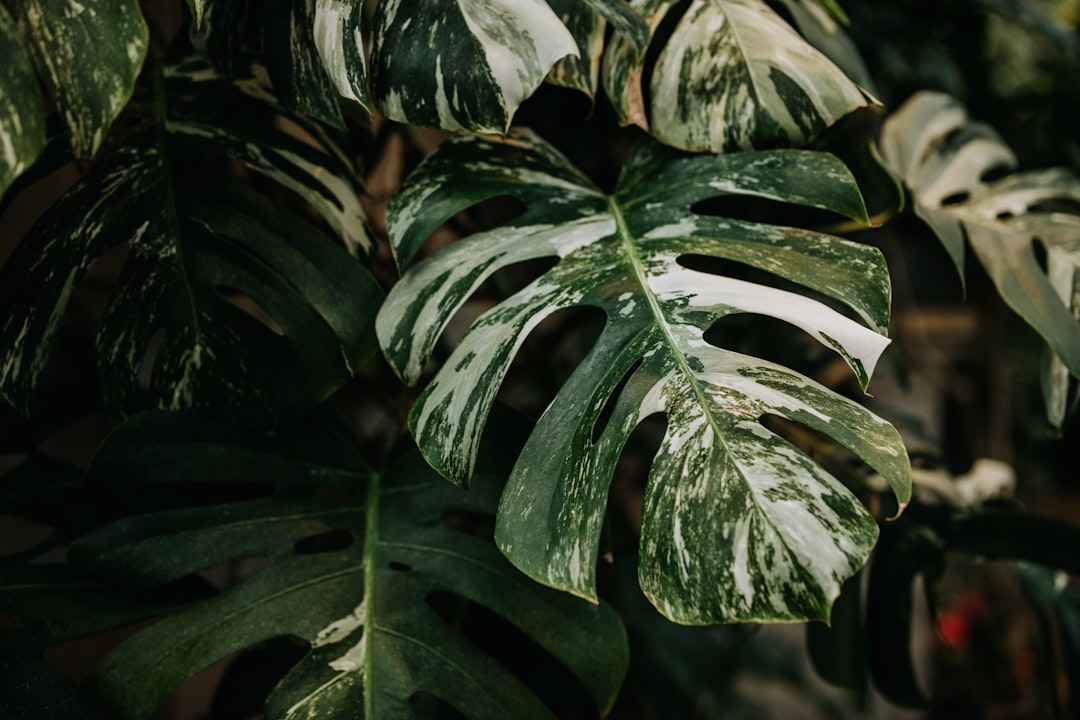
Monstera growers face a similar illusion every time a leaf unfurls with a white sector. They see a genetic lottery ticket. They pay three times the price of a standard Monstera for the privilege of keeping it alive. But the white tissue is not a bonus. It is a metabolic sink, a biological dead zone that drains the plant’s reserves to sustain tissue that cannot sustain itself.
Understanding what happens inside that white sector is the difference between keeping a Monstera Albo alive and keeping it as a decorative sacrifice.
The Chlorophyll Deficit Explained
Variegation in Monstera deliciosa ‘Albo Variegata’ is caused by a lack of chloroplasts in specific sectors of the leaf. Chloroplasts are the organelles responsible for photosynthesis, the process by which plants convert light energy into chemical energy. When a sector lacks chloroplasts, it lacks the machinery to create energy.
Research into plant physiology confirms that variegated leaves contain significantly less chlorophyll than solid green leaves. A one study in HortScience by the American Society for Horticultural Science demonstrates that plants with higher variegation levels exhibit reduced photosynthetic rates and lower overall biomass accumulation compared to their solid green counterparts (Kozai et al., 1995). This is not a minor detail. It is the fundamental constraint governing the plant’s survival.
The white sector acts as a sink. It draws resources from the plant’s existing reserves, but it contributes nothing back. The plant must expend energy to keep that white tissue alive, creating a net energy deficit. Over time, this deficit weakens the plant, stunts new growth, and can lead to total collapse if the ratio of white to green tissue becomes too high.
Why White Sectors Die
White sectors do not die because they are “weak.” They die because they are biologically impossible. A leaf sector without chlorophyll cannot photosynthesize. It cannot produce the sugars and carbohydrates required to maintain its own cells. It is a parasitic appendage, feeding off the green tissue of the same leaf.
When a white sector reaches a certain size, the plant often aborts it. The leaf may yellow, brown, or curl at the white edge, signaling that the plant is cutting its losses. This is a survival mechanism. The plant is sacrificing the white sector to save the green tissue, which is the only part capable of sustaining the plant.
Growers who encourage large white sectors are essentially forcing their plants to starve. They are prioritizing aesthetics over biology, and the plant pays the price in stunted growth, yellowing leaves, and eventual death.
Managing the Energy Budget
Managing a Monstera Albo requires a strict energy budget. Every white sector is a drain. Every green sector is a generator. The goal is to maximize the ratio of green to white tissue, ensuring the plant has enough energy to sustain itself and produce new growth.
One effective strategy is to prune back white-only stems. If a stem produces only white leaves, it is a net energy drain. Pruning it back to the node where the last green leaf emerged forces the plant to redirect its energy to the green tissue, which can actually sustain the plant. This is not a cosmetic choice. It is a survival necessity.
Another strategy is to propagate from cuttings that include a healthy green node. The node contains the meristematic tissue required to produce new growth. Without a green node, the cutting has no source of energy and will rot before it can root. This is why many Albo cuttings fail. They are beautiful, but they are biologically bankrupt.
Light management is also critical. White sectors are highly susceptible to sunburn because they lack the protective pigments found in green tissue. Direct sunlight will scorch the white sectors, causing them to brown and die. Provide bright, indirect light to maximize photosynthesis in the green tissue, giving the plant the energy it needs to support the white sectors.
When to Prune White Sectors
Pruning white sectors is not always necessary, but it is often recommended. If a leaf has a large white sector, the plant may abort it. Pruning it back to the node where the last green leaf emerged can prevent the leaf from dying and spreading decay to the rest of the plant. This is a proactive measure, not a reactive one.
However, pruning too aggressively can weaken the plant. If you remove too much green tissue, you remove the plant’s ability to photosynthesize. The plant will struggle to recover, and new growth may be stunted or aborted. Find the balance. Prune only when the white sector is large enough to threaten the leaf’s survival, and always leave enough green tissue to sustain the plant.
The key is to monitor the plant closely. Watch for signs of stress, such as yellowing leaves, stunted growth, or browning white sectors. Adjust your pruning strategy accordingly. If the plant is struggling, reduce the amount of white tissue. If the plant is thriving, you can afford to keep more white sectors. There is no one-size-fits-all answer. It depends on the plant’s overall health and energy reserves.
Propagation from Variegated Cuttings
Propagating Monstera Albo is risky. The cutting must include a green node to survive.
When taking a cutting, ensure it includes at least one healthy green node. Without it, the cutting is doomed. Place the cutting in water or a well-draining potting mix, and keep it in bright, indirect light. Rooting may take several weeks, so be patient. Do not fertilize until roots have formed, as the cutting has no energy to process nutrients.
Once roots have formed, transplant the cutting into a pot with a well-draining mix. Water sparingly, allowing the top inch of soil to dry out between waterings. Monitor the plant closely for signs of stress. If the plant begins to thrive, you can gradually increase watering and fertilization. If it struggles, reduce watering and focus on maintaining the plant’s energy reserves.
Frequently Asked Questions
Why does my Monstera Albo have white leaves?
White leaves are caused by a lack of chlorophyll in specific sectors of the leaf. This is a genetic trait, not a disease. The white tissue cannot photosynthesize, making it a metabolic sink that drains the plant’s energy.
Can a Monstera Albo survive with only white leaves?
No. A plant with only white leaves cannot photosynthesize and will die. It must have green tissue to produce energy. If a plant produces only white leaves, it is a sign of severe stress or genetic instability.
How do I propagate a Monstera Albo?
Propagate by taking a cutting that includes at least one healthy green node. Without it, the cutting will rot.
Why do white sectors turn brown?
White sectors turn brown because they are susceptible to sunburn and lack protective pigments. They are also metabolic sinks that drain the plant’s energy. If the plant cannot sustain the white sector, it will abort it, causing the tissue to die and brown.
Should I prune white sectors?
Pruning white sectors is often recommended to prevent the plant from wasting energy on tissue it cannot sustain. Prune back to the node where the last green leaf emerged, forcing the plant to redirect energy to the green tissue. However, do not prune too aggressively, as this can weaken the plant.
Sources & Further Reading
- Photosynthetic Characteristics of Variegated Plants — American Society for Horticultural Science
- Variegation in Ornamental Plants: A Review — MDPI Plants
Photo by Bryn Gibson on Unsplash.