Aggressive pruning makes basil bitter. It turns a sweet, fragrant herb into a chemical weapon. When you pinch back sweet basil (Ocimum basilicum) expecting a bushier harvest, you are not encouraging growth. You are triggering a stress response that floods the leaves with estragole and eugenol. The plant shifts its metabolic priority from producing soft, palatable foliage to manufacturing concentrated defense oils. The result is a harvest that tastes medicinal, smells like cleaning fluid, and fails to deliver the flavor you planted it for. The solution is not to stop pruning, but to change exactly where and how you prune. By following the node rule, you redirect the plant’s energy into vegetative branching rather than chemical defense, keeping the flavor clean and the harvest steady.
When you snip a basil stem above a node, you are removing the apical meristem, the growing tip that produces auxin. Auxin suppresses the lateral buds sitting just below the cut. Remove the tip, and the lateral buds wake up. This is the mechanism every gardening book cites when it tells you to pinch basil to make it bushy. The mechanism is real. The outcome is not what you think it is. The plant does not just grow two stems. It grows two stems that are chemically compromised.
Basil is a member of the Lamiaceae family, the mint family. Plants in this family are evolutionarily designed to produce high concentrations of volatile oils as a defense mechanism. When the plant perceives physical damage, it shifts its metabolic priority from producing soft, palatable leaf tissue to producing secondary metabolites. These compounds are the bitter oils that repel herbivores. In sweet basil, the primary bitter compounds are estragole (methyl chavicol) and eugenol. Estragole is the dominant flavor compound in basil, but when its concentration spikes beyond a certain threshold, the flavor profile shifts from sweet and anise-like to harsh and medicinal. The plant is literally telling you it is under attack, and the only way to communicate with it is through the leaves you eat.
The node rule is a specific pruning technique that prevents this chemical shift. It requires you to identify the exact node where you want the plant to branch, and then cut precisely one millimeter above that node, leaving exactly two sets of leaves behind. This sounds like standard pruning advice, but the critical difference lies in the depth of the cut and the resulting leaf count. When you make a shallow cut, leaving only one pair of leaves, the plant has almost no photosynthetic capacity left to fuel the new growth. It is forced to pull energy from its root reserves, which triggers the stress response and the subsequent spike in bitter oils. When you leave two full sets of leaves, the plant retains enough photosynthetic engine to fuel the new growth without triggering the chemical defense mechanism.
Let’s look at the anatomy of the node. A node is the point on the stem where a leaf attaches. Directly above that leaf attachment, nestled in the axil, is a lateral bud. This bud is dormant as long as the apical meristem is active. When you remove the apical meristem, the lateral bud receives the signal to grow. The node rule dictates that you must leave at least two nodes below your cut. Each node produces one leaf. Therefore, you must leave at least two leaves behind. If you cut too close to the node, leaving only one leaf, the plant enters a state of resource depletion. The new growth will be small, stunted, and intensely bitter. If you cut too far above the node, leaving four or five leaves, you are wasting energy on leaf tissue that will eventually be shaded out by the new growth, and you are not actually encouraging branching efficiently.
The timing of the cut matters just as much as the depth. You must prune basil when the plant is actively growing, which means when the soil temperature is consistently above 60 degrees Fahrenheit and the plant has at least six to eight true leaves. Pruning too early, when the plant is still in its seedling stage, does not just stunt the plant. It kills the harvest. A seedling with fewer than six true leaves does not have the root mass to support the energy expenditure of regrowing. Every time you prune a young plant, you are setting it back by days, and you are increasing the likelihood that it will trigger its defense mechanism. Wait until the plant is robust. Wait until it has established a strong root system. Then, and only then, do you begin the node rule.
There is a common misconception that you should prune basil when it starts to flower. This is a mistake that ruins the entire plant. Once basil begins to flower, it shifts its energy from leaf production to seed production. The leaves become tough, fibrous, and intensely bitter. Pruning a flowering plant does not reverse this process. It only delays the inevitable. If you see flower buds forming, you must harvest the entire plant immediately. Do not try to prune back the flowers. You cannot un-flower a basil plant. The bitter oils are already concentrated in the leaves. Harvest everything, dry the remaining leaves, and start a new plant. This is not a failure of pruning. It is the natural lifecycle of an annual herb.
The node rule also applies to harvesting leaves for cooking. When you need a few leaves for a salad or a pesto, do not just pluck them off the stem. Plucking leaves without a clean cut leaves the stem exposed to disease and does not encourage branching. Instead, use the node rule to harvest. Identify a node near the top of the plant. Cut one millimeter above the node, leaving two sets of leaves. This single cut will give you enough leaves for a meal, and it will encourage the plant to branch, giving you more leaves for the next harvest. This is the most efficient way to harvest basil. It maximizes yield while minimizing bitterness.
Another critical aspect of the node rule is the angle of the cut. You must cut at a 45-degree angle, sloping away from the node. This prevents water from pooling on the cut surface, which can lead to fungal infection. Fungal infection is a secondary stressor that can trigger the plant’s defense mechanism. By cutting at a 45-degree angle, you allow water to run off, keeping the plant healthy and focused on growth rather than defense. This is a small detail that makes a big difference. It is the difference between a healthy, productive plant and a sickly, bitter one.
The node rule is not just a pruning technique. It is a philosophy of growing. It recognizes that plants are not passive recipients of our care. They are active participants in the growing process. They respond to our actions with chemical signals. By understanding these signals, we can work with the plant rather than against it. The node rule is a way of communicating with the plant. It says, “Grow. Do not defend. Produce leaves, not oil.” And the plant responds. It gives us more leaves, sweeter leaves, and a longer harvest season.
Consider the difference between a plant pruned with the node rule and one pruned aggressively. The aggressively pruned plant will have fewer, stunted branches. The leaves will be small, dark green, and intensely aromatic. When you crush a leaf from this plant, the smell will be overwhelming, almost chemical. It will taste bitter. The plant pruned with the node rule will have multiple, robust branches. The leaves will be larger, lighter green, and delicately aromatic. When you crush a leaf from this plant, the smell will be sweet and anise-like. It will taste like basil. This is the difference between a plant that is defending itself and a plant that is producing. This is the difference between a bitter harvest and a sweet one.
There is one more nuance to the node rule that is often overlooked. The type of basil you are growing matters. Sweet basil (Ocimum basilicum) responds well to the node rule. Holy basil (Ocimum sanctum) and Thai basil (Ocimum basilicum var. thyrsiflora) have different chemical profiles and growth habits. Holy basil is more tolerant of pruning, but it still produces bitter oils when stressed. Thai basil is more sensitive to pruning, and its leaves are naturally more anise-forward. The node rule works best with sweet basil. If you are growing holy basil or Thai basil, you must be even more careful with your cuts. Leave more leaves. Prune less frequently. And expect a stronger, more complex flavor profile. This is not a failure of the node rule. It is the natural variation of the species.
Finally, the node rule is not a one-time fix. It is a continuous process. You must prune your basil regularly throughout the growing season. Every time you harvest leaves, use the node rule. Every time you see new growth, prune it back to the node. This keeps the plant compact, productive, and flavorful. It prevents the plant from becoming leggy and weak. It maximizes yield. It minimizes bitterness. It is the single most effective technique for growing sweet basil. It is not difficult. It requires only that you pay attention to the plant. Look at the nodes. Count the leaves. Make the cut. And watch your plant thrive.
Sources & Further Reading
- Growing Basil in Home Gardens — Penn State Extension
- Basil: Ocimum basilicum — University of Florida IFAS Extension
- Pruning and Training Basil Plants — Royal Horticultural Society
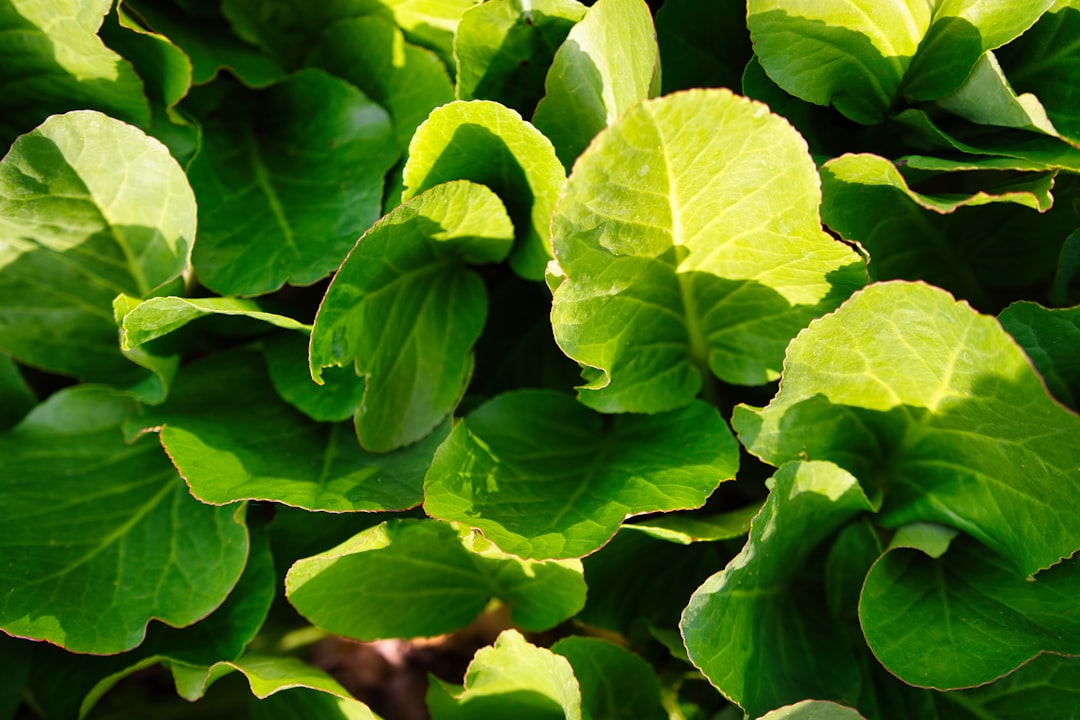
Photo by 𝕡𝕒𝕨𝕤 𝕒𝕟𝕕 𝕡𝕣𝕚𝕟𝕥𝕤 on Unsplash.