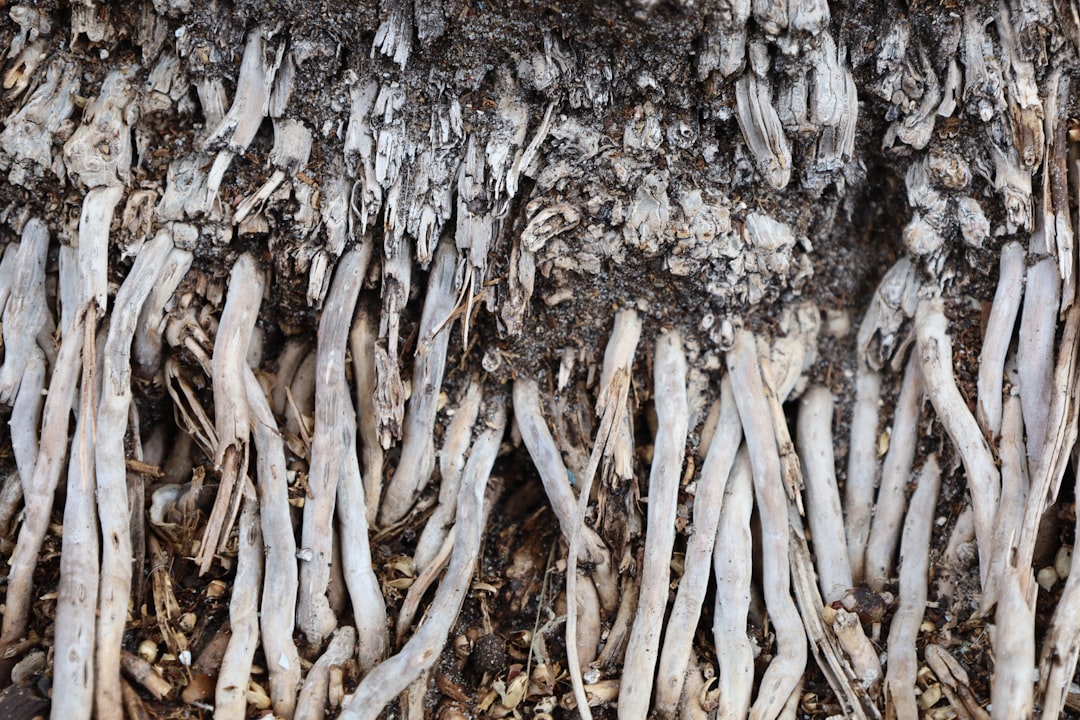
You are standing in front of a 12-foot Ficus elastica, looking at a thick, woody root that has pushed through the soil and is currently dangling three inches above the floor. It looks like a structural failure. It looks like a mistake. You reach for your pruning shears, ready to snip it off and pretend it never happened, but your hand stops. That root is not an error. It is the plant telling you exactly what it needs, and cutting it without understanding the mechanism will only trigger the next one.
Aerial roots on a rubber tree are not a cosmetic flaw to be hidden. They are a physiological signal of the plant’s relationship with its environment. When a Ficus elastica sends roots into the air, it is trying to survive. Understanding why it does this, and when to intervene versus when to let it grow, separates the owners who kill their trees from the ones who grow them into indoor giants.
Why Rubber Trees Grow Aerial Roots
In the wild, Ficus elastica grows as a massive canopy tree in the understory of Southeast Asian rainforests. It is a hemiepiphyte. It starts life high up in the branches of a host tree, sending roots down to the ground to anchor itself and steal nutrients. Once those roots hit the soil, the plant commits to the ground, eventually crushing the host tree with its expanding trunk. This is not a houseplant quirk. This is the plant’s core survival strategy.
When you move that plant into a pot, you remove the ground. You restrict the root ball. You limit the water. The plant responds by sending roots out of the pot, searching for the stability and moisture it used to get from the earth. It is reaching for the ground. It is trying to re-establish the hemiepiphytic cycle you interrupted when you put it in a plastic container.
Three specific environmental triggers force this behavior. The first is low humidity. Rubber trees evolved in 80% relative humidity environments. Most homes sit between 30% and 40%. When the air is dry, the plant loses water through its leaves faster than its roots can pull it from the soil. The aerial roots are a desperate attempt to pull moisture directly from the air, a trick many tropical plants use to survive dry spells. The second trigger is root congestion. If your plant has been in the same pot for more than two years, the root ball is likely a solid mass of tangled roots with zero air pockets. The plant is suffocating. It sends aerial roots out of sheer panic, looking for a way to breathe. The third trigger is light. Low light slows growth, but it does not stop the plant’s instinct to reach. A rubber tree in a dark corner will still send out roots, trying to find the ground it can no longer see.
When to Cut Aerial Roots
Most gardeners cut aerial roots because they look weird. That is a valid aesthetic preference, but it is not a biological reason to cut them. Cutting an aerial root is not like pruning a leaf. It is amputation. You are removing a functioning organ that the plant spent energy to build. If you cut it, you must understand the cost.
You should cut an aerial root when it is damaging the plant itself or your living space. If the root has grown thick enough to crack the pot, it is pulling itself out of the soil and destabilizing the entire plant. If it is touching the floor and has started to root into the carpet or dirt, it is creating a moisture trap that can lead to crown rot. If the root is brown, mushy, or smells like sulfur, it is dead tissue, and leaving it there invites fungal spores into the pot. In these cases, cut it. Use sharp, sterilized shears. Cut it flush with the stem. Do not leave a stub.
Do not cut an aerial root simply because it is long. A healthy, green, firm aerial root is doing work for your plant. It is pulling water. It is stabilizing the stem. It is photosynthesizing. If you cut it, you are forcing the plant to expend energy to grow another one, or to stop growing altogether. You are trading a visible, manageable root for an invisible, internal stress response. The plant will not be happy. It will drop leaves. It will stall. It will punish you for removing its lifeline.
When to Hide Aerial Roots
Hiding an aerial root is not the same as cutting it. It is an act of integration. If the root is healthy, firm, and green, you have two options: leave it exposed, or bury it. Burying it is the most effective way to turn a nuisance into a resource.
When you bury a healthy aerial root, you are giving it a second chance to function as a true root. You push it back into the soil. You cover it. You water it. Within a few weeks, the buried portion will develop lateral root hairs. It will start pulling water and nutrients from the pot. It will stabilize the main stem. It will make the plant bigger, faster, and more resilient. This is how you grow a 15-foot rubber tree in a living room. You do not cut the roots. You bury them. You let the plant do what it was designed to do.
If you cannot bury the root, you can hide it. Wrap it in moist sphagnum moss. Place the moss in a small plastic sleeve. Tape it to the stem. This creates a micro-humidity chamber around the root. The root will stay alive. It will continue to pull moisture. It will not rot. It will not dry out. It will remain a functional organ, just out of sight. This is the technique used by professional greenhouse growers to propagate Ficus elastica without losing the parent plant. It is standard horticultural practice.
When to Let It Grow
There is a third option, and it is the one most people are too afraid to choose: do nothing. If you have a high ceiling, if you have a corner that gets indirect light, and if you do not mind the look of a jungle, let the root grow. A rubber tree with exposed aerial roots is not a failed houseplant. It is a thriving one. It is a plant that has figured out how to survive in a hostile environment. It is adapting. It is winning.
Letting it grow requires one adjustment: humidity. If you let the root hang in dry air, it will dry out, turn brown, and die. It will become a dead weight. If you mist the root daily, or place a humidifier nearby, or bury it in moss, it will stay alive. It will grow. It will get thicker. It will turn woody. It will look like a piece of modern art. It will look like a tree in a rainforest. It will look like a plant that knows what it is doing.
This is the hardest lesson for houseplant owners to learn: you are not the gardener. You are the environment. The plant is the gardener. It knows how to grow. It knows how to survive. Your job is not to control it. Your job is to support it. When you cut an aerial root, you are taking control. When you bury it, you are supporting it. When you let it grow, you are trusting it. Choose wisely.
The Honest Limits of Aerial Root Management
Burying aerial roots does not work for every plant. It works for Ficus elastica because it is a hemiepiphyte. It does not work for Monstera deliciosa, which sends out aerial roots to climb, not to bury. It does not work for Pothos, which sends out aerial roots to stabilize, not to feed. It does not work for Snake plants, which do not send out aerial roots at all. If you try to bury a Monstera aerial root, it will rot. If you try to bury a Snake plant root, you will kill the plant. Always identify the plant before you bury the root.
Furthermore, burying an aerial root does not fix a root-bound plant. If your rubber tree is root-bound, burying the aerial root will not unbind the main root ball. It will just add one more root to a system that is already suffocating. You must repot the plant. You must break up the root ball. You must give the main roots room to grow. Burying an aerial root is a supplement, not a cure. If your plant is root-bound, repot it. If your plant is not root-bound, bury the root. If your plant is not root-bound and you do not want to bury the root, let it grow. If your plant is root-bound and you do not want to repot it, cut the root. There is no magic bullet. There is only biology.
Aerial roots on a rubber tree are not a mistake. They are a message. They are telling you that the plant is alive, that it is adapting, and that it is trying to survive. You can cut them. You can bury them. You can hide them. Or you can let them grow. But you must understand what you are doing before you pick up your shears. The root is not the problem. The root is the solution. Treat it with respect, and your rubber tree will reward you with growth, stability, and beauty. Treat it with fear, and it will punish you with leaf drop, stunted growth, and eventual death. The root is watching.
Sources & Further Reading
- Ficus elastica (Rubber Plant): Care and Propagation — Royal Horticultural Society
- Rubber Plant (Ficus elastica) – Indoor Care Guide — Penn State Extension
- Aerial Roots: Function and Management in Tropical Houseplants — United States Department of Agriculture (USDA) Agricultural Research Service
Photo by Kiran Naidu on Unsplash.