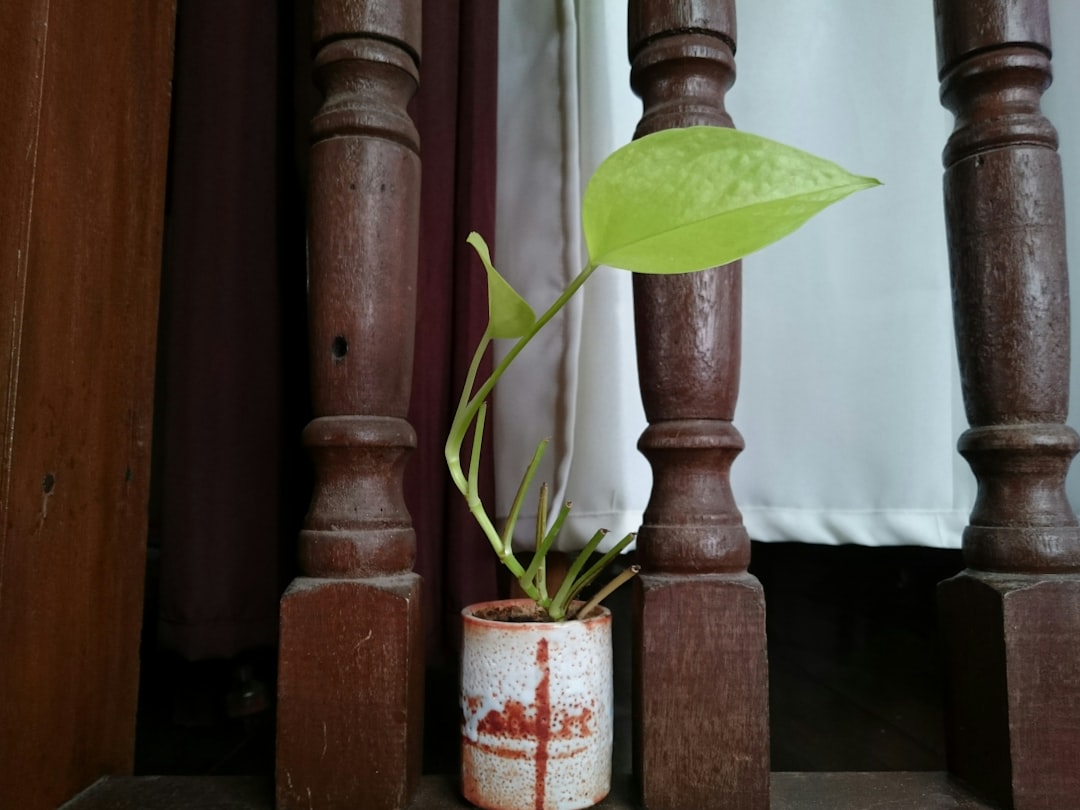
You bought a Neon Pothos because the chartreuse leaves looked like a splash of sunshine on your shelf. You placed it in a bright spot, maybe near a south-facing window, and waited for it to thrive. Instead, the leaves are getting smaller, the stem segments are stretching thin, and the vibrant yellow is fading into a dull, stressed green. You water it less. You wipe the leaves. You buy a new fertilizer. The plant keeps shrinking, and you are convinced you are doing everything wrong. The problem is not your care routine. It is the light.
Neon Pothos (*Epipremnum aureum* ‘Neon’) is a cultivar bred specifically for low-to-medium indoor light. Its genetic blueprint prioritizes chlorophyll efficiency over raw light absorption. When you place it in high, direct, or even intense indirect light, the plant triggers a physiological shutdown of leaf expansion. It stops growing large leaves because it cannot process the energy the light provides. The plant is not dying. It is conserving resources. The shrinking leaves are a direct signal of light overload, a symptom most gardeners misread as underwatering or nutrient deficiency.
The Chlorophyll Trade-Off
To understand why your Neon Pothos is shrinking, you have to look at what makes it different from the standard Green Pothos. The ‘Neon’ cultivar was selected for its bright, lime-yellow coloration. That color comes from a specific lack of chlorophyll in the leaf tissue. Chlorophyll is the pigment that captures light energy for photosynthesis. Green Pothos leaves are packed with it. Neon Pothos leaves have significantly less. This is not a defect; it is a trade-off. The plant sacrifices light-capturing capacity for visual appeal.
When you expose a low-chlorophyll plant to high light, you create an energy imbalance. The plant receives more photons than its limited chlorophyll can convert into chemical energy. This excess energy creates reactive oxygen species that damage the leaf cells. The plant’s defense mechanism is to stop expanding new leaf tissue. It produces smaller, thinner leaves that are easier to protect, or it reabsorbs nutrients from older leaves to move them to the roots. The visible result is the shrinking leaves you see on your desk. It is a survival response, not a disease.
Reading the Light Threshold
The most common mistake is assuming that “bright indirect light” is the same for every plant. It is not. A Monstera deliciosa can handle a south-facing window with a sheer curtain. A Neon Pothos will shrink in that same window. The difference lies in the light-hour threshold and the intensity of the photons hitting the leaf surface.
Neon Pothos thrives in what horticulturists call “low to medium” light. This translates to a spot that receives bright, filtered light for four to six hours a day, but never direct sun. A north-facing window is often too dark, leading to leggy growth and loss of color. A east-facing window is usually the sweet spot, providing gentle morning sun that the plant can handle without triggering the shrink response. If your plant is near a south or west window, even with a curtain, the light intensity is likely too high.
You can test your light levels without expensive equipment. Place your hand between the window and the plant. If your hand casts a sharp, dark shadow on the leaves, the light is too intense for a Neon Pothos. If the shadow is soft and diffuse, the light is likely safe. If there is no shadow, the light is too low, and the plant will stretch toward it, losing its compact shape. The goal is a soft shadow that moves slowly across the leaves as the sun shifts.
Recovery and Long-Term Care
If your Neon Pothos is already shrinking, moving it to a lower-light location will stop the damage, but it will not reverse it. The small leaves that have already formed will stay small. The plant will produce new leaves at the new, appropriate size. This process takes time. You must be patient. Do not fertilize heavily, thinking the plant is starving. It is not starving; it is stressed. Over-fertilizing a stressed, light-limited plant will burn the roots and accelerate the decline.
Watering remains consistent with other Pothos varieties. Let the top inch of soil dry out between waterings. Overwatering a light-stressed plant is the fastest way to cause root rot, which kills the plant entirely. The roots need oxygen, and soggy soil in a low-light environment will suffocate them. Use a well-draining potting mix, perhaps with extra perlite, to ensure the roots stay healthy while the leaves recover.
Keep the humidity moderate. Neon Pothos does not require the high humidity that tropical plants like Calatheas do, but it will crisp at the edges in very dry air. A simple room humidity level is sufficient. If the air is extremely dry, misting occasionally can help, but it is not a cure for light stress. The core issue remains the light intensity.
When to Accept the Shrink
There is a final, practical consideration. Some gardeners prefer the compact, shrub-like look of a light-stressed Neon Pothos. The small leaves create a dense, textured appearance that can be visually striking in a small container. If you like the look, you can maintain it by keeping the plant in that higher-light spot, accepting that the leaves will never reach the large, dramatic size of a Green Pothos. But if you want the classic, lush look of the cultivar, you must move it to lower light and wait for new growth.
The shrinking leaves of a Neon Pothos are not a mystery. They are a clear, biological signal. The plant is telling you that the light is too strong for its specific genetic makeup. By understanding the chlorophyll trade-off and respecting the light threshold, you can stop the shrink and enjoy the vibrant, chartreuse beauty the cultivar was bred to show. Move it to a gentler spot, water it normally, and let it grow at its own pace. The leaves will return to their proper size, one new leaf at a time.
Sources & Further Reading
- Pothos (Epipremnum aureum) Care Guide — Penn State Extension
- Neon Pothos: Epipremnum aureum 'Neon' — Royal Horticultural Society
- Light Requirements for Indoor Houseplants — University of Minnesota Extension
Photo by Lhar Capili on Unsplash.