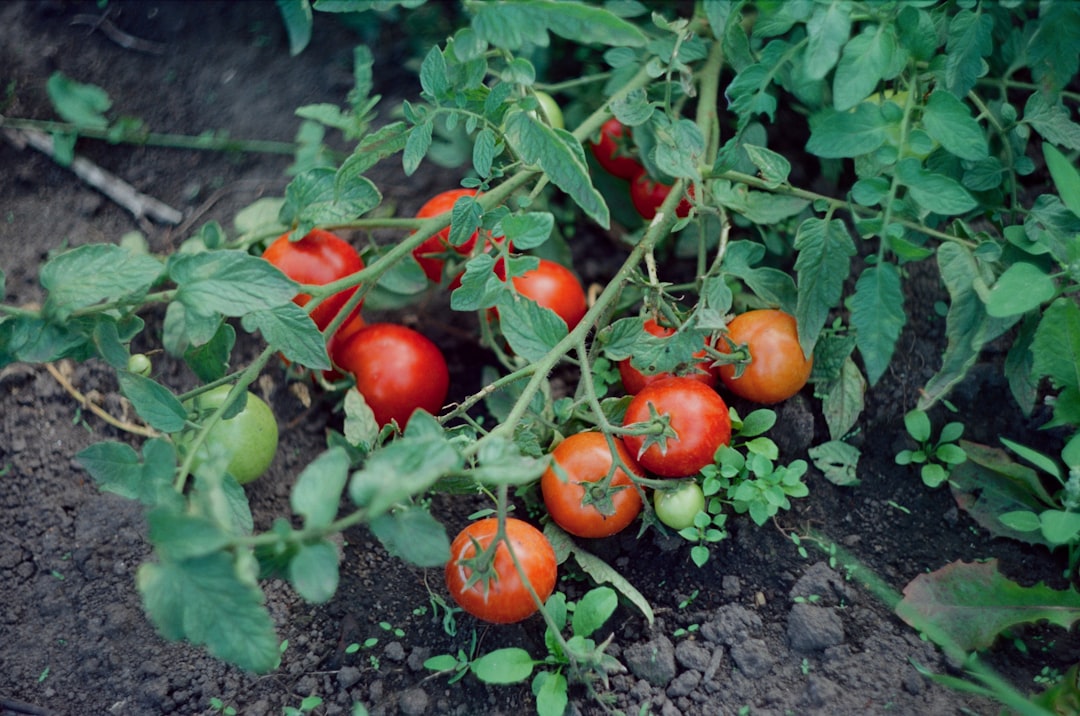
You have just finished deadheading your first round of cherry tomatoes, and the soil looks perfectly fine. You check the moisture level with your finger, it comes away slightly damp, and you move on to the next bed. Three days later, the lower leaves of your Brandywine plant are curling into tight, brittle cigars, and the fruit at the bottom of the cluster is splitting open with a loud crack. You immediately reach for the watering can, pour a gallon of water directly onto the base of the stem, and wait for the recovery. The plant does not recover. The leaves stay curled, the fruit keeps splitting, and you are left wondering why your careful watering schedule is failing you entirely.
The problem is not your watering frequency. The problem is your planting depth. You are growing your heirloom tomatoes like annuals, staking them at the surface of the soil, and ignoring the single most powerful physiological tool the plant possesses for surviving drought, heat stress, and transplant shock. That tool is the adventitious root system, and it only activates when you bury the stem deep enough to trigger it. The 12-inch rule for planting tomatoes is not a suggestion for decorative borders. It is a hard biological threshold that determines whether your plant survives a July heatwave or simply gives up.
The 12-Inch Rule for Heirloom Tomatoes: Why Depth Matters More Than Water
When you pull a tomato seedling from a nursery tray, you are looking at a plant with a very specific, very fragile root system. The roots are clustered in the top two inches of the soil, pale, thin, and completely unaccustomed to the heavy, unfiltered environment of a garden bed. If you plant this seedling at the exact depth it sat in the pot, you are handing it a plant with a two-inch root system and telling it to survive on its own. It cannot. The plant will survive, sure, but it will survive as a struggling annual, constantly tethered to the surface layer of the soil where temperatures spike, moisture evaporates, and nutrients wash away with the first heavy rain.
Burying the stem deep triggers a genetic override. The cells along the buried portion of the stem recognize the darkness and the pressure of the soil, and they begin to differentiate into adventitious roots. These are not the same as the original tap roots. They are a secondary, massive root network that forms in a matter of days, expanding the plant’s effective root zone from two inches to two feet. A tomato planted at twelve inches deep does not just have a bigger root system. It has a completely different root system, one capable of reaching down to the cooler, moister subsoil that surface-rooted plants simply cannot access.
This is why the 12-inch rule for heirloom tomatoes exists. It is about survival. Heirloom varieties, with their sprawling growth habits and massive fruit loads, are the most vulnerable to environmental stress. They are not bred for the rigid, staked, surface-level growing conditions of commercial hydroponics. They are bred for the messy, deep, unpredictable environment of a home garden. Burying them deep is the single most effective way to give them the stability and water access they need to produce heavy fruit without collapsing under their own weight or burning out from heat stress.
How to Bury the Stem Without Killing the Plant
Implementing the 12-inch rule for heirloom tomatoes requires a specific planting technique that most gardeners get wrong. The goal is not to simply pile soil up around the base of the stem, which can smother the remaining leaves and invite fungal diseases. The goal is to lay the stem horizontally along the bottom of the planting hole, burying the lower twelve inches, and then gently backfilling the soil up to the first set of true leaves. The top two to three inches of the plant, including the growing tip and the first few leaf nodes, must remain above the soil line to continue photosynthesizing and directing energy into the new root system.
Start by digging a hole that is six inches deep and six inches wide. Lay the seedling on its side in the hole, orienting the growing tip toward the north to prevent it from bending awkwardly as it grows upward. Bury the lower twelve inches of the stem with garden soil, ensuring that the soil is firm but not compacted. The remaining two to three inches of the plant, including the top leaves, should stick out of the ground at a slight angle. Backfill the hole with the remaining soil, pressing it down gently to eliminate air pockets. Water the plant thoroughly to settle the soil around the newly exposed root nodes. Within seven to ten days, you will see small white bumps emerging along the buried portion of the stem. These are the adventitious roots, and they are the plant’s new lifeline.
The critical mistake gardeners make is burying the plant too deep. If you bury the entire plant, including the top leaves, you are suffocating the photosynthetic engine. The plant will not die immediately, but it will enter a state of severe shock, halting growth while it struggles to push new leaves through the soil. If you bury the plant too shallow, you are missing the trigger entirely. The plant will grow, but it will grow with the same fragile, surface-level root system it had in the nursery pot, leaving it vulnerable to the exact heat and drought stresses you are trying to avoid.
Why Heirlooms Need This More Than Hybrids
Not all tomatoes need the 12-inch rule for heirloom tomatoes with the same intensity. Determinate bush varieties, which are bred to grow to a fixed height and set all their fruit at once, have less stem to bury and less incentive to develop a massive adventitious root system. They are often staked tightly and grown in smaller spaces. But indeterminate heirloom varieties, with their sprawling, vine-like growth habits and continuous fruit production over a six-month season, are entirely dependent on the stability and water access provided by deep planting.
Heirlooms are also more susceptible to splitting. When a plant has a shallow root system, a heavy rain event causes the soil to swell rapidly, pulling water up into the fruit faster than the skin can expand. The fruit splits. This is not a disease. It is a physics problem. A plant with a deep root system, anchored by twelve inches of buried stem, can regulate its water uptake more steadily. It draws water from deeper, more consistent soil layers, reducing the violent fluctuations in internal pressure that cause fruit to split. The 12-inch rule for heirloom tomatoes is, in part, a fruit-quality rule.
Furthermore, heirlooms are often grown in less-than-perfect soil. They are the plants you save from year to year, the ones you propagate from seed, the ones you grow because you love their flavor, not because they are easy to ship. They are not bred for commercial durability. They are bred for flavor and complexity. By giving them a deep root system, you are giving them the ability to forage for nutrients in the subsoil, reducing their dependence on surface fertilizers and creating a more robust, resilient plant that can handle the unpredictability of a home garden.
When the 12-Inch Rule for Heirloom Tomatoes Fails
There are exceptions to every rule, and the 12-inch rule for heirloom tomatoes is no different. If you are planting in heavy clay soil that does not drain well, burying the stem deep can trap moisture around the base of the plant, leading to crown rot. In these cases, you must amend the soil with coarse sand or compost to improve drainage before burying the stem. If you are growing in very sandy soil, the 12-inch rule is even more critical, as the plant will desperately need those deep roots to reach the water table. If you are growing in a container, the 12-inch rule is physically impossible, which is why container tomatoes must be grown in pots that are at least five gallons deep, allowing the roots to reach the bottom where moisture is more consistent.
Another failure point is using soil that is too cold. If you plant your tomatoes in early spring, when the soil temperature is below 60 degrees Fahrenheit, the adventitious root nodes will not develop. The plant will sit in the soil, waiting for warmth, while the buried stem rots. Wait until the soil is warm, then plant deep. This is the single most common reason the 12-inch rule for heirloom tomatoes fails: gardeners rush the process before the soil has warmed enough to support the new root growth.
What This Changes About Your Garden
Adopting the 12-inch rule for heirloom tomatoes changes how you view your garden. It shifts the focus from surface-level maintenance to deep-rooted resilience. You stop worrying about daily watering schedules and start worrying about soil structure and depth. You stop seeing the plant as a fragile annual and start seeing it as a deep-rooted perennial, capable of surviving on its own. It is a fundamental shift in perspective, and it is the difference between a garden that survives and a garden that thrives.
When you plant your next heirloom tomato, do not just dig a hole. Dig a trench. Bury the stem. Let the plant build its own foundation. The 12-inch rule for heirloom tomatoes is not a trick. It is biology. And once you see the difference, you will never plant a tomato at the surface again.
Sources & Further Reading
- Growing Tomatoes in the Home Garden — Penn State Extension
- Tomato Planting: Bury the Stem Deep — USDA Agricultural Research Service
- Tomato Production — Oregon State University Extension Service
Photo by Katerina Shkribey on Unsplash.