In 2018, a horticulturist at the University of Florida ran a humidity trial on 400 basil plants, splitting them evenly between sweet basil (*Ocimum basilicum*) and holy basil (*Ocimum tenuiflorum*). She placed them in identical pots, gave them the same amount of water, and subjected them to 90% relative humidity for three weeks. The sweet basil plants developed severe downy mildew within ten days, their leaves yellowing and collapsing. The holy basil plants sat there, completely unbothered, their leaves retaining their structural integrity. The difference was not in how much water they received, but in the microscopic architecture of their leaves.
When you grow holy basil versus sweet basil, you are not growing two varieties of the same plant. You are growing two plants with entirely different evolutionary strategies for surviving moisture. Sweet basil is a Mediterranean sun-lover that chokes in its own transpiration. Holy basil is a tropical survivor that evolved to thrive in the exact humidity that kills its cousin. Understanding this biological split is the only way to stop killing holy basil in humid climates, or killing sweet basil in dry ones.
The Vein Architecture That Controls Moisture
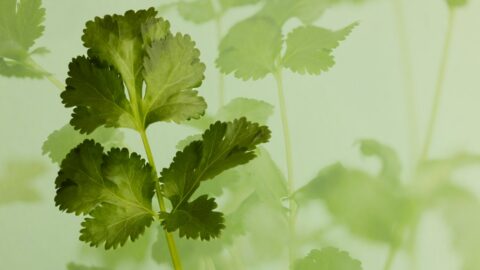
If you look at a sweet basil leaf under a microscope, you see a relatively smooth surface with a standard network of veins. The stomata, the tiny pores that regulate gas exchange and water loss, are distributed evenly across the upper and lower surfaces. This works perfectly in the dry, breezy Mediterranean climate where sweet basil evolved. But in high humidity, those stomata cannot push water vapor out fast enough. The moisture gets trapped inside the leaf tissue, creating a perfect incubator for fungal spores, specifically *Peronospora belbahrii*, the pathogen that causes downy mildew.
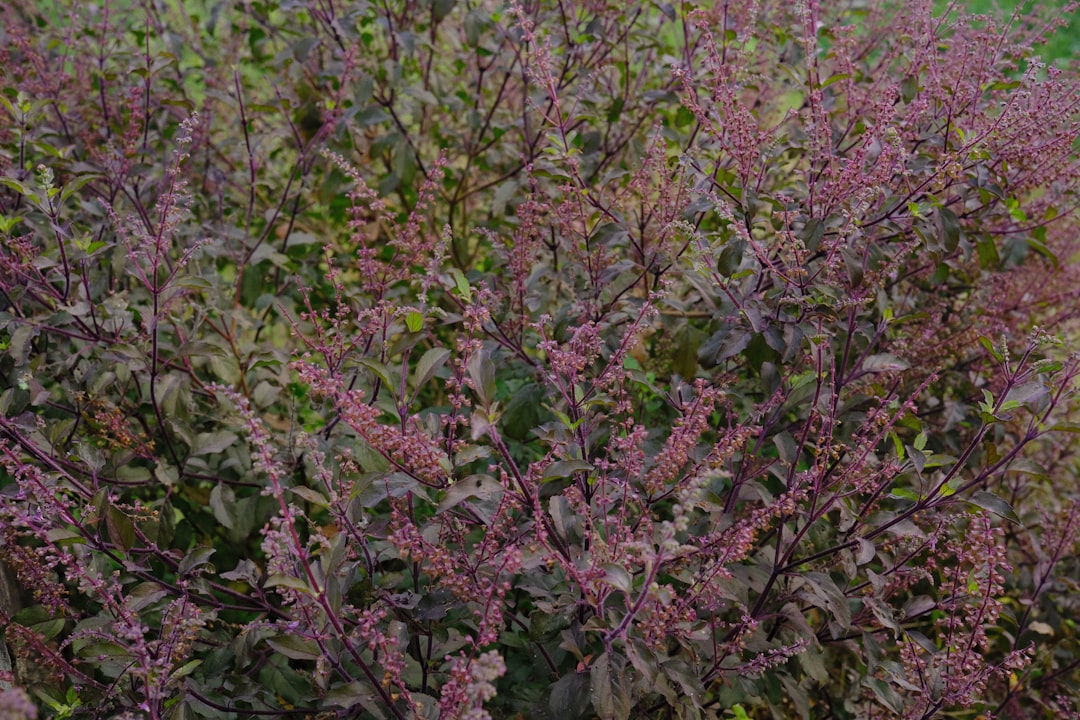
Holy basil handles this differently. Its leaves are thicker, more leathery, and covered in microscopic hairs called trichomes. These trichomes are not just for show. They create a boundary layer of still air directly against the leaf surface, which slows down the rate of transpiration. More importantly, holy basil has a higher concentration of essential oils, particularly eugenol and ocimum, which act as natural antifungal agents. When the humidity spikes, holy basil does not fight it. It uses its chemical defenses to neutralize the threat that destroys sweet basil.
This is why holy basil thrives in the deep South, the Pacific Northwest, and tropical regions, while sweet basil turns to mush the moment the air gets heavy. You cannot force sweet basil to tolerate high humidity by changing your watering schedule. The limitation is built into its leaf anatomy.
Why Holy Basil Suffers in Dry Air
Here is the counter-intuitive part: holy basil, the humidity champion, actually suffers in dry, arid climates. If you live in a region with 30% relative humidity, holy basil will show signs of stress long before sweet basil does. The same trichomes that protect holy basil from fungal rot in high humidity will trap moisture away from the leaf surface in dry air, causing the edges to brown and crisp. The thick, waxy cuticle that prevents water loss in the tropics becomes a barrier to water uptake in the desert.
Sweet basil, by contrast, is built for dry air. Its thinner leaves allow for rapid transpiration, which pulls nutrients up from the roots efficiently. In a dry climate, sweet basil grows vigorously, produces abundant oils, and rarely gets fungal issues. Holy basil in that same climate will look stunted, with leaves that are smaller, darker, and often edged in brown. It is not dying from lack of water; it is dying from lack of humidity.
This split explains why gardeners in humid climates often give up on holy basil. They treat it like sweet basil, water it heavily, and watch it succumb to mildew. The solution is not to water less. The solution is to stop treating them as interchangeable. Holy basil requires airflow that sweet basil does not, and sweet basil requires dryness that holy basil cannot handle.
Container Growing Changes the Equation
When you grow these plants in containers, you create a microclimate that can override regional humidity. This is where the real gardening challenge lies. In a container, the soil stays wet longer than in the ground, which increases the humidity around the base of the plant. For sweet basil, this is a death sentence. The combination of wet soil and high ambient humidity guarantees root rot and downy mildew.
Holy basil, however, handles container growing with remarkable ease. Its root system is more tolerant of wet conditions, and its antifungal oils protect it from the soil-borne pathogens that plague sweet basil. If you live in a humid climate, holy basil is the only basil that will reliably survive in a container without constant intervention. Sweet basil in a container in July is a ticking time bomb.
To make sweet basil survive in humid climates, you have to fight its biology. You must plant it in gritty, highly draining soil, ensure maximum airflow, and never let the leaves get wet. Even then, it will struggle. Holy basil, on the other hand, will thrive in standard potting mix, as long as you give it full sun. The difference is not in your care routine. It is in the plant’s inherent design.
Flavor Profiles and Culinary Uses
The biological differences between these two plants also dictate their culinary uses. Sweet basil is the king of Italian cuisine. Its flavor is dominated by linalool and anethole, which give it that classic, sweet, slightly peppery taste. It is best used fresh, added at the end of cooking, or blended into pesto. Heat destroys its delicate oils, and high humidity accelerates its degradation.
Holy basil has a completely different chemical profile. It is dominated by eugenol, which gives it a spicy, clove-like aroma, and methyl chavicol, which adds a licorice note. This is why holy basil is the cornerstone of Thai cuisine. It is used in stir-fries, curries, and soups, where the heat of cooking actually releases its complex oils. Holy basil can handle heat that would vaporize sweet basil’s flavor. It also has a longer shelf life, retaining its potency even after being chopped and stored.
If you are growing basil for flavor, you must choose the right plant for the right dish. Sweet basil for caprese salads and pesto. Holy basil for pad krapow and Thai curries. Trying to substitute one for the other will result in a dish that tastes fundamentally wrong, regardless of how well you grew the plant.
How to Grow Holy Basil Successfully
Growing holy basil is simpler than growing sweet basil, provided you respect its tropical origins. Start with seeds indoors six weeks before your last frost. Transplant them outdoors only after the soil has warmed to 70°F. Holy basil is far more cold-sensitive than sweet basil. A light frost will kill it instantly.
Plant it in full sun. Holy basil requires at least six hours of direct sunlight daily. In partial shade, it will become leggy and produce fewer oils. Water it when the top inch of soil is dry. Unlike sweet basil, holy basil does not need constant moisture. It is drought-tolerant once established. Overwatering is the only way to kill it, and even then, it is more forgiving than sweet basil.
Harvest holy basil by pinching off the top sets of leaves. This encourages bushy growth and prevents the plant from flowering too early. Once holy basil flowers, its leaves become bitter and tough. Keep pinching it back, and it will produce leaves all season long. In humid climates, holy basil will grow until the first hard frost. In dry climates, it will grow until the air gets too dry, then slow down.
The choice between holy basil and sweet basil is not a matter of preference. It is a matter of climate. If you live in a humid region, holy basil is your only reliable option. If you live in a dry region, sweet basil will outperform holy basil every time. Grow the plant that matches your air, not the one you want to cook with. The plant will tell you, through its leaves, whether it is happy or dying. Listen to them.
Sources & Further Reading
- Basil Production in Florida — University of Florida IFAS Extension
- Comparative Analysis of Ocimum Species Under High Humidity Stress — University of Florida Department of Horticultural Sciences
Photo by Rahul Mishra on Unsplash.