You water your aloe vera because it looks like it is dying. The leaves are dropping, the plant looks thin, and your instinct as a gardener is to give it more water to help it recover. But your aloe vera is not dying of thirst. It is dropping leaves because you are watering it like it is summer, and the plant is drowning in soil that stays wet far too long during the dormant season.
When an aloe vera plant drops leaves in winter, it is almost always a symptom of root rot triggered by a combination of reduced light, cooler temperatures, and the gardener’s instinct to keep the plant alive by watering it. The plant enters a dormant state where it stops growing and stops drinking. Watering it during this period keeps the soil saturated for weeks, suffocating the roots and creating the perfect environment for root-destroying fungi. The leaves drop because the root system can no longer support them, and the plant sheds them to conserve energy for survival.
Why Aloe Vera Drops Leaves in Winter
Understanding why aloe vera drops leaves requires looking at how the plant behaves across seasons. In spring and summer, aloe vera grows actively, pushing out new rosette leaves and expanding its root system. It needs regular water, bright light, and warmth. In autumn and winter, as daylight hours shorten and temperatures drop, the plant slows its metabolism significantly. It enters a state of dormancy, not death, but a deliberate pause in growth.
During dormancy, the plant’s water requirements drop by roughly 50 to 75 percent compared to summer levels. If you continue watering at the same frequency, the soil stays wet for far longer than the roots can process. The excess moisture creates an anaerobic environment around the roots, where beneficial aerobic bacteria die and anaerobic, root-rotting fungi thrive. The roots begin to decay, and the plant responds by shedding leaves to reduce water loss and conserve resources for the root crown.
This is not a sign that your aloe is dying. It is a sign that your watering schedule is out of sync with the plant’s biological clock. The leaves are the plant’s emergency release valve, and they are dropping because the roots are failing to deliver water and nutrients.
How to Tell If Your Aloe Is Root Rotting
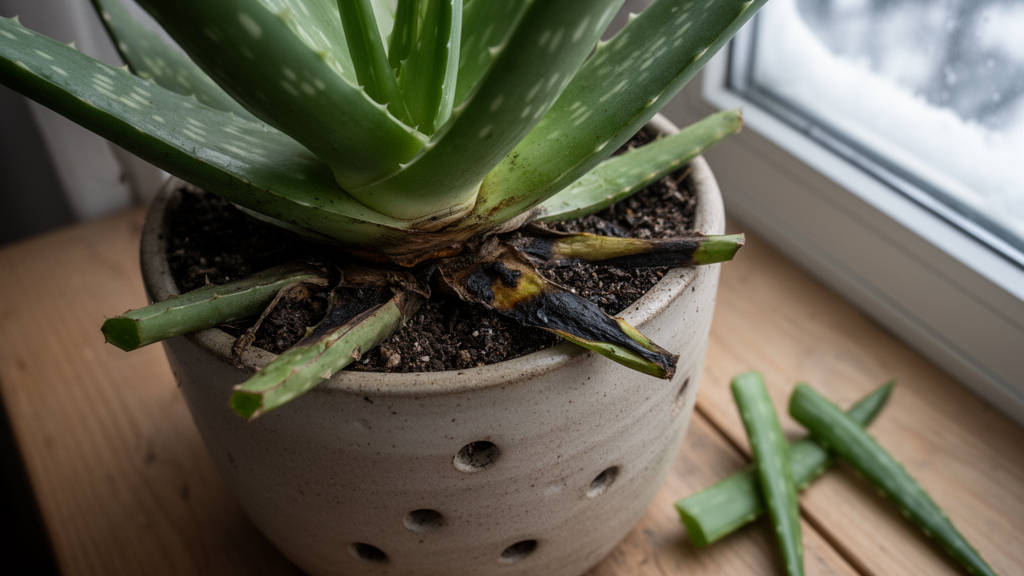
Root rot in aloe vera is subtle until it is advanced. The plant does not wilt like a thirsty plant. It looks healthy, maybe even plump, while the roots are silently decaying. The first sign is often a leaf that feels soft at the base, near the soil line. Gently squeeze the lower leaves. If they feel mushy, translucent, or blackened, you have root rot. Healthy aloe leaves should feel firm and slightly resistant when pressed.
Another telltale sign is a foul, earthy odor coming from the soil. Healthy soil smells like dirt. Rotting soil smells like decay. If you pull the plant out of its pot and the roots are brown, black, or slimy instead of white or light tan, you have confirmed root rot. The plant will drop leaves rapidly as the root system fails to support the canopy.
Do not ignore these signs. Root rot in aloe vera is fatal if left untreated. The fungus spreads from the roots up into the stem, and once the crown is infected, the plant is beyond saving. The goal is to catch it early, remove the rot, and let the remaining healthy roots recover.
How to Save an Aloe Vera Plant with Root Rot
Saving an aloe vera plant with root rot requires immediate action. Remove the plant from its pot and gently wash the roots under lukewarm water to remove as much soil as possible. Inspect the roots carefully. Cut away any brown, black, or slimy roots with clean, sharp scissors. Leave only the firm, white or light tan roots. If the stem is soft or discolored, cut back to healthy tissue. The plant may lose some leaves during this process, but that is normal. The plant is shedding damaged tissue to focus on recovery.
After trimming, let the plant dry out for three to five days in a shaded, well-ventilated area. This allows the cut surfaces to callus over, which prevents new rot from setting in. Do not repot the plant immediately. Wait until the cut ends are dry and callused. Then repot the plant in a container with excellent drainage, using a gritty, fast-draining soil mix designed for succulents. Water the plant sparingly after repotting, waiting until the soil is completely dry before watering again.
Patience is critical during recovery. The plant will not grow new leaves for several months. Do not be tempted to water more frequently. The plant is using its stored water to heal its roots. Overwatering during recovery will kill it. Trust the process. Let the plant dictate the watering schedule, not your calendar.
How to Prevent Root Rot in Winter
Preventing root rot in winter is easier than treating it. The key is to adjust your watering schedule to match the plant’s reduced needs. In winter, water your aloe vera only when the soil is completely dry, which may mean watering once every three to four weeks, or even less, depending on your home’s temperature and humidity. If you are unsure whether the soil is dry, stick your finger two inches into the soil. If it feels damp, do not water.
Another critical factor is light. Aloe vera needs bright light year-round, but winter light is weaker. Place your plant in the sunniest window you have, ideally a south-facing window in the Northern Hemisphere. If your home is dark in winter, consider using a grow light to supplement natural light. Without sufficient light, the plant cannot process water efficiently, and the risk of root rot increases.
Finally, ensure your pot has drainage holes. If your aloe is in a decorative pot without drainage, repot it into one with drainage. Excess water must be able to escape. If you use a pot without drainage, water the plant sparingly and never let it sit in standing water. The goal is to keep the soil on the drier side, not the wet side. Aloe vera thrives on neglect, not pampering.
When Root Rot Is Not the Problem
Root rot is the most common cause of leaf drop in winter, but it is not the only one. If your aloe’s leaves are firm, the soil is dry, and there is no foul odor, the leaf drop may be natural. Older leaves at the base of the rosette will occasionally drop as the plant matures. This is normal and not a cause for concern. The plant is simply shedding old leaves to make room for new growth.
Another possible cause is underwatering. If the soil is bone dry and the leaves are shriveled, thin, or crispy, your aloe is thirsty. Water it thoroughly, and the plant should recover within a week. However, underwatering is rare in winter, as the plant’s water needs are so low. Most gardeners overwater, not underwater.
Extreme cold can also cause leaf drop. If your aloe is exposed to temperatures below 50 degrees Fahrenheit (10 degrees Celsius) for extended periods, the leaves may drop as a stress response. Keep your aloe in a warm spot, away from cold drafts and windows that lose heat at night. If the plant is cold-stressed, move it to a warmer location and let it recover. Do not water until the plant is warm and the soil is dry.
The Real Reason Your Aloe Drops Leaves
Aloe vera drops leaves in winter because you are watering it like it is summer. The plant is dormant, its roots are dormant, and the soil stays wet for too long. The result is root rot, and the leaves drop as the plant sheds damaged tissue to survive. The solution is simple: water less, provide more light, and trust the plant’s natural cycles. Stop fighting the seasons. Let the plant rest. It will reward you with new growth in spring.
Sources & Further Reading
- Aloe Vera Care: How to Water, Light, and Repot — University of Illinois Extension
- Aloe Vera: The Medicinal Plant — Royal Horticultural Society
- Common Pests and Diseases of Aloe — The Old Farmer's Almanac