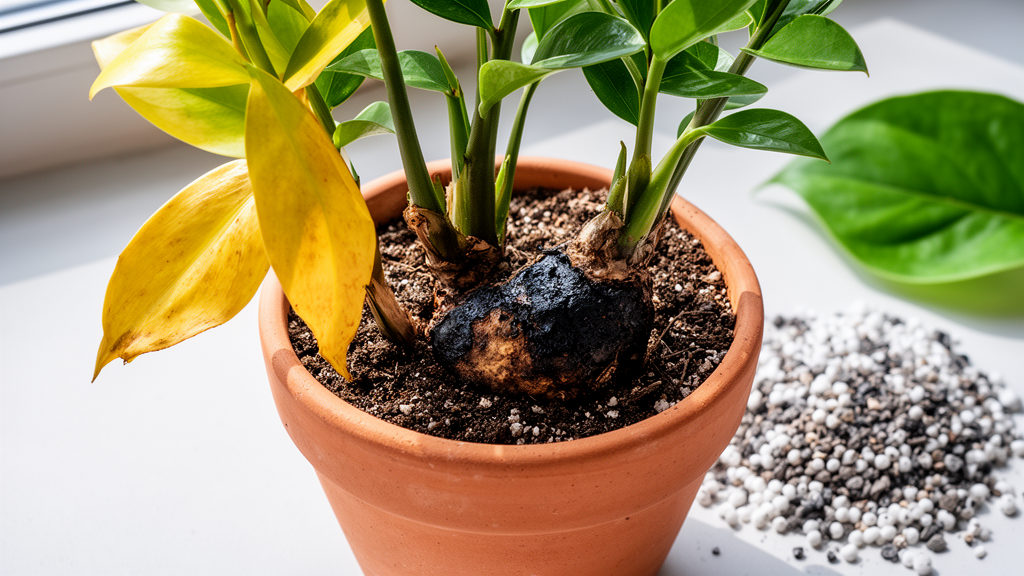
A ZZ plant does not turn yellow because it is thirsty. It turns yellow because its roots are suffocating in oxygen. Standard potting mix holds water like a sponge, and root cells die when they cannot breathe, turning the leaves yellow before the soil even feels damp. The fix is not less water. It is a soil that drains fast enough to let air reach the root zone.
You bought the ZZ plant (Zamioculcas zamiifolia) because it is supposed to be indestructible. The marketing on the tag said “low maintenance” and “drought tolerant.” You followed the instructions: water it once a month, keep it on the windowsill, and forget about it. Three months later, the lowest leaves are yellowing. You panic. You stop watering completely. You move it to a darker corner. The yellowing spreads. The stem at the base turns soft and black. The plant is dying, and you are killing it with the exact care routine the label told you to follow.
The problem is not the water. The problem is the soil. And more specifically, the problem is the soil you were told to use.
The Standard Potting Mix Is a Slow-Drowning Device
Most houseplant owners buy a bag of “standard potting mix” or “indoor plant mix” and assume it works for everything. It does not. Standard potting mix is designed for moisture-loving plants like ferns, calatheas, and most tropical foliage. It is made of peat moss, vermiculite, and fine compost. It holds water. It holds it aggressively.
When you plant a ZZ plant in standard potting mix, you are creating a physical environment that contradicts the plant’s biology. ZZ plants are native to the dry, rocky, well-drained regions of eastern Africa. They store water in thick, underground rhizomes that look like swollen potatoes. These rhizomes are designed to survive drought, not to sit in wet, anaerobic sludge. When the rhizome is surrounded by waterlogged soil, it cannot exchange gases with the atmosphere. The cells inside the rhizome begin to die from lack of oxygen. This is root rot. It is a physical suffocation.
The yellowing leaves are not a sign of thirst. They are the plant’s emergency signal. When the root system fails, the plant cannot pump water to the leaves. The leaves, which require constant water to maintain turgor pressure, begin to collapse. They turn yellow, then soft, then black, and they drop. The plant sacrifices the leaves to save the rhizome. If you stop watering at this stage, you are treating the symptom, not the cause. The rot is already inside the rhizome. It will continue to spread until the entire plant is a black, mushy mass.
Why the “Dry Out” Method Fails
Most ZZ plant care guides tell you to let the soil dry out completely between waterings. This advice is well-intentioned but technically flawed. In standard potting mix, the soil never truly dries out. The surface may feel dry to the touch, but the roots are sitting in a damp, oxygen-deprived environment. The peat moss holds water for weeks. The vermiculite holds water for weeks. The fine compost holds water for weeks.
When you water a ZZ plant in standard potting mix, you are flooding the root zone. The water has nowhere to go. It sits. The roots cannot breathe. The rhizome begins to rot from the inside out. This process is invisible until the leaves start to yellow. By the time you see the yellow leaves, the rot has already reached the crown of the plant. At that point, no amount of drying out will save it. The damage is structural. The cells are dead. The tissue is necrotic.
This is why ZZ plants in standard potting mix have a reputation for being difficult. They are not difficult. They are just planted in the wrong soil. The solution is not to water less. The solution is to change the soil.
The Gritty Soil Recipe That Actually Works
To save a ZZ plant, you must repot it into a soil mix that drains fast enough to let air reach the root zone. This is not a suggestion. It is a biological requirement. The rhizome needs oxygen. If the soil does not provide oxygen, the rhizome will die.
Here is the exact gritty soil recipe that works for ZZ plants, and for all aroids and succulent-like houseplants:
- 50% high-quality indoor potting mix (peat-based is fine, but it must be the base)
- 25% coarse perlite (not fine perlite. coarse perlite creates large air pockets)
- 25% pumice or coarse horticultural grit (this adds weight and drainage)
Mix these components thoroughly. The goal is a soil that looks like a loose, crumbly aggregate, not a dense, muddy block. When you water it, the water should drain through the pot within seconds, leaving the soil moist but not saturated. The air pockets created by the perlite and pumice allow oxygen to reach the root zone. The rhizome can breathe. The roots can function. The plant can thrive.
If you are repotting a ZZ plant that is already showing yellow leaves, you must remove it from the standard potting mix immediately. Gently wash the old soil from the roots. Inspect the rhizome. If any part of the rhizome is soft, black, or smells bad, cut it away with a sterile knife. Leave only the firm, white or cream-colored tissue. Repot the healthy rhizome into the gritty soil mix. Water it lightly, just enough to settle the soil. Then wait. Do not water again until the soil is completely dry. This may take three to four weeks. Be patient. The plant is healing.
How to Water a ZZ Plant Correctly
Once your ZZ plant is in the gritty soil mix, you can water it correctly. The rule is simple: water only when the soil is completely dry. To test this, stick your finger two inches into the soil. If it feels dry, water. If it feels even slightly moist, wait. Do not water on a schedule. Water based on the soil’s condition. This is the only way to avoid root rot.
When you water, water thoroughly. Pour water until it runs out of the drainage holes. This flushes out any accumulated salts and ensures the entire root zone is hydrated. Then, empty the saucer. Do not let the pot sit in standing water. Standing water is the fastest way to trigger root rot, even in gritty soil.
ZZ plants are drought tolerant because they store water in their rhizomes. They do not need frequent watering. In fact, they prefer to be slightly underwatered rather than overwatered. If you are unsure whether to water, wait another week. The plant will not die from missing one watering. It will die from too much water.
Signs Your ZZ Plant Is Recovering
After repotting into gritty soil and correcting your watering routine, your ZZ plant will begin to recover. The yellowing will stop. New leaves will emerge, small and bright green, from the center of the rhizome. The stem will firm up. The plant will look healthy again. This process takes time. Do not expect immediate results. The rhizome is a slow-growing organ. It takes months to rebuild the root system and produce new leaves. Be patient. Trust the soil. Trust the process.
If your ZZ plant has already turned completely black and mushy, the rot has reached the crown. There is no saving it. You must discard it. But do not throw away the lesson. The lesson is that standard potting mix is a slow-drowning device for plants that need air. Learn to read the soil. Learn to read the plant. And learn to use the right soil for the job.
Why This Matters Beyond the ZZ Plant
The ZZ plant is not the only houseplant that suffers from standard potting mix. Many popular houseplants are native to dry, rocky, or well-drained environments. They do not need waterlogged soil. They need air. They need drainage. They need grit. These plants include snake plants, peace lilies, anthuriums, philodendrons, and most succulents. If you are growing any of these plants in standard potting mix, you are risking root rot. You are risking yellow leaves. You are risking the death of your plant.
The solution is the same for all of them: gritty soil. Mix your own. Use perlite. Use pumice. Use grit. Let the air reach the roots. Let the plant breathe. Let it thrive. This is not a complex technique. It is a basic biological requirement. It is the difference between a plant that lives and a plant that dies. It is the difference between a yellowing mess and a lush, green, healthy houseplant. Choose the right soil. Choose the right water. Choose the right plant. And your ZZ plant will thank you.