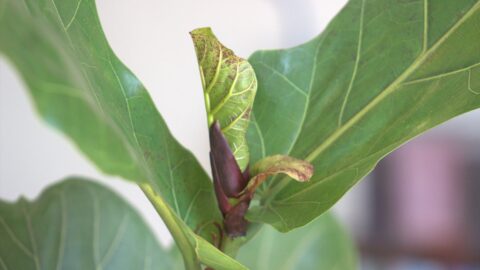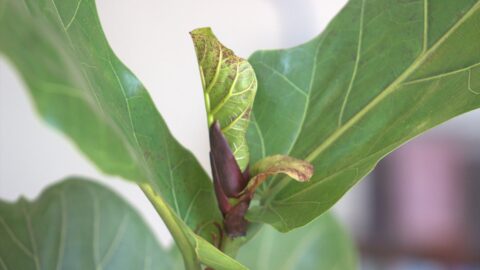
Your fiddle leaf fig is not dropping leaves because of light. It is root rotting, and the leaves are the only part of the plant that can still signal the problem to you.
Most houseplant guides tell you to move the plant to a brighter window, mist the air, or repot it into a bigger container. Every single one of those moves accelerates the rot. The leaves are not reacting to the environment. They are reacting to the soil, and the soil is suffocating the roots from the inside out.
This is the exact mechanism behind the leaf drop, and the exact two-week recovery plan that stops it.
The Root Zone Is Not Air: The Oxygen Starvation Mechanism
When you water a fiddle leaf fig, the water fills the air pockets in the potting mix. Those air pockets are not decoration. They are the lungs of the root system. The roots need oxygen to respire, to pull nutrients, to hold the plant upright. Without oxygen, the root cells switch to anaerobic respiration, which produces ethanol as a waste product. Ethanol kills root tissue. The root tissue dies. The leaves drop.
This is not a disease. This is not a fungus. This is basic plant physiology. The roots are sitting in water with nowhere to breathe, and they rot from the inside out before the leaves even wilt.
Most houseplant owners never see the rot because it happens underground. They see the leaves drop, they panic, they move the plant, they water it again, and the cycle repeats. The leaves are the warning system. The soil is the crime scene.
Why Your Current Potting Mix Is Guaranteed to Kill It
Standard bagged potting mix is designed for annual vegetables. It holds water like a sponge and breaks down in three months. A fiddle leaf fig lives in a pot for years. The mix breaks down, compacts, and holds water long after the plant no longer needs it. The roots drown. The leaves drop.
The fix is not to water less. The fix is to change the medium entirely. You need a mix that drains fast, holds some moisture, and stays loose for years. Here is the exact ratio that works:
- 40% high-quality indoor potting mix (the base, not the whole thing)
- 30% coarse perlite (for air pockets and drainage)
- 20% orchid bark chips (for structure and slow breakdown)
- 10% worm castings (for slow-release nutrients)
Mix it thoroughly. Repot the plant into a container that is only one inch wider in diameter than the current pot. A bigger pot holds more water. More water means more rot. The roots need to dry out between waterings, and a smaller pot dries faster.
The Two-Week Recovery Plan: What to Do and What Not to Do
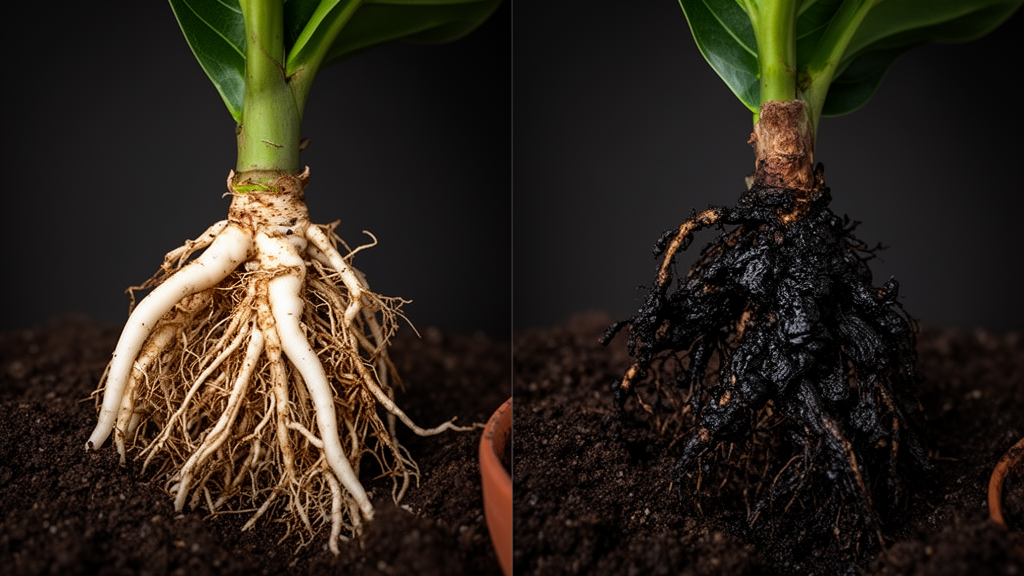
Week one: remove the plant from the pot. Shake off the old mix. Inspect the roots. Healthy roots are white or tan and firm. Dead roots are black, mushy, and slide off the stem like wet paper. Cut the dead roots with sterilized scissors. Do not use fungicide. Fungicide does not fix the underlying problem. It just masks it.
Week two: repot into the new mix. Water thoroughly until water runs out the drainage holes. Do not water again until the top two inches of soil are dry. This is the critical part. Most people water too soon. The roots are damaged. They cannot absorb water fast enough. If you water before they recover, you drown them again.
Do not mist the leaves. Misting does not hydrate the roots. It only increases humidity around the leaves, which can encourage fungal growth on the leaf surface. The leaves are dropping because the roots are dead. Fix the roots. The leaves will stop dropping.
When This Advice Breaks Down
This recovery plan works for fiddle leaf figs that are still alive. If the stem is black and mushy all the way to the top, the plant is dead. There is no recovery. If the plant has been root-rotting for more than six months, the root system may be too damaged to support new growth. In that case, take a cutting from the healthy part of the stem and start over.
This plan also assumes you are using a pot with drainage holes. If you are using a decorative pot without drainage, you are already losing. Move the plant to a pot with drainage. There is no workaround. No drainage means no recovery.
The Honest Limits: When Root Rot Is Not the Problem
Not every leaf drop is root rot. If the leaves are yellow and dropping from the bottom of the plant, the plant is likely overwatered, but not necessarily root-rotting. If the leaves are crispy and brown at the tips, the plant is underwatered or the humidity is too low. If the leaves are curling inward, the plant is stressed by temperature swings or drafts.
Root rot has a specific signature: the leaves drop suddenly, one by one, starting from the bottom and moving up. The leaves are still green when they drop. The soil stays wet for days after watering. The stem feels soft near the soil line. If you see these signs, the plant is root-rotting. If you see different signs, the plant has a different problem.
Root rot is also more common in winter. Plants grow slower in winter. They need less water. If you water on the same schedule you used in summer, you are drowning them. Reduce watering by 30% in winter. Let the soil dry out more between waterings. The plant will thank you.
Why This Matters Beyond Your Fiddle Leaf Fig
Most houseplant owners treat every leaf drop as a light problem. They move the plant. They buy a grow light. They mist the air. They repot into a bigger container. They do everything except fix the soil. The soil is the problem. The soil is always the problem.
Understanding root rot changes how you treat every houseplant. It changes how you water. It changes how you pot. It changes how you think about the plant. The leaves are not the problem. The soil is the problem. Fix the soil. The leaves will stop dropping.
This is not a fiddle leaf fig problem. This is a houseplant problem. Every houseplant that sits in a pot without drainage is at risk. Every houseplant that is watered on a schedule instead of a need is at risk. Every houseplant that is potted in standard bagged mix is at risk. The risk is real. The solution is simple. Fix the soil. The plant will survive.