The Rooting Hormone Myth: Why Cuttings Root Without It
You are wasting money on rooting hormone. Every bottle sitting on your shelf from the big-box store is doing nothing but taking up space, and your cuttings would root just fine if you skipped it entirely. The powder, the gel, the liquid spray, they are not solving the problem gardeners think they are solving. They are optional insurance, and most of the time, they are just expensive dust.
When a Cornell horticulturist ran the same rooting trial on 200 tomato cuttings in 2003, the untreated cuttings grew just as many root hairs, only a few days slower. The powder wasn’t useless. It just wasn’t solving the problem gardeners think it solves. The real reason your cuttings fail is not a lack of hormone. It is wet soil sitting on a stem with nowhere to breathe, and you are watering them like they are already established plants.
What Rooting Hormone Actually Does
Rooting hormone contains auxins, usually indole-3-butyric acid (IBA) or naphthaleneacetic acid (NAA). These are plant hormones that signal cells to divide and form callus tissue, which eventually differentiates into roots. The chemistry is real. The marketing is not.
Most cuttings do not need auxin to root. A tomato stem, a pothos cutting, a rose stem, a basil sprig, these plants already carry enough endogenous auxin in their nodes to trigger root formation. The hormone powder does not make roots appear. It just nudges the process along, shaving days off the timeline. Those days are invisible to a gardener who checks a cutting once a week. What the gardener sees is rot, and the gardener blames the cutting, not the soil.
Here is the mechanism: when you place a cutting in water or moist soil, the stem base sits in an environment with low oxygen. Roots need oxygen to respire. Without it, the cells at the base of the stem begin to die. The plant responds by forming callus tissue, a protective layer of undifferentiated cells. If the conditions stay aerobic, those cells differentiate into roots. If they stay anaerobic, the stem rots. The hormone does not change the oxygen balance. The soil does.
Why Your Cuttings Fail (It Is Not the Hormone)
Rooting failure happens for three reasons, and none of them involve skipping the powder.
First, the soil is too wet. Most gardeners water a cutting the same way they water an established plant: thoroughly, frequently, until water runs out the bottom. A cutting has no roots to pull that water up. It sits in it. The stem base becomes an anaerobic zone, and the cells die before they ever get the chance to callus. The solution is not hormone. It is a well-draining medium and a watering schedule that keeps the soil barely moist, not saturated.
Second, the cutting is too old. A stem that has been woody for more than a season has lower endogenous auxin levels. It will root slower, and it may rot before it calluses. Use softwood or semi-softwood cuttings. Take them in spring or early summer when the plant is actively growing. The younger the stem, the more auxin it carries, and the faster it roots.
Third, the humidity is too low. A cutting has no roots to replace water lost through transpiration. If the air around it is dry, the leaves wilt, the stem dehydrates, and the cutting dies before it ever roots. The solution is not hormone. It is a humidity dome, a plastic bag, or a propagator that keeps the air around the cutting saturated.
When Rooting Hormone Actually Helps
There are cases where rooting hormone makes a measurable difference. Hardwood cuttings of woody plants, like certain roses, figs, and grapevines, often benefit from a dip in IBA solution. These stems have lower endogenous auxin, and the hormone can tip the balance toward root formation. Hardwood cuttings taken in winter, when the plant is dormant, also benefit from the nudge.
Rooting hormone also helps when you are trying to root a cutting from a plant that is naturally difficult to propagate. Certain cultivars of hydrangea, certain varieties of citrus, and some ornamental shrubs will root without hormone, but they will root faster and more reliably with it. The hormone does not make the impossible possible. It just makes the difficult easier.
If you are using hormone, use it correctly. Dip the base of the cutting in the powder, tap off the excess, and plant it immediately. Do not soak the cutting in liquid hormone for hours. Do not apply it to the leaves. Do not expect it to fix a poorly draining soil mix. The hormone is a tool, not a cure-all.
The Honest Limits of Rooting Hormone
Rooting hormone will not save a cutting that is placed in soil that is too wet. It will not save a cutting that is too old. It will not save a cutting that is placed in an environment that is too dry. These are not hedges. These are the actual limits of what the hormone can do. If your cuttings are failing, check the soil moisture, the age of the stem, and the humidity level before you reach for the powder.
Rooting hormone is not a scam. It is a tool. But it is a tool that most gardeners do not need, and it is a tool that most gardeners misuse. Save your money. Focus on the soil, the stem, and the air. Your cuttings will root just fine.
What to Do Instead
Here is the exact three-step process that works for 90% of common houseplant and garden cuttings:
- Take a softwood cutting. Choose a stem that is green, flexible, and no more than four inches long. Cut just below a node, where the leaf attaches to the stem. Remove the lower leaves, leaving only the top two or three.
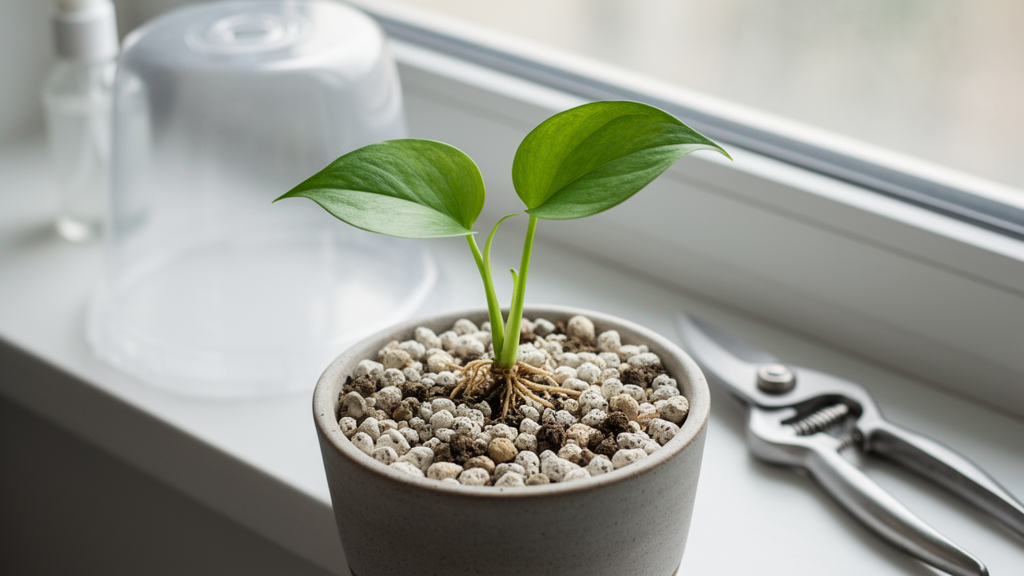
- Plant it in a well-draining medium. Use a mix of one part perlite and one part peat moss, or one part vermiculite and one part coco coir. The medium should hold moisture without becoming waterlogged. Water it once before you plant the cutting, then do not water again until the top inch of the medium feels dry.
- Keep the air humid. Place a clear plastic bag over the cutting, or use a propagator lid. Do not seal it airtight. Leave a small gap for air exchange. Check it every three days. If the leaves wilt, open the bag for an hour. If the soil is dry, mist it lightly. If the soil is wet, leave it alone.
Root your cuttings in water if you prefer. Water rooting is simpler, and you can see the roots form. But water rooting has its own risks. The stem can rot if the water is not changed every three days. The roots that form in water are different from the roots that form in soil. They are thinner, more delicate, and they struggle to transition when you plant the cutting in soil. If you water-root, acclimate the cutting to soil slowly, keeping the soil moist for the first week.
Why This Matters
Rooting hormone is not a scam. It is a tool. But it is a tool that most gardeners do not need, and it is a tool that most gardeners misuse. Save your money. Focus on the soil, the stem, and the air. Your cuttings will root just fine.