You have probably been told to add compost to your container herbs. “Compost is free,” they say. “Compost is food.” You follow that advice, mix a generous handful into the pot, and watch your basil yellow, your rosemary stall, and your mint grow leggy and thin. You water it. You give it more compost. You assume the plant is sick. The plant is not sick. It is starving. The mistake is not in the compost. It is in the assumption that compost feeds plants directly.
Compost is not fertilizer. It is a soil conditioner. This distinction matters more in a five-gallon pot than in a garden bed, and ignoring it turns your best intentions into a slow nitrogen tie-up. When you add organic matter to a confined container, the microbes that break it down need nitrogen to do their work. They pull that nitrogen from the soil, and your plants starve. The result is exactly what you see: a plant sitting in what looks like fertile soil but is functionally empty.
The fix is not to stop composting. It is to understand what compost does, what it does not do, and how to pair it with a real fertilizer in a container system. This article covers the mechanism, the exact ratio that works for herbs, and the one amendment that turns compost from a slow sink into a fast-acting soil builder.
Compost Is Not Fertilizer (And Why That Matters in a Pot)
Compost is decomposed organic matter. It is a soil amendment that improves structure, water retention, and microbial life. It contains small amounts of nitrogen, phosphorus, and potassium, but those numbers are low and slow-release. A typical finished compost might test at 1-1-1 or 2-1-1. That is not enough to sustain a fruiting herb like basil or a flowering rosemary in a five-gallon pot. Those plants need more than a slow trickle of nutrients. They need a steady supply.
Fertilizer, by contrast, is a concentrated source of nutrients. It can be synthetic or organic, but the key is that it delivers nitrogen, phosphorus, and potassium in a form the plant can use immediately. A balanced liquid fertilizer like 10-10-10 or 5-5-5 gives plants what they need to grow. Compost gives the soil what it needs to hold those nutrients longer.
When you mix compost into a container, you are building a better soil. You are not feeding the plant directly. If you rely on compost alone, your herbs will starve. This is the single most common container gardening mistake, and it is invisible until the damage is done.
The Nitrogen Tie-Up: What Happens When You Add Compost Wrong
When you add organic matter to soil, microbes begin to decompose it. Decomposition requires energy. Microbes use carbon as fuel and pull nitrogen from the surrounding soil to build their own cells. This process is called nitrogen tie-up, and it is real, measurable, and devastating to container plants.
In a garden bed, the soil volume buffers this effect. The microbes pull nitrogen from a large reservoir, and the plant roots can access it. In a five-gallon pot, the soil volume is small. The microbes pull nitrogen from a tiny reservoir, and the plant roots have nowhere else to go. The result is a plant that sits in soil that looks rich but is functionally nitrogen-depleted.
The symptoms are clear: yellowing lower leaves, stunted growth, and a plant that refuses to put on new foliage. If you see these signs after adding fresh compost, you are not dealing with a pest or a disease. You are dealing with nitrogen tie-up. The fix is not to remove the compost. It is to add a nitrogen source that the plant can use immediately.
How to Fix It: The Exact Ratio for Container Herbs
The solution is simple: pair compost with a balanced fertilizer. Use compost as the base, then add a fertilizer to cover the plant’s immediate needs. This is the ratio that works for most container herbs:
- Compost: 20-30% of the total pot volume. This improves structure and microbial life.
- Base fertilizer: A balanced organic fertilizer like 5-5-5 or 10-10-10, applied at the rate recommended on the package. This gives the plant immediate nitrogen.
- Top dressing: A light application of compost or worm castings every 4-6 weeks. This feeds the soil, not the plant directly.
This ratio works because it separates the roles. Compost builds the soil. Fertilizer feeds the plant. When you mix them correctly, your herbs get the best of both worlds: a healthy soil structure and a steady nutrient supply.
For specific herbs, adjust the nitrogen slightly. Basil and cilantro need more nitrogen for leafy growth. Rosemary and thyme need less. Adjust the fertilizer ratio accordingly, but keep the compost at 20-30% of the pot volume. This is the non-negotiable baseline for container success.
What to Avoid: The Three Compost Mistakes That Kill Container Plants
Not all compost is created equal, and not all container gardening mistakes are the same. Here are the three most common errors that turn compost from a soil builder into a plant killer:
Mistake 1: Using raw or incompletely composted material. Raw compost is active. Microbes are still breaking it down, and they are still pulling nitrogen from the soil. Use only finished compost, which is dark, crumbly, and smells like earth. If your compost is hot, smelly, or full of recognizable scraps, it is not finished. Do not use it in containers.
Mistake 2: Over-composting. Too much compost in a container can lead to water retention issues. Compost holds water, and too much of it can suffocate roots. Keep compost at 20-30% of the pot volume. If your soil feels soggy or smells sour, you have too much compost. Add more perlite or coarse sand to improve drainage.
Mistake 3: Ignoring pH. Compost can alter soil pH, and some herbs are sensitive to pH changes. Basil prefers a pH of 6.0-7.0. Rosemary prefers 6.0-6.5. Check your soil pH before adding compost, and adjust with lime or sulfur if needed. A pH test kit is cheap and easy to use. Do not skip this step.
The One Amendment That Turns Compost Into a Fast-Acting Soil Builder
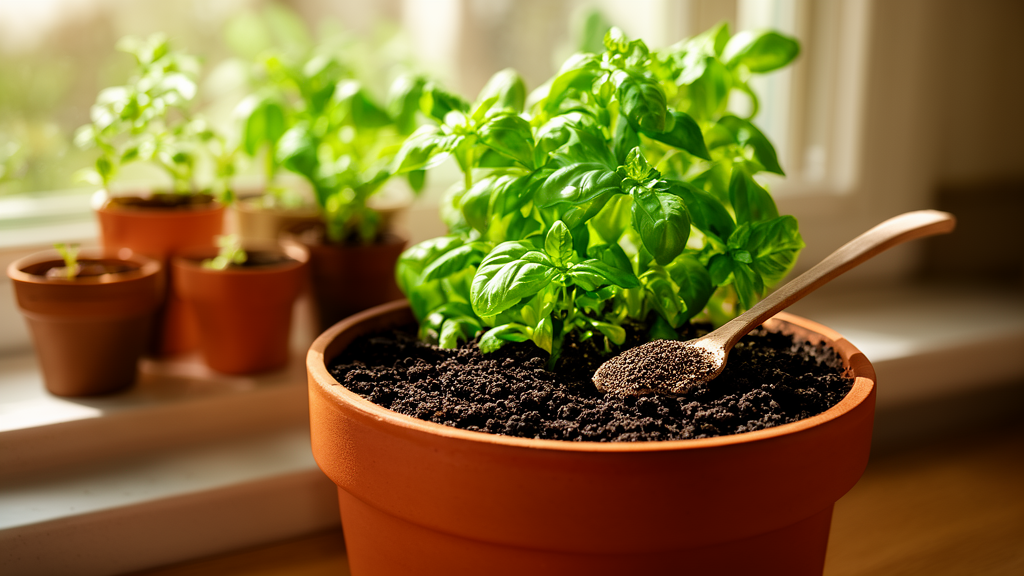
Worm castings. These are the end product of earthworm digestion, and they are the single most effective soil amendment for container gardening. Worm castings are rich in beneficial microbes, enzymes, and nutrients. They improve soil structure, water retention, and nutrient availability. They are also gentle enough to use on seedlings.
Use worm castings as a top dressing every 4-6 weeks. Sprinkle a thin layer on the soil surface, water it in, and let the microbes do their work. This feeds the soil, not the plant directly, and it works in harmony with your compost and fertilizer mix. Your herbs will respond with faster growth, greener leaves, and better flavor.
Worm castings are not a fertilizer. They are a soil conditioner. But they work faster than compost because they are already broken down. Microbes do not need to pull nitrogen from the soil to decompose them. They are ready to go. This makes them the perfect partner for compost in a container system.
When This Strategy Fails: The Exceptions You Must Know
Not every container herb responds to this strategy. Some plants are sensitive to nitrogen, and too much of it can cause leggy growth or poor flowering. Rosemary, thyme, and oregano are low-nitrogen herbs. They prefer leaner soil and less frequent feeding. If you are growing these herbs, reduce the fertilizer ratio and increase the compost ratio. Keep compost at 30% of the pot volume, and use a low-nitrogen fertilizer like 3-5-5. This prevents leggy growth and encourages flowering.
Another exception is citrus trees in containers. These plants are heavy feeders and need more nitrogen than herbs. Use a citrus-specific fertilizer, and increase the compost ratio to 30-40% of the pot volume. This provides the structure and nutrient retention citrus trees need to thrive in a confined space.
Finally, if your container soil is already rich in organic matter, you may not need to add compost at all. Test your soil before adding anything. If the organic matter content is above 10%, skip the compost and focus on fertilizer. This prevents over-composting and water retention issues.
The Payoff: What This Changes About How You Grow
Understanding the difference between compost and fertilizer changes everything. You stop treating compost as a magic bullet and start using it for what it is: a soil builder. You pair it with a real fertilizer, and your container herbs get the best of both worlds. This is not a theoretical exercise. This is the exact method that turns struggling container gardens into productive ones.
The next time you add compost to a pot, remember: you are building soil, not feeding plants. Feed the plants with fertilizer. Build the soil with compost. This separation of roles is the single most important lesson in container gardening, and it is the one most gardeners miss.
Your herbs will thank you with faster growth, greener leaves, and better flavor. Your soil will thank you with better structure, water retention, and microbial life. This is not a quick fix. This is a long-term strategy that compounds over time. Start now, and your container garden will be the envy of every neighbor who still thinks compost is a free lunch.