
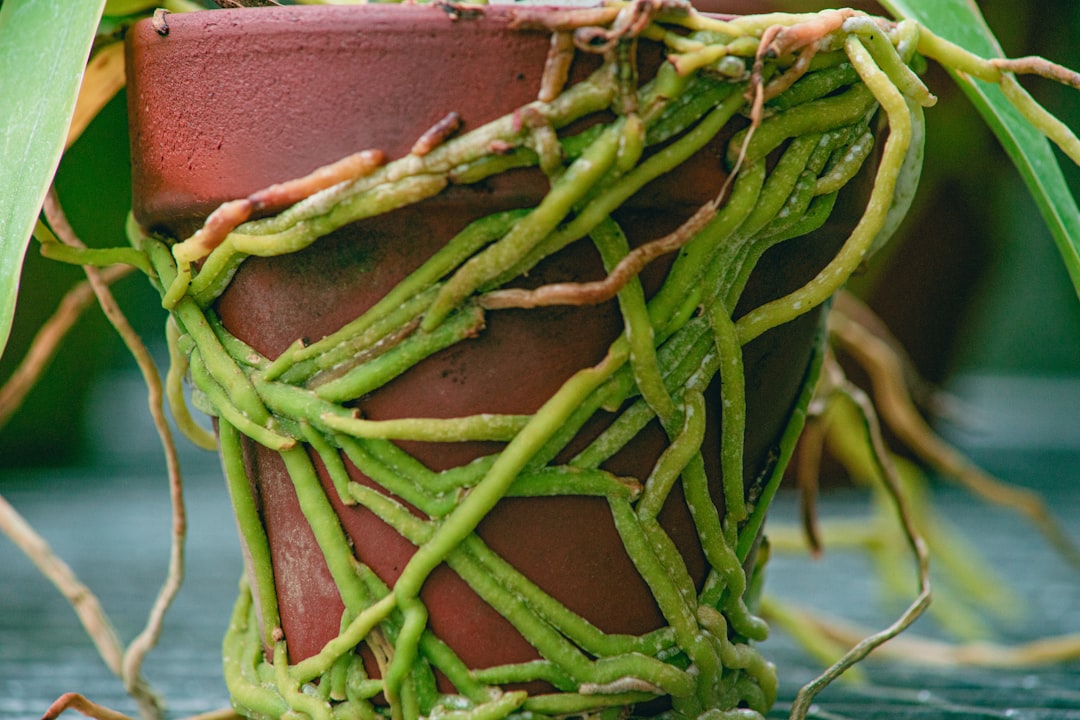
Orchid root rot is not a watering schedule problem. It is a potting medium failure. You can water your orchid once a month, once a week, or once a day, and it will still rot if the potting medium cannot drain fast enough to keep the roots oxygenated. The frequency of your watering is irrelevant when the physical structure of the potting mix holds water against the roots for longer than the root hairs can survive without breathing.
Most orchid growers treat root rot as a symptom of their own negligence. They look at the black, mushy roots and immediately blame the watering can. They reduce the watering frequency, they switch to smaller pots, they start misting less aggressively. The plant dies anyway. This happens because the rot is not caused by how often you water. It is caused by how long the water stays in contact with the roots, and the potting medium determines that duration.
Why Orchid Roots Need Air More Than Water
Orchid roots are fundamentally different from the roots of most garden plants. They are not designed to pull nutrients from soil. They are epiphytic, meaning they evolved to grow on tree bark in tropical canopies, where they hang in the air and absorb moisture from passing clouds and rain. Their outer layer, called the velamen, is a thick, spongy tissue designed to absorb water rapidly and then release it just as quickly. The root tissue underneath the velamen is alive and requires a constant supply of oxygen.
When you plant an orchid in a standard, moisture-retentive potting mix, you are forcing an epiphyte to behave like a terrestrial plant. The roots are wrapped in a medium that holds water tightly against the root surface. The velamen absorbs the water, but the water cannot escape fast enough. The root tissue underneath suffocates. Within days, the root cells die, and opportunistic fungi move in to digest the dead tissue. This is root rot.
The critical factor here is not the volume of water you apply, but the contact time. A root can survive a brief soaking if the medium drains instantly. It cannot survive sitting in damp medium for three days. This is why two orchids watered with the exact same frequency can have completely different outcomes. One is in a gritty, fast-draining mix that leaves the roots dry within hours. The other is in a dense, moisture-retentive mix that keeps the roots wet for days. The second orchid will rot, regardless of how infrequently you water it.
The Potting Medium Is the Real Culprit
The most common cause of orchid root rot is the potting medium itself. Standard bagged potting soil, peat moss, and even some commercial orchid mixes are designed to hold water. They are engineered for terrestrial plants that thrive in consistent moisture. Orchids do not thrive in consistent moisture. They thrive in cycles of wet and dry, with the dry cycle being almost as important as the wet cycle.
If your potting medium is holding water against the roots for more than 24 to 48 hours after you water, it is the primary cause of your rot. This is a physical reality, not a matter of opinion. You can test this by watering your orchid and then digging out a small section of the medium after 24 hours. If the medium is still wet and heavy, it is holding water against the roots. The roots will rot. There is no way around this.
The solution is to switch to a fast-draining, gritty potting medium. Bark chips, perlite, pumice, and charcoal are the standard components. These materials do not hold water against the roots. They allow water to flow through the pot quickly, leaving the roots exposed to air for the majority of the time. This mimics the orchid’s natural environment and prevents the conditions that allow rot to take hold.
Do not underestimate the importance of the pot itself. Plastic pots hold moisture longer than clay pots. If you are using a plastic pot, you must water less frequently, but more importantly, you must ensure the medium inside is gritty enough to drain quickly. If you are using a clay pot, you must water more frequently, but the medium can be slightly more moisture-retentive. The pot and the medium work together to determine contact time.
How to Diagnose Root Rot Before It Kills the Plant
Root rot is often invisible until it is too late. The leaves may still look green and healthy, but the roots are dying underneath. This is why you must check the roots regularly, not just when the plant looks sick. The best way to check the roots is to gently remove the orchid from its pot. If the roots are firm and green or silver, the plant is healthy. If the roots are mushy, black, or brown, the plant has root rot.
Do not wait for the leaves to yellow or drop. By the time the leaves show symptoms, the root system is often too damaged to support the plant. Check the roots every three to four months, or whenever you water. This is not a lot of work, and it will save you from losing plants to silent rot.
If you find root rot, do not panic. You can save the plant. Remove all the rotted roots. Cut them away with clean, sharp scissors. Leave only the firm, healthy roots. Repot the plant in a fresh, fast-draining medium. Water the plant sparingly for the first week to allow the cut roots to callus over. Then resume normal watering. The plant will recover, but it may take several months to regrow the root system.
Why Watering Frequency Is a Distraction
Most orchid care guides focus on watering frequency. They tell you to water once a week, or once every ten days, or once a month. They give you a schedule. This is misleading. A schedule is useless if the potting medium is wrong. If the medium holds water against the roots for days, no schedule will save the plant. If the medium drains instantly, you can water daily, and the plant will thrive.
The focus should be on the medium, not the schedule. Choose a medium that drains fast. Use a pot that allows air circulation. Check the roots regularly. Water when the medium is dry, not when a calendar says it is time. This is the only way to prevent root rot. Frequency is a distraction. It is a symptom of a deeper problem that most guides ignore.
How to Repot an Orchid with Root Rot
Repotting an orchid with root rot requires care and precision. Do not rush the process. Take your time to remove all the rotted roots. Do not leave any black or mushy tissue behind. If you leave even a small piece of rotted root, the rot will spread to the healthy roots, and the plant will die.
Use a clean, sharp pair of scissors or pruning shears. Sterilize the tools before you start, and sterilize them between plants if you are repotting multiple orchids. This prevents the spread of fungal spores from one plant to another. Do not use dull tools, as they will crush the healthy root tissue and make the plant more susceptible to infection.
After you have removed all the rotted roots, repot the plant in a fresh, fast-draining medium. Do not reuse the old medium. Even if it looks dry and clean, it is full of fungal spores and will cause the rot to return. Use a pot that is only slightly larger than the root system. Orchids prefer to be root-bound. A pot that is too large will hold too much water and cause the rot to return.
Water the plant sparingly for the first week. Do not soak the medium. Just moisten it enough to keep the remaining roots from drying out completely. This allows the cut roots to callus over and heal. After a week, you can resume normal watering. Monitor the plant closely for the next few months. If the leaves start to yellow or drop, you may have missed some rotted roots. Check the roots again and remove any new rot.
When Root Rot Is Not the Problem
Root rot is the most common cause of orchid decline, but it is not the only one. Sometimes, the leaves yellow and drop because of underwatering, not overwatering. Sometimes, the leaves yellow and drop because of a nutrient deficiency. Sometimes, the leaves yellow and drop because of a pest infestation. It is important to diagnose the problem correctly before you start cutting roots.
If the roots are firm and healthy, but the leaves are yellowing, the problem is likely not root rot. Check the leaves for pests. Check the soil for nutrient deficiencies. Check the light levels. Orchids need bright, indirect light. Too much light will burn the leaves. Too little light will cause the plant to stop growing and eventually die. Do not assume root rot is the problem without checking the roots first.
FAQ
How often should I water my orchid?
Water your orchid when the potting medium is dry. This could be once a week, once every ten days, or once a month, depending on the medium, the pot, and the environment. Do not follow a schedule. Follow the medium.
What is the best potting medium for orchids?
A fast-draining, gritty medium is best. Avoid standard potting soil, peat moss, and any medium that holds water against the roots.
How do I know if my orchid has root rot?
Remove the orchid from its pot and check the roots.
Can I save an orchid with root rot?
Yes. Water sparingly for the first week.
Does the type of pot matter?
Yes.
Sources & Further Reading
- Orchid Root Rot: Diagnosis and Treatment — University of Florida IFAS Extension
- Orchid Root Rot: What It Is and How to Treat It — Royal Horticultural Society
- Orchids: Diagnosis and Treatment of Root Rot — Penn State Extension
Photo by Timothy Dykes on Unsplash.