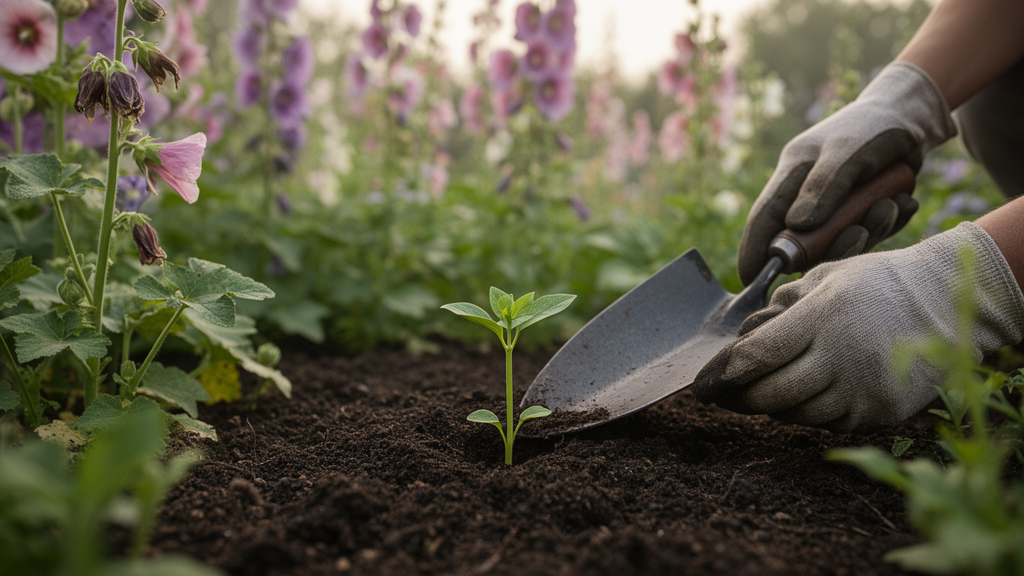
You walk past a neighbor’s garden and see a riot of color, hollyhocks, foxglores, self-heals, and something you do not recognize pushing through the mulch. You assume your own perennial border is failing because it looks sparse, so you buy more plants and fill every gap. You do not realize your border is actually doing exactly what perennials are supposed to do: it is reproducing aggressively, but you are pulling the seedlings before they ever get a chance to mature.
Perennial self-seeding is not a problem. It is the plant’s insurance policy. When a hosta sends up a flower stalk, when a columbine drops its papery seed pods, when a hollyhock shatters its capsule against a boot, the plant is betting on the next generation. You are treating that bet as a weed problem and pulling it before it earns its place in the bed. The result is a border that looks thin, looks unfinished, and looks like it needs constant replanting, when the real issue is that you are fighting the very mechanism that keeps the border alive without your wallet.
The Anatomy of a Self-Seeding Perennial
Self-seeding perennials do not grow from a single storage organ the way bulbs or tubers do. They grow from seed. That distinction matters because it changes how you manage them. A dahlia tuber stores carbohydrates underground and waits for spring. A self-seeding perennial drops viable seed onto the soil surface, and those seeds sit there until conditions trigger germination. The seed does not know you pulled it last week. It waits. Some seed banks in garden soil remain viable for three to five years.
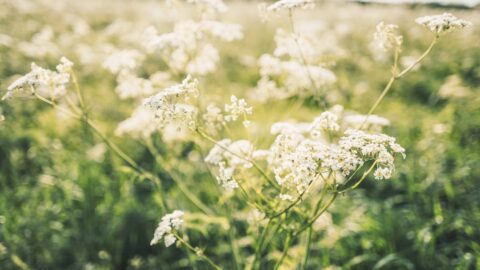
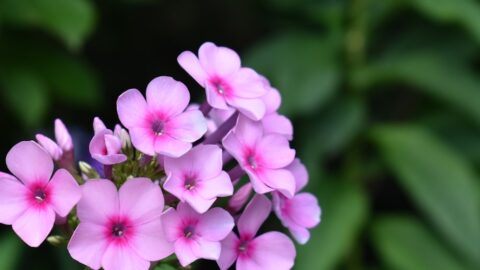
The plants most likely to self-seed are the ones with small, dry, papery seed capsules. Foxglove (*Digitalis purpurea*) drops thousands of dust-like seeds from a single stalk. Hollyhock (*Alcea rosea*) shatters its capsules when brushed. Sweet William (*Dianthus barbatus*) and columbine (*Aquilegia spp.*) release seeds with a slight bounce. Even common garden phlox and yarrow will drop viable seed if you let the flower heads dry on the plant. These are not weeds. They are perennials that happen to reproduce by seed rather than by rhizome or stolon.
Why You Are Pulling Them (And Why You Should Stop)
The instinct to pull seedlings comes from two places: the fear of an unkempt border, and the fear of losing control over which plants occupy your space. Both are real fears, but both are solvable without pulling.
When you pull a seedling, you are not just removing a plant. You are removing a future mature plant that would have cost you $8 to $15 at the nursery. You are also removing a plant that is already adapted to your microclimate. The seed came from a plant that survived your winter. It came from a plant that bloomed in your soil. That seed carries your garden’s genetics forward. Pulling it is like throwing away a free plant that already knows how to live here.
The solution is not to stop pulling. The solution is to pull strategically. Leave the seedlings that fall within the intended border. Pull the ones that have jumped into the vegetable bed, into the path, or into a space you explicitly reserved for something else. This is not passive neglect. This is active curation. You are curating the border by deciding where seedlings belong, not by erasing every seedling that appears.
How to Manage Self-Seeding Without Losing Control
Managing self-seeding perennials requires a simple shift: stop treating seedlings as weeds and start treating them as inventory. You do not need to pull every seedling. You need to decide which seedlings earn a spot and which do not.
Here is the exact process:
- Wait until the seedlings have two true leaves. Cotyledons (the first two leaves) look different from species to species and are hard to identify. Once the second pair of true leaves appears, you can usually tell whether the seedling is a desired perennial or an actual weed. This takes about two to three weeks after germination.
- Transplant, do not pull. When you find a seedling in the wrong place, do not yank it. Water the area well the day before. Gently lift the seedling with a hand trowel, keeping as much soil around the roots as possible. Replant it where you want it. This is free plant material, and it survives transplant better than a bare-root nursery plant because it already has a root system adapted to your soil.
- Deadhead selectively. If you want to stop a plant from self-seeding entirely, deadhead the flower heads before they dry and shatter. This works for foxglove, hollyhock, and sweet William. If you want to let the plant seed, leave the dried flower heads on the plant through winter. The seed will drop naturally in spring. This is the difference between a border that spreads and a border that stays put.
- Use a shallow hoe or hand weeder. For seedlings that have not yet developed true leaves, a shallow hoe or a hand weeder (like a Dutch hoe or a stirrup hoe) will slice them off at the soil line without disturbing the roots of nearby mature plants. This is faster than pulling and does not leave a hole for weeds to colonize.
The Honest Limits: When Self-Seeding Becomes a Problem
Self-seeding perennials are not universally beneficial. There are specific situations where they become a genuine problem, and you need to know when to stop curating and start controlling.
The first limit is invasive potential. Not all self-seeding perennials are equal. Some self-seeders are benign and stay within the border. Others spread aggressively and can overwhelm smaller plants. *Aquilegia* (columbine) self-seeds readily but rarely becomes aggressive. *Digitalis* (foxglove) self-seeds heavily but stays within a reasonable radius. *Alcea* (hollyhock) self-seeds and can spread quickly in loose, sandy soil. *Papaver* (celandine poppy) self-seeds aggressively and can become invasive in moist, rich soil. *Erysimum* (wallflower) self-seeds freely but rarely overwhelms. *Aster* and *Solidago* (asters and goldenrod) self-seed and can spread aggressively if not divided every few years.
The second limit is soil type. Self-seeding perennials thrive in loose, well-drained soil. They struggle in heavy clay or compacted soil because the seed cannot penetrate the surface layer. If your border is heavy clay, self-seeding perennials will not be your problem. If your border is loose, sandy, or amended with compost, self-seeding perennials will be your problem, and you need to manage them actively.
The third limit is time. A self-seeding perennial border takes three to five years to mature into a full, layered display. In year one, you will see gaps. In year two, you will see some fill-in. In year three, the border will start to look dense. In year four and five, the border will look like a mature, established garden. If you pull seedlings every year, you reset this timeline to zero. If you curate seedlings, you reach maturity faster and spend less money on replacements.
What This Changes About How You Garden
Most gardeners treat their perennial border as a static painting. They buy plants, place them, and expect them to stay where they are. A self-seeding border is not a painting. It is a living system that reproduces, adapts, and fills space. When you stop pulling seedlings and start curating them, you stop fighting the garden and start working with it.
The result is a border that costs less to maintain, looks fuller faster, and adapts to your specific microclimate without your intervention. You do not need to replant every three years. You do not need to buy new plants every spring. You need to decide which seedlings belong and which do not, and let the rest do what they were designed to do.
Next spring, when you see those tiny green shoots pushing through the mulch, do not pull them. Wait for the true leaves. Transplant the ones that belong. Deadhead the ones you want to contain. Let the rest grow. Your border will thank you by looking fuller, costing you less, and doing exactly what perennials are supposed to do: persist, reproduce, and fill the space without your constant intervention.