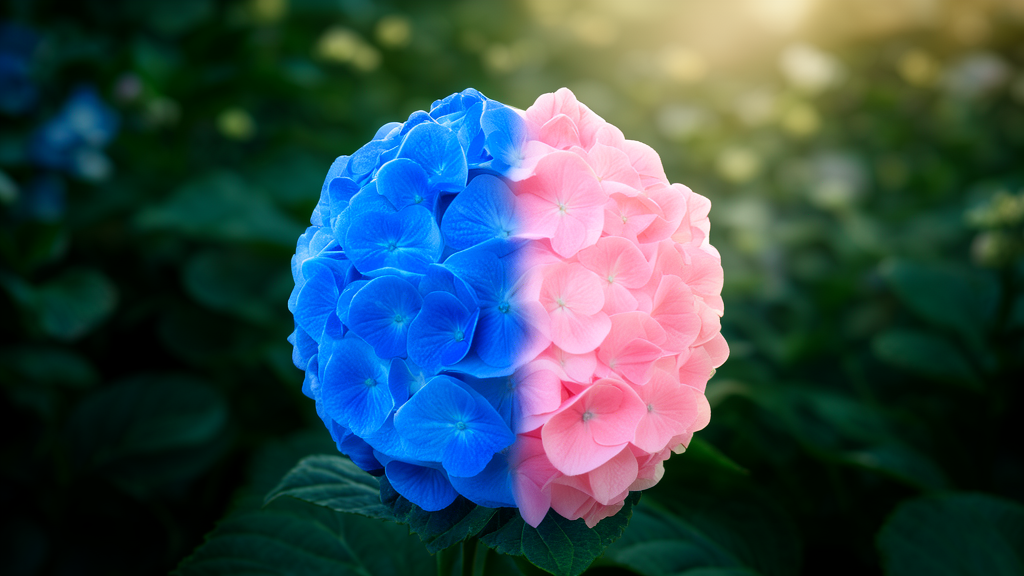
Most gardeners have poured aluminum sulfate into their soil and watched pink hydrangeas stay pink. The product label promises blue, the garden delivers pink, and the gardener blames the brand. The real problem is not the product. It is the pH. Hydrangea color is a pH problem. Aluminum is just the passenger. If your soil sits above 6.0, no amount of aluminum sulfate will turn those flowers blue, and you have been wasting money on a chemistry lesson you never started.
Here is what the aluminum myth actually hides. Aluminum sulfate does not turn hydrangeas blue. It makes aluminum available to the plant, and the plant deposits that aluminum into the petal tissue, which blocks the red anthocyanin pigments from forming. Without the red, the blue shows through. That distinction matters because aluminum is a double-edged sword. In soil with a pH below 5.5, aluminum ions dissolve freely and enter the root system in concentrations that can poison other plants. In soil with a pH above 6.5, aluminum binds to phosphate and becomes completely unavailable. The flower tissue never sees it, and the red anthocyanins develop normally, producing pink or purple blooms regardless of how much aluminum sulfate you pour into the ground.
The pH Range That Actually Controls Color
The critical pH range for blue hydrangeas is 5.2 to 5.5. This is not a suggestion. This is the window where aluminum ions remain soluble enough to be absorbed but not so soluble that they poison the root system. Most gardeners miss this window because they treat pH as a background variable, something to check once every three years and adjust with lime or sulfur when the test kit says so. Hydrangea color demands that you treat pH as the primary control, not a side effect.
When you add aluminum sulfate to soil, you are lowering the pH while simultaneously introducing aluminum ions. The pH drop is the real event. The aluminum is just the passenger. If your starting pH is 6.8, adding aluminum sulfate will not turn your flowers blue. It will take multiple applications over two or three seasons to drag the pH down to 5.5, and in the meantime, you are dumping aluminum into soil that cannot use it. The aluminum sits in the soil matrix, bound to phosphates, doing nothing. Meanwhile, your hydrangeas remain pink, and you wonder why the product is not working.
The solution is to test your soil first. Not guess. Test. A $15 soil test kit from a land-grant university extension service will tell you your starting pH. If it is above 6.0, you have work to do. If it is below 5.0, you have to raise it with garden lime before you can safely add aluminum sulfate. If it sits between 5.2 and 5.5, you are in the sweet spot, and a single application of aluminum sulfate per plant should be enough to lock in blue for the season.
Why Pink Hydrangeas Stay Pink (And How to Fix It)
Pink hydrangeas are not a failure. They are the default state. Most cultivars of Hydrangea macrophylla produce pink flowers when aluminum is unavailable, which is most soils outside the Pacific Northwest and parts of the Appalachian highlands. If you want blue flowers in a region where your soil pH runs 6.5 or higher, you have two options: change the soil chemistry, or change the cultivar.
Changing the soil chemistry is expensive and slow. It requires annual applications of elemental sulfur to hold the pH down, aluminum sulfate every spring, and constant monitoring to avoid crashing the pH below 5.0. It works, but it is a maintenance job that competes with your other garden tasks. The alternative is to plant cultivars that produce blue flowers without aluminum. Hydrangea arborescens cultivars like ‘Annabelle’ and ‘Invincibelle’ produce white flowers that fade to green, not blue. Hydrangea quercifolia (oakleaf hydrangea) produces white flowers that age to pink. Neither will give you blue, regardless of soil chemistry.
There are, however, specific Hydrangea macrophylla cultivars that produce blue flowers even at higher pH levels. ‘Nikko Blue’ and ‘Blue Wave’ are reliable blue producers in pH ranges up to 6.0, though they may lean toward purple at 6.2. ‘Endless Summer’ is the most widely available, and it produces blue flowers reliably down to pH 5.5, though it may produce mixed pink and blue blooms in the 5.8 to 6.2 range. These cultivars are not magic. They simply have genetic variations that allow them to express blue pigments under slightly less acidic conditions than older cultivars.
The Honest Limits: When Hydrangeas Won’t Go Blue
Hydrangeas will not go blue under three specific conditions, and knowing them saves you from wasting time, money, and soil chemistry.
First, red-flowering cultivars exist. Some cultivars, like ‘Pinocchio’ and ‘Rosalind’, are genetically programmed to produce pink or red flowers regardless of pH. They lack the genetic pathway to express blue pigments even when aluminum is abundant. If you buy a red cultivar and try to force it blue, you will fail. Always check the cultivar name before buying.
Second, container-grown hydrangeas are difficult to manage for color. The small soil volume means pH shifts happen quickly, and aluminum sulfate applications can crash the pH to toxic levels within a single season. If you grow hydrangeas in containers, use a soilless mix with a starting pH of 5.5, add aluminum sulfate sparingly, and test monthly. It is possible, but it is high-maintenance.
Third, drought stress blocks aluminum uptake. Even if your soil pH is perfect and your aluminum sulfate is fresh, a hydrangea that is water-stressed will not absorb aluminum efficiently. The plant closes its stomata, slows root activity, and prioritizes survival over pigment production. Water deeply and consistently during the bud-setting phase, and the color will follow. Neglect the water, and the flowers will stay pink, no matter what you add to the soil.
Hydrangea color is not a mystery. It is a pH problem with an aluminum side effect. Test your soil. Adjust the pH to 5.2 to 5.5. Add aluminum sulfate once per season. Water consistently. The flowers will turn blue, or they will turn pink, and that is the chemistry, not a failure of your gardening skills.